

한식에 대한 다채로운 이야기를 전하는 온라인 매거진
Vol 48. Food for Good Health
Wish for Good Health Contained in Food
Joy of Food for Good Health
Our people have developed a custom for making distinctive dishes with seasonal ingredients and eating seasonal dishes according to season.
They enjoyed a variety of seasonal dishes on Jeongwol Daeboreum(the first full moon of the lunar year), and most of them pertain to “byeoksa(the act of preventing disaster and dispelling evil),” which expels bad energy from our body. Our people’s earnest wish for the health of their loved ones and neighbors is contained in the food they eat while welcoming the first full moon of the new year.
Reference. <Encyclopedia of Korean Seasonal Customs> <Encyclopedia of Korean Culture>
“Since the ancient times, the tiger has been both the object of fear and the symbol of courage to drive out negativity. In 2022, the year of the Imin(tiger), which is considered one of the representative “byeoksa” animals of the Korean people, we will introduce “the food for good health” that is eaten on the first full moon of the new year with an earnest wish that our nation will soon get out of the pain of COVID-19.”

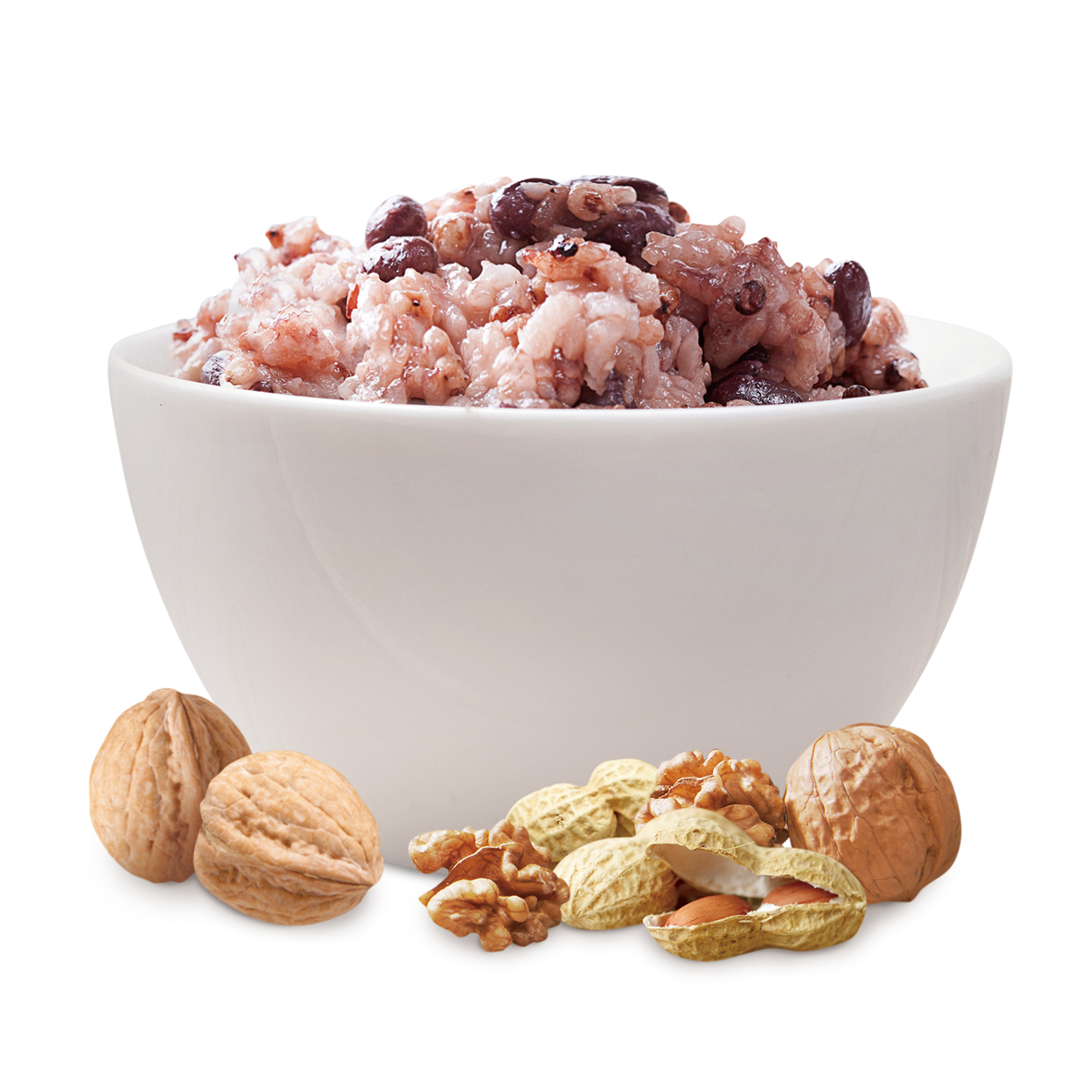
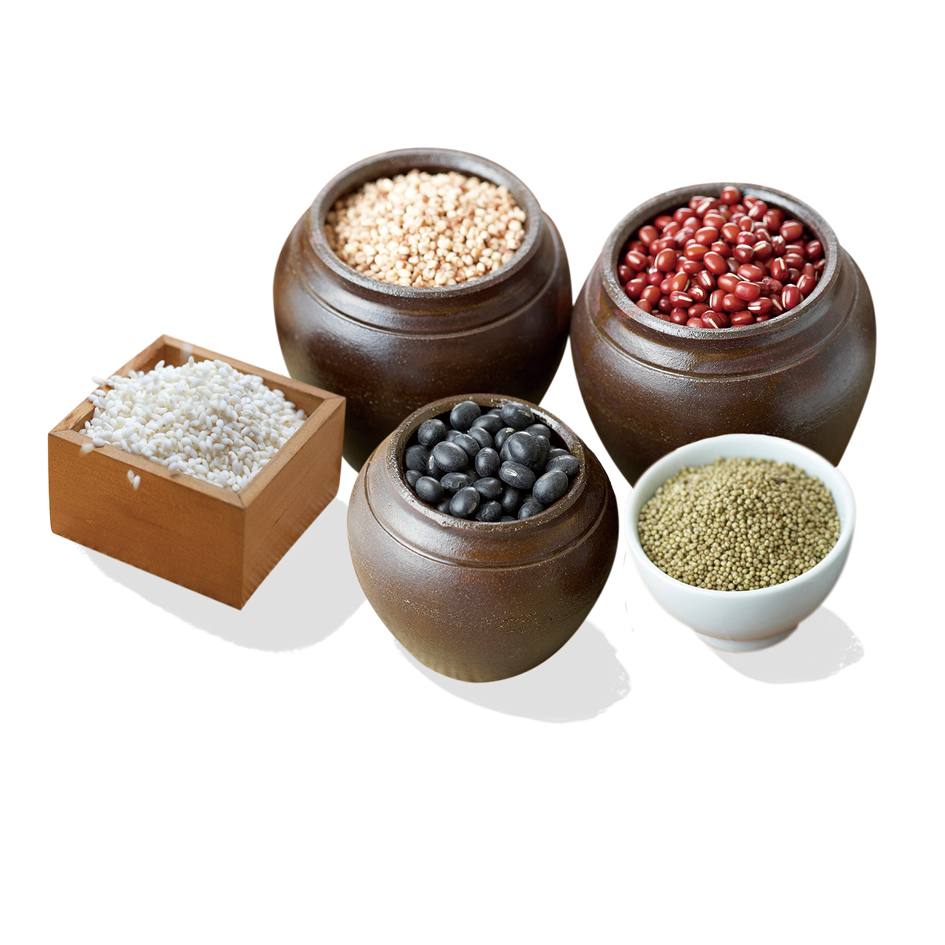
Jeongwol Daeboreum(the first full moon of the new year) is called “sangwon(上元)” in Chinese, and jeolsik(seasonal food) eaten on this day is called sangwon jeolsik. This day is the most important day in our customs, occupying as much weight as the New Year. How important it was can be assessed from the number of customs introduced in <Seasonal Customs of Korea> by Choi Sangsoo. Of the 192 seasonal events held annually, half are held in the first month, and 55 of them are related to the first full moon. The full moon contains the principle of abundance that leads to “the moon, goddess, and earth.” In our agriculture-centered culture, it must have been natural to cook and eat ogokbap(steamed five-grain rice) on the first full moon of the new year, which determines the vitality and productivity of the year, while also praying for a good harvest. The custom of eating ogokbap seems to have been passed down since the Silla period. According to the <Samguk Yusa(Memorabilia of the Three Kingdoms)>, King Soji of Silla held a ceremony on January 15th of the lunar calendar every year to thank the crow that informed him of treason by making yaksik(sweet rice with nuts and jujubes) containing valuable ingredients. The common people, who experienced difficulty finding valuable ingredients, such as pine nuts and jujubes, replaced them with five-grain rice, which was made with sticky rice, millet, red bean, soybean, and foxtail millet to ward off bad luck and pray for good health and a prosperous year. Ogok makes up the five types of grains in blue, red, yellow, white, and black colors. In oriental medicine, it is interpreted as the eater achieves balance of the body by receiving the energy of the five colors evenly. Ogok also means “all grains,” so if a farmer farms five types of grains, it means that the farmer farms all types of grains. Thus, when our ancestors made ogokbap, they served it to the deities of their house that took care of the family first, and prayed for the harmony and prosperity of the household. There was also a myth about “Sharing it with three neighbors with different last names to have good fortune of the year” to remember those who could not eat ogokbap due to poor circumstances.

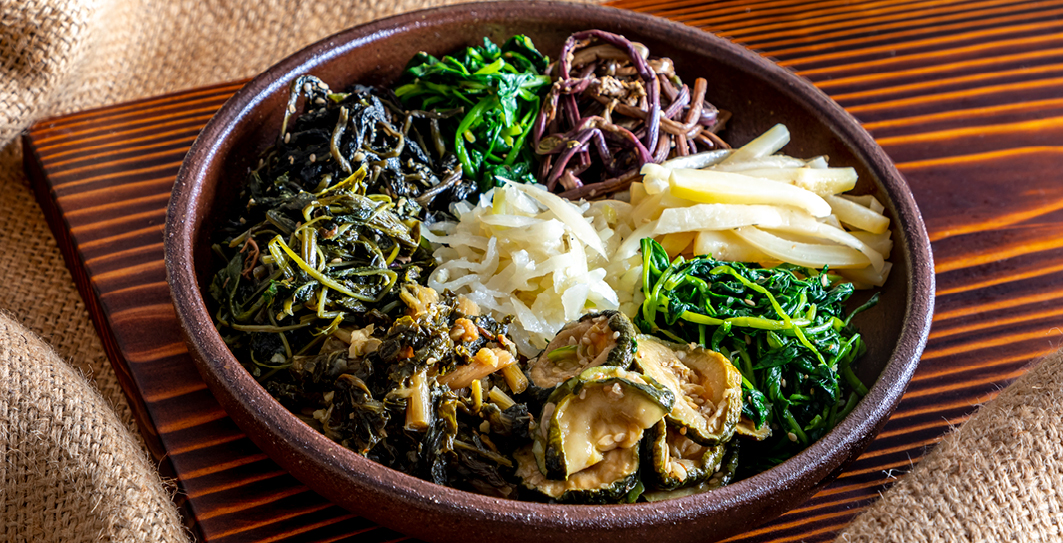
Muguennamul(seasoned vegetables dish made with the vegetables dried in the previous year) is a side dish that is paired with ogokbap on the first full moon of the year. It is called mugeunnamul(dried vegetables) because the dish is made from various vegetables, picked and dried in the spring and autumn of the previous year and stored during winter, and is soaked and steamed on the first full moon of the new year. In Chinese characters, it is called “jinchae.” They are mainly young zucchini, eggplant, mushrooms, bracken, bellflower, radish leaf, castor leaf, and taro stem. Mugeunnamul is a type of food for good health and is eaten to pass the summer heat safely. It is recorded in the <Dongguk Sesigi> that “If you eat mugeunnamul, you will not feel the heat of the coming summer.” In the winter, when fresh vegetables were scarce, dried vegetables were valuable ingredients that supplied nutrients. Their excellent storage and high utilization features are considered to be their great advantages.You can enjoy a nutty and earthy taste that is different from raw vegetables by soaking dried vegetables well in water and then boiling them, and frying them in oil or pouring broth and boiling them. The dried vegetables are also a type of dish that provide nutrients in cold weather, and they taste the best around the first full moon of the year. This is because although it is spring in terms of the season, the cold weather is not yet gone, so it is a time when seasonal dishes with some calories are needed. The types of aged herbs vary, depending on the region. In mountainous areas such as Gangwon-do, chwinamul(aster leaf) is eaten after drying, and in areas near the sea, seaweeds such as gulfweed are used.

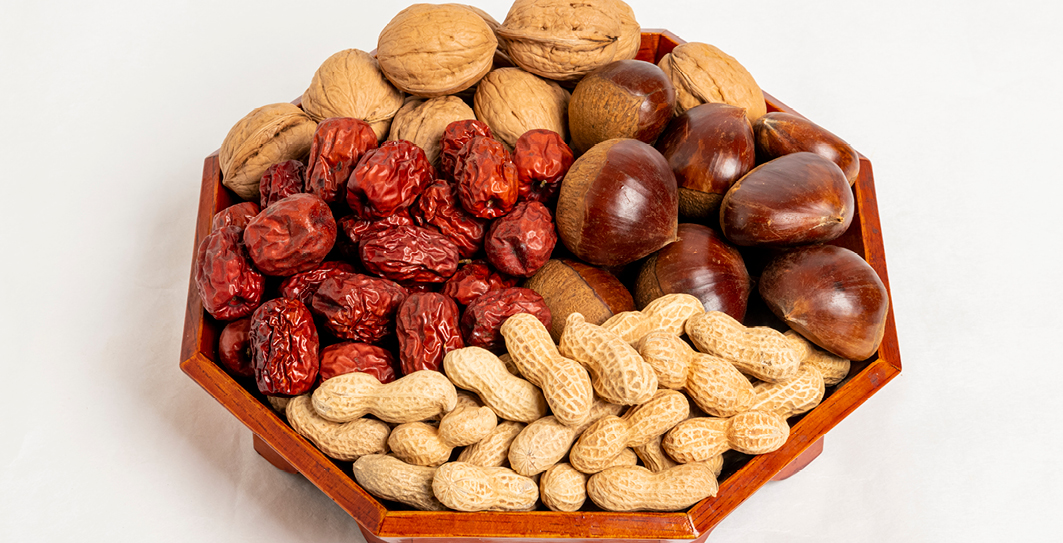
The first thing we do in the early morning of Jeongwol Daeboreum is bureom kkaegi(cracking nuts). The whole family gathers around, and bites down nuts, such as chestnuts, walnuts, maidenhair nuts, and pine nuts, at once with their molars, and recites blessings together, saying, “May this year be peaceful and boil-free.” The nuts eaten at this time are called “bureom” or “bureum,” and are bitten down according to the eater’s age. The first ones are thrown on the yard or roof, and the second ones are eaten after biting down the skin.
This seasonal custom, which was practiced since the ancient times to prevent boils, is a folklore that has been handed down widely in Korea for a long time. Its examples can be found in various records of the late Joseon Dynasty. However, far ahead of this purpose, bureom kkaegi is an act derived from the common shamanistic purpose of humankind “to make teeth strong by biting down hard things.”
“Bureom” is a homonym that has two meanings: the collective term for hard-shelled fruits, and the abbreviation for boil. This met with an era when the danger of skin diseases or infectious diseases accompanied by boils was realistically and highly recognized, and it changed to the term, “bureom kkaegi.” It added the meaning of wishing for a year's well-being according to the characteristics of the New Year's customs, taking roots in the Korean custom.