


한식에 대한 다채로운 이야기를 전하는 온라인 매거진
Vol 48. Food for Good Health
“Jinchaesik,” Another Culture Created from Our People’s Affection for Namul
Elegance of Korean Food
According to a 2017 World Health Organization survey, the average daily intake of vegetables per person worldwide was 384 g, which is higher than the recommended intake of 250 g. At first glance, people all over the world seem to enjoy vegetarianism, but Korea and China played a major role in raising the average.
Though the proportion of vegetarian food is decreasing in Korea due to a westernized diet in recent years, greens are still a staple side dish on our table. If we were to pick a unique vegetable dish of our people that boasts of a variety of vegetable recipes, it is mugeunnamul, also known as “jinchaesik.”
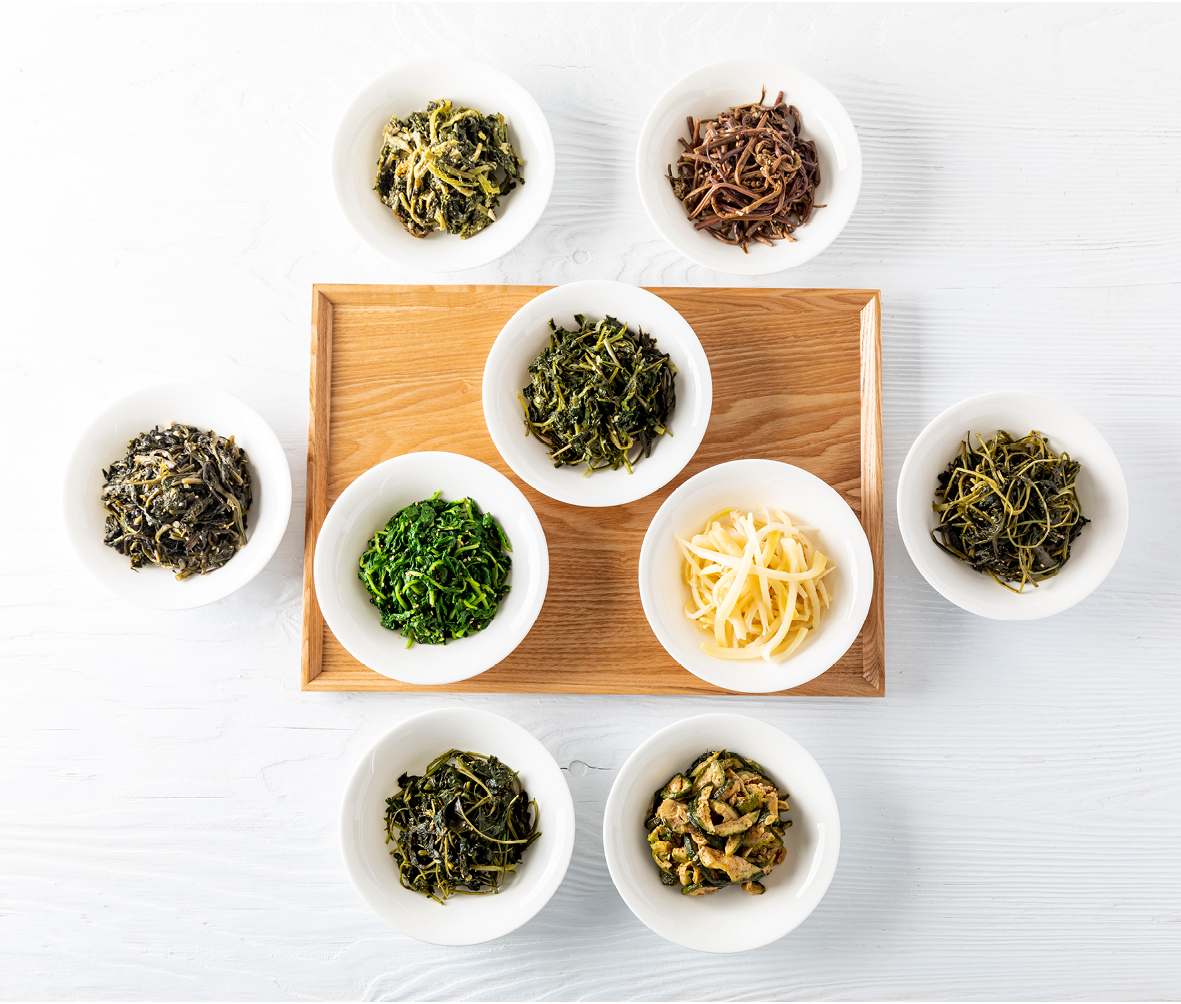
“During the Japanese colonial period, North Gando was populated by Koreans, Japanese, Chinese, Russians, and people from different neighboring countries. Among them, it was easy to distinguish the Joseon people. In early spring, all those who climbed the mountain with baskets of vegetables were Koreans. No one taught them, but the Joseon people went out gathering wild herbs in the mountains and in the fields in the spring.”
- The words of journalist Hong Seungmyeon
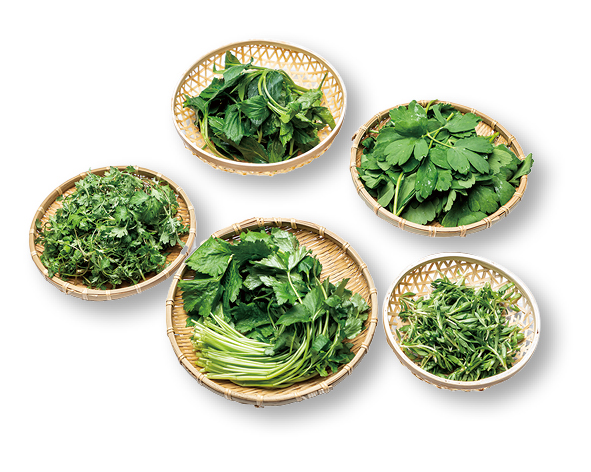

Our people enjoyed vegetables according to the seasons to the extent that the seasons were determined by the types of vegetables on the table. Namul(seasoned vegetables) is a side dish that is so familiar to us that there is nothing special about it. However, if you look at it deeply, you can get a glimpse of the simple yet healthy food philosophy of our ancestors.
In our table, where rice is the staple, namul is a food source that adds abundant dietary fiber, vitamins, minerals, and phytochemicals. Wild vegetables, such as bracken and ixeris dentata, change our body into an alkalescent constitution. They are rich in components that strengthen the body's antioxidant power and immunity.
According to the Korea Forest Service, the result of testing the efficacy of wild herb extracts showed that most wild herb extracts were found to have high anticancer effects. Recently, the claim that wild herbs are helpful in preventing adult diseases with its anti-diabetes and anti-obesity effects has been scientifically proven through experiments by the Rural Development Administration. Among the 23 major wild greens, four wild greens, such as short bristle-like haired ixeris, Korean mind, Ulleungdo aster, and aster, are effective in preventing metabolic diseases, such as diabetes and obesity. Short, bristle-like haired ixeris is a perennial herb that grows commonly in mountain valleys and streams, and its young leaves and roots are eaten as namul. People have been using it as a medicine, such as a sedative. Korean mint is a perennial herb of the Asiatic self-healing family known as “Korean herbs,” and due to its unique scent, it is mainly used as a spice. It is famous for its effect on eliminating harmful microorganisms. Ulleungdo aster and aster, which have been shown to have anti-obesity effects, have been used to treat tonsillitis and bronchitis because of their anti-inflammatory effects since the ancient times. The effort to explore natural foods that are beneficial to our body from the perspective of “yaksik dongwon,” which views the origins of food and medicine as the same, has remained as a simple yet diverse food legacy.
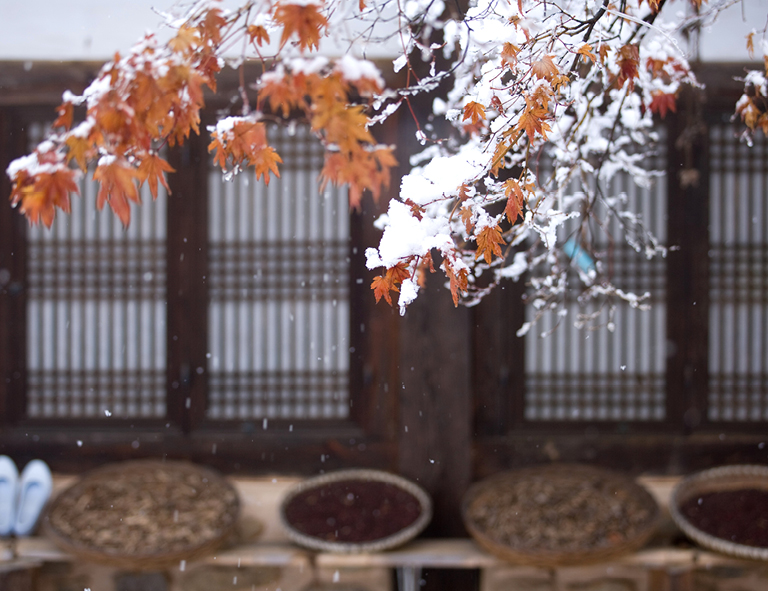

It is said that there are more than 300 types of vegetables that our people have eaten alone, so the term “namul people” doesn’t sound too exaggerated. Why did our people like namul side dishes so much? The answer can be found in the terrain. Since nearly 70% of the country is made up of mountainous areas, wild herbs and field vegetables that can be easily obtained from nature quickly became part of our food culture. It led to a culture of ssam(vegetable wraps) and side dishes, which are the basics of Korean food, and to a vegetarian-centered Korean food culture. Grains and vegetables that have supported the culture of rice and side dishes, which are the staple of our table, were very important food resources for Koreans. During the season of spring poverty, when the harvested grains ran out, root vegetables and fruits that could be gathered from the mountains became emergency crops that could sustain life. Thus, jinchaesik, which enabled our ancestors to store it and eat it for a long time in preparation for the time when namul was in shortage, was a product of the wisdom of our ancestors who wanted to alleviate the worries of eating even a little.
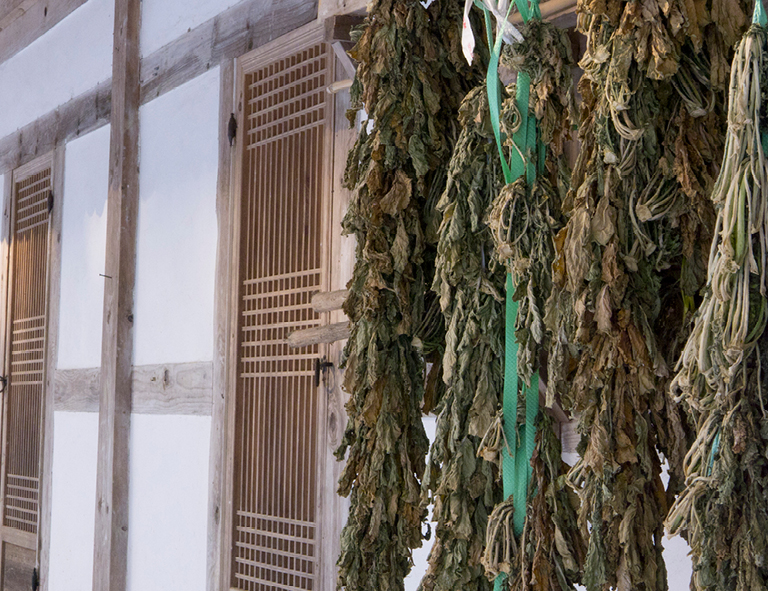

Long storage period and high utilization were the greatest strengths of mugeunnamul. When dried vegetables were boiled and stir-fried in oil or boiled in a broth over low heat, people could enjoy the taste and texture that were different from raw vegetables. Fresh vegetables that are from the field seem to be better for the body, but because they are fermented during the drying process, dried vegetables are richer in nutrients. Let’s give an example of dried radish leaves, which is called the “tonic on the winter table.” The raw radish leaves contain a large amount of iron and calcium, and are also rich in vitamin A that has anti-cancer effects and is good for eye health. When it is dried, these components increase even more. Dietary fiber, which helps manage weight and prevent constipation with a feeling of fullness, also increases three to four times as it dries. However, if dried radish leaves are cooked at high temperatures, the nutrients are easily destroyed, so it is better to lightly blanch them in salt water to reduce vitamin loss. When golden oak mushrooms or radish slices are dried in the sun, vitamin D increases. If you eat bracken after drying it, toxicity disappears, and you can eat it without any worries. Moreover, mugeunnamul and raw vegetables differ in taste. When namul is dried, it loses moisture, but its sweetness becomes stronger as its nuttiness is doubled. Moreover, as the volume is reduced, a larger quantity of vegetables can be consumed, which is an advantage.
Long storage period and high utilization were the greatest strengths of mugeunnamul. When dried vegetables were boiled and stir-fried in oil or boiled in a broth over low heat, people could enjoy the taste and texture that were different from raw vegetables. Fresh vegetables that are from the field seem to be better for the body, but because they are fermented during the drying process, dried vegetables are richer in nutrients. Let’s give an example of dried radish leaves, which is called the “tonic on the winter table.” The raw radish leaves contain a large amount of iron and calcium, and are also rich in vitamin A that has anti-cancer effects and is good for eye health. When it is dried, these components increase even more. Dietary fiber, which helps manage weight and prevent constipation with a feeling of fullness, also increases three to four times as it dries. However, if dried radish leaves are cooked at high temperatures, the nutrients are easily destroyed, so it is better to lightly blanch them in salt water to reduce vitamin loss. When golden oak mushrooms or radish slices are dried in the sun, vitamin D increases. If you eat bracken after drying it, toxicity disappears, and you can eat it without any worries. Moreover, mugeunnamul and raw vegetables differ in taste. When namul is dried, it loses moisture, but its sweetness becomes stronger as its nuttiness is doubled. Moreover, as the volume is reduced, a larger quantity of vegetables can be consumed, which is an advantage.
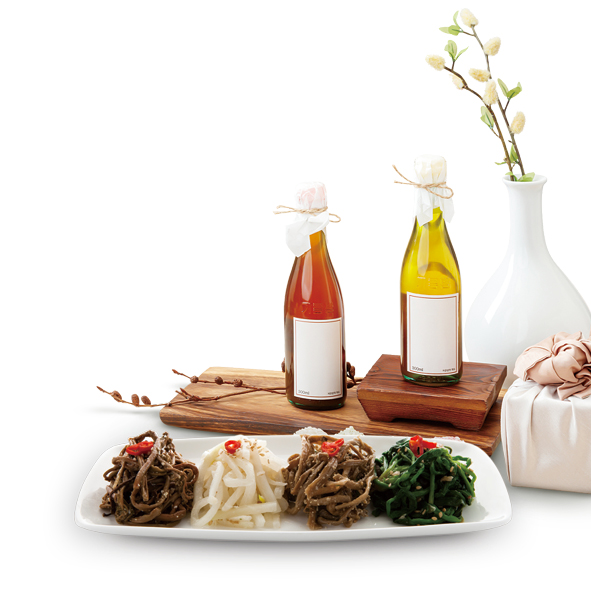

With a steady interest in health and gastronomy, the types of edible oils that can be selected have been diversified. However, the oils that suit our namul dishes are native oils. The representative sesame oil and perilla oil add flavor to jinchaesik, while balancing the nutrients that are lacking in our table.
According to the Rural Development Administration, perilla oil contains 62% of omega-3 alpha-linolenic acid among unsaturated fatty acids. This is the highest content among vegetable oils, and it is known as a component that helps improve learning ability and memory, and prevent various chronic diseases. The sesame oil is low in omega-3 fatty acids, but it contains 40% linoleic acid from the omega-6 family and 40% oleic acid from the omega-9 family. It is also rich in lignan, an antioxidant, so you can expect it to have an anti-aging effect.
If you eat Korean traditional oil with namul, which is a good pairing, its aroma and flavor become more enhanced. If you use perilla oil rather than sesame oil when stir-frying dried vegetables, the unique flavor will permeate and stimulate your palate. Sesame oil is weak against heat, so if you will use it, season them after namul is blanched, and enjoy the oil’s fragrance fully. If you use it for spinach namul, you can increase the absorption rate of a fat-soluble vitamin. When seasoning bracken, either perilla oil or sesame oil can be used to enjoy different flavors, so choose one according to your palate.