


한식에 대한 다채로운 이야기를 전하는 온라인 매거진
Vol 46. Rediscovery of Pat
What Does Pat Look Like in the Old Records? ─ The Story of Pat Recorded in the Old Books
Tasty Road
Pat is a crop with a long history of cultivation, and it is often mentioned in old agricultural books. If we look at the records one by one, we can find out the types of red beans that our ancestors cultivated, and how they cooked and ate them. Let's take a look at the records of pat that have been with our people for a long time.
Reference. 1. The National Folk Museum of Korea 2. The Rural Development Administration 3. <The Story of Beautiful Seasonal Custom Foods>(Kang Jaehee, Yoon Sookja, Jilsiru) 4. <Unexpected Food History>(Kim Kyunghoon, Today Books)
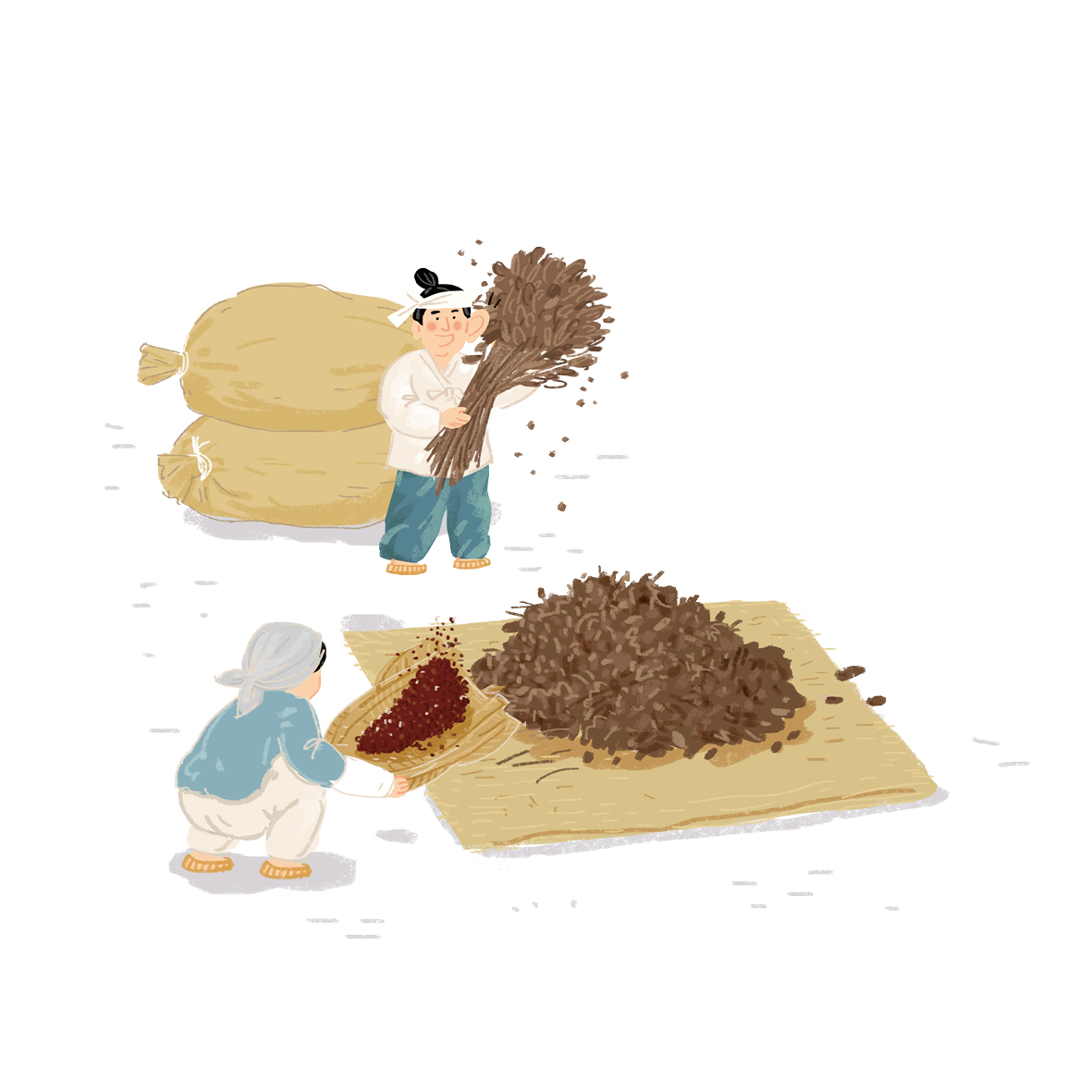
Various Types of Red Beans in the Old Agricultural Books
When you read the old agricultural books, you can see that the types of red beans were surprisingly diverse. In the <Geumyangjapnok>, a book about overall farming written by Kang Hui-maeng, a scholar during the reign of King Seongjong of the Joseon Dynasty, there are 7 types of pat: bomgalyipat(春小豆), gurupat(根小豆), moedaegipat(山達伊小豆), jeobaeboochaepat(渚排夫蔡小豆), meokpat(黑小豆), olpat(早小豆), and saengdongpat(升伊應同小豆). In the late Joseon Dynasty, in <Imwon Gyeongjeji>, an agricultural encyclopedia written by Seo Yu-gu, a Silhak scholar during the reign of King Seonjo, there are more types of pat, including jaeryeongyipat(再寧小豆), suiinnalpat(五十日小豆), and yonguinunpat(龍眼小豆).
Looking at the names of pat written in old books, you can assume that there were many varieties named after their shape, color, use, planting time, ripening time, cultivation area, etc. Various types of pat still remain today, and the ones that have been nurtured in modern times include Arari, Seona, Huinnarae, Haeoreum, Hongda, and Honggyeong.
Becoming a Medicine
Based on experimental results, it has been found that pat is rich in nutrients. However, even in the Joseon Dynasty, when science and technology were not yet advanced, people knew that red beans were good for the body. The book <Dongui Bogam(東醫寶鑑)>, compiled under the command of King Seonjo by Heo Jun, the royal physician, introduces the efficacy of red beans in detail.
“The red bean is called jeoksodoo(赤小豆), and it relieves the swelling of the body and discharges the ongjong(癰腫: small boil) and blood pus. It treats sogal similar to diabetes, stops diarrhea, discharges the urine, and relieves soojong(水腫), the swelling of the body, and changman(脹滿), the swelling of the stomach. It eliminates small boils caused by body heat and also breaks down eohyeol(瘀血: bruises).”
- <Dongui Bogam(東醫寶鑑)
Having a Shamanistic Meaning
Pat is an ingredient that has been used in a variety of recipes mainly for its symbolic meaning. For a long time, our ancestors believed that ghosts were harmful, and brought sickness and unhappiness to people. As a result, they thought of a way to chase away the evil spirits and prevent them from interfering with people. In the process, they considered ghosts born from yin to be opposite to yang, and believed that they would run away when they are countered with the most powerful yang, the fire. They thought that ghosts were afraid of the red color of fire and considered it to be the color that chased away the evil spirits. Due to its red color, pat became a food with a shamanistic meaning.
“In our custom, on the first horse day(午日) of the new year, a rite called jeungbyeongdosin(甑餠禱神: praying to deities with sirruteok) was held by making patsirutteok(red bean steamed rice cake) and praying for musataean(無事泰安: safety and well-being) throughout the year. At this time, patsirutteok was made with many thick layers of rice cake and red beans, and boiled pig’s head, dried pollack, and freshly drawn water were placed in specific places.”
- <Dongguksesigi(東國歲時記: Record of the Seasonal Customs of Korea)>(1849)
As you can see from the record of <Dongguksesigi>, patsirutteok(red bean steamed rice cake) was used in the meaning of byoeksa(辟邪), which means to ward off wicked spirits. Sirutteok was also called jeungbyeong(甑餠), and it refers to a steamed rice cake with layers separated by fillings. Patsirutteok uses red beans as the filling and it was made in October in the lunar calendar to wish for peace and comfort for the family, or to pray for health and peace year-round, and good crops for the year to the guardian of the village. Moreover, it also has the meaning of avoiding evils through red beans as the evil spirits were afraid of the red color.
The belief that red beans could prevent infectious diseases continued until the Joseon Dynasty, according to <Sejong Silok: The Chronicle of King Sejong>. The record of June 5, in the 16th year of King Sejong’s reign shows how to use pat with the content that when the king asked his vassals on how to prevent the infectious disease that was already prevalent at the time, one of them said, “Put 1 doe(= 1.8 liter) of pat in a sack made with thin hemp, and put it in a well. Take it out after the 3rd day and all family members shall each have 27 beans.” Of course, there is no record of the actual effectiveness of the method.
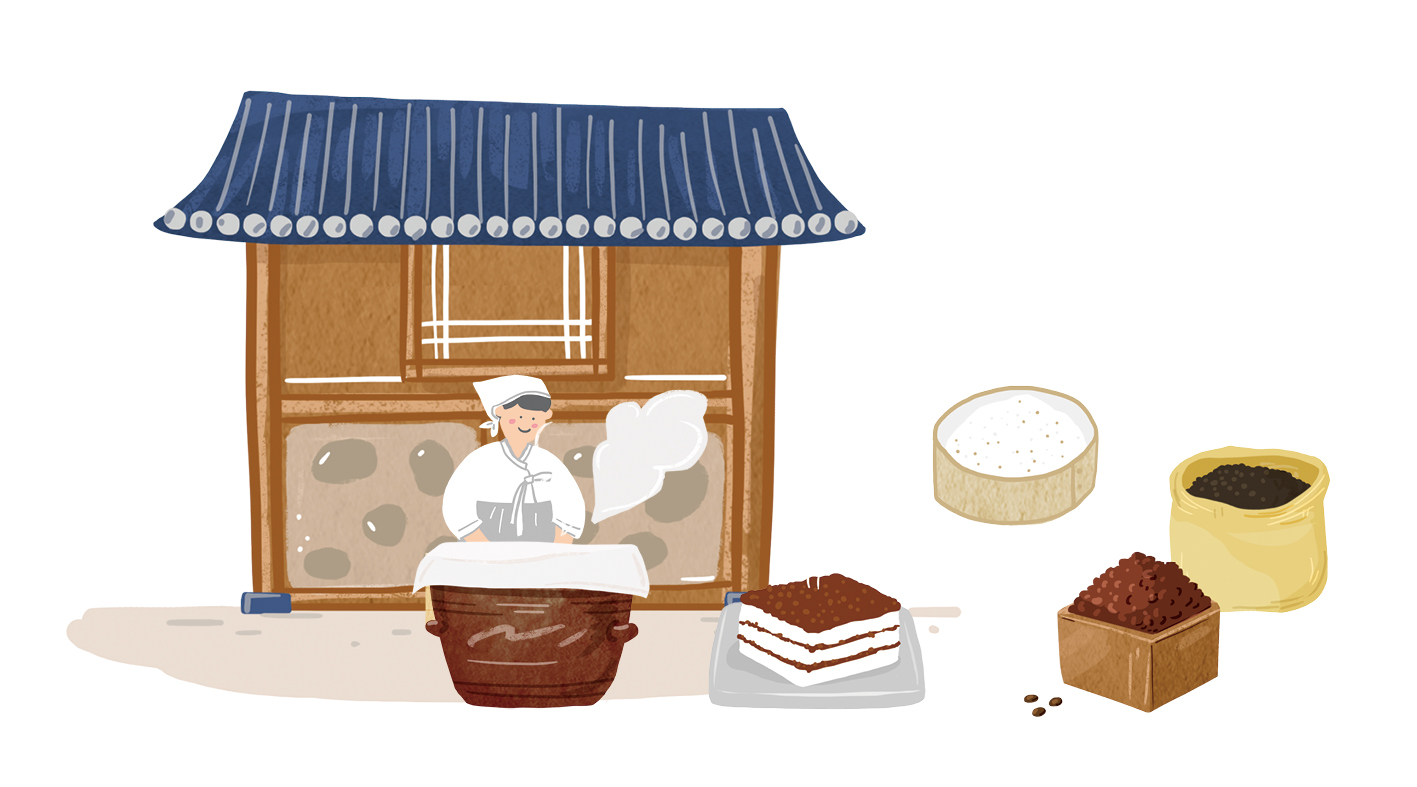
Ingredients Used for Important Food
Pat was used often as an important food ingredient on a meaningful day. For instance, there are patsusuchaltteok(red bean and sorghum sticky rice cake) used for the 1st birthday of babies, patsirutteok used for weddings, patjuk eaten on Dongji(winter solstice), patbap(rice cooked with red beans), etc., They are still being consumed today. Since they are considered as important dishes, those made with red beans always make an appearance in old cookbooks. The following shows some of them.
“Wash the red beans thoroughly to remove the sand. Cook them in a pot like rice so that the outcome is either hard or wet, and roughly mash them up. Carefully cook the rice as directed in How to Make Rice Flour. Place the rice flour up to the depth of a finger joint(or to make it thicker, up to the depth of two joints) and flatten it out. Cover the rice flour with a layer of mashed red beans and repeat the process once more each. After making the layers, steam it, and allow it to cool. Cut it in the same way as kkulpyeon(a type of rice cake with honey), but the size should be a bit larger.”
- Pattteok <Joseon Yori Jebeop(朝鮮料理製法)>(1934)