


한식에 대한 다채로운 이야기를 전하는 온라인 매거진
Vol 45. Gukbap, the Epitome of
Everything Can be an Ingredient ─ Guk and Tang We Love
Discovering Korean Food
Korean guk and tang (types of soup) have developed in a variety of ways by combining seasonal ingredients and regional flavors.
Let’s take a look at our guk and tang, in which everything became an ingredient.
Sources & References. Ministry of Agriculture, Food and Rural Affairs, Rural Development Administration
From Meat to Bones
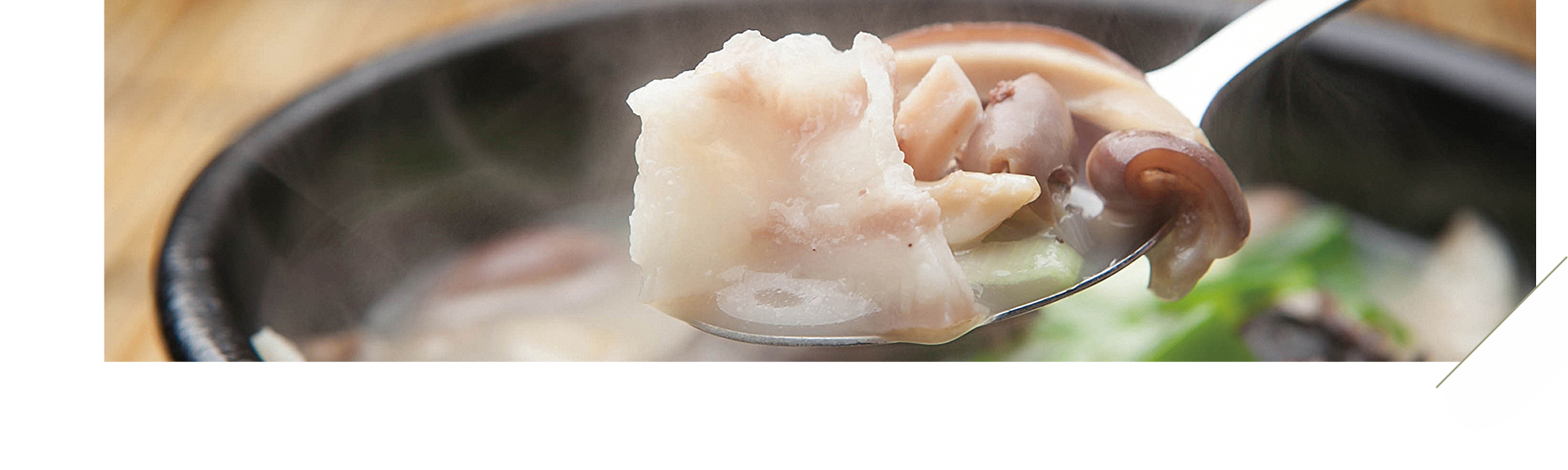 Meat is the most used ingredient for guk and tang. Meat, including beef, pork, and chicken, is used to make the broth for guk and tang, and the bones were used as ingredients as well. It doesn't stop there. The intestines and even seonji made with blood also became ingredients for guk. Seolleongtang and gomtang using beef are the most well-known dishes, but dwaejigukbap and sundaegukbap using pork or its by-products, and dakgomtang using chicken have been loved by many for a long time.
With the Flavors of Rivers and Seas
 Myeolchi(anchovies) is an essential ingredient used to make the basic broth of guk and tang at home. The broth, which is filled with the flavor of the sea, enhances the taste of a dish. In fact, to make guk and tang, fish or seafood living in rivers and seas were used often. There are tang dishes using sea fish or roes, such as chueotang(loach soup), minmul maewoontang(spicy freshwater fish stew), daegutang(codfish soup), mineotang(croaker stew), agwitang(monkfish soup), altang(spicy fish roe soup), etc. Also, like gulgukbap(oyster and rice soup) eaten in the winter, many types of seafood were used.
Clean Taste of Vegetables in a Bowl
 Vegetables that grow differently in the four seasons were also used to make guk and tang. The green leaves that grow in the spring are used to make guk a lot, and the dishes include aukguk(curled mallow soup), bomdongguk(fresh winter cabbage soup), naengiguk(shepherd’s purse soup), etc. For kongnamulgukbap, which is known as Korea’s representative gukbap, vegetables were also used, while gosari haejangguk(bracken hangover soup), a local dish of Jeju Island, is a one-bowl meal made by simmering bracken well.
Guk and Tang Made at Home
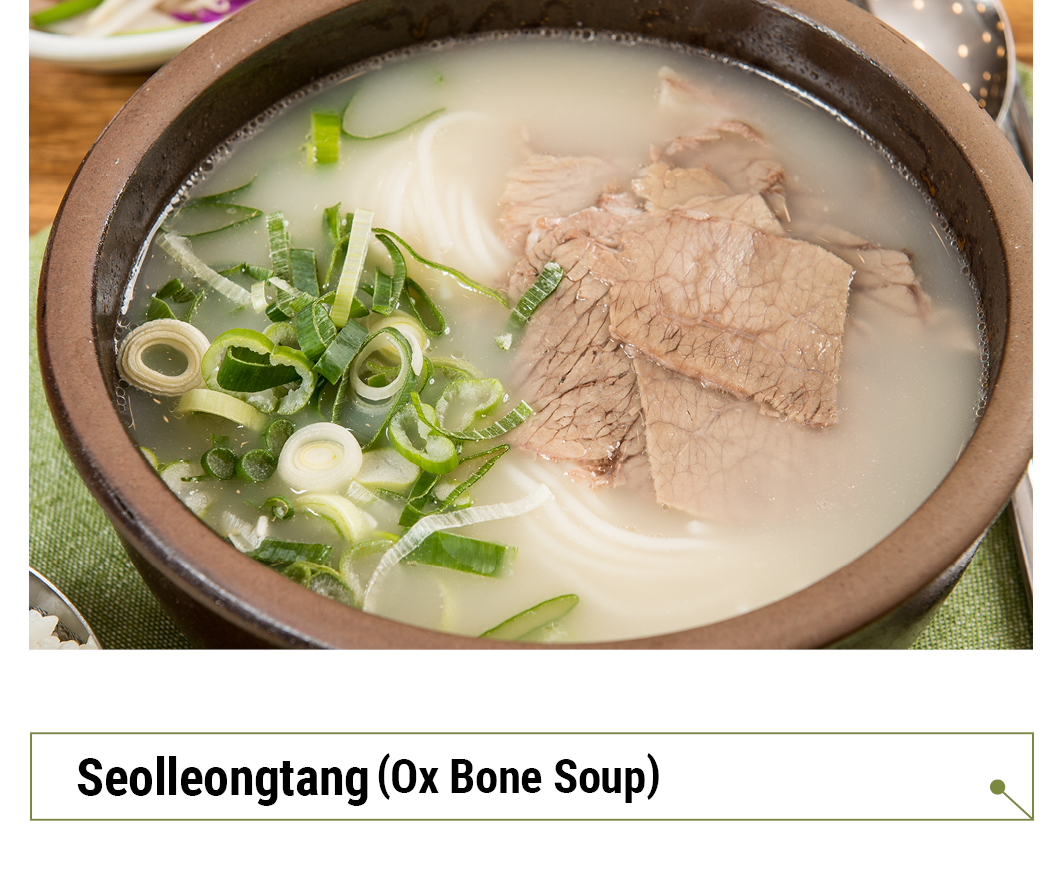
Ingredients
500 g mixed bones, 1.5 kg ox leg bones, 500 g brisket, 60 cups(15L) water, 1 green onion, 60 g whole cloves of garlic, 2 dried red chilis
How to make it
① Soak the mixed bones and leg bones in cold water overnight to drain the blood.
② Soak the brisket for at least 1 hour to drain the blood.
③ Put water in a pot and boil the bones, and when it boils, discard the water, remove the bones, and wash them.
④ Put the bones, brisket, green onion, garlic cloves, and dried red chilis in cold water, and boil for 5 to 6 hours while continuously replenishing the water. Skim off any foams that appear in the process.
⑤ When the brisket is sufficiently cooked to taste, remove it, and slice it thinly. For the broth, cool it and remove the fat layer.
⑥ Add the rice and top it with the sliced meat and chopped green onion, and pour the boiling hot milky broth over it to serve.
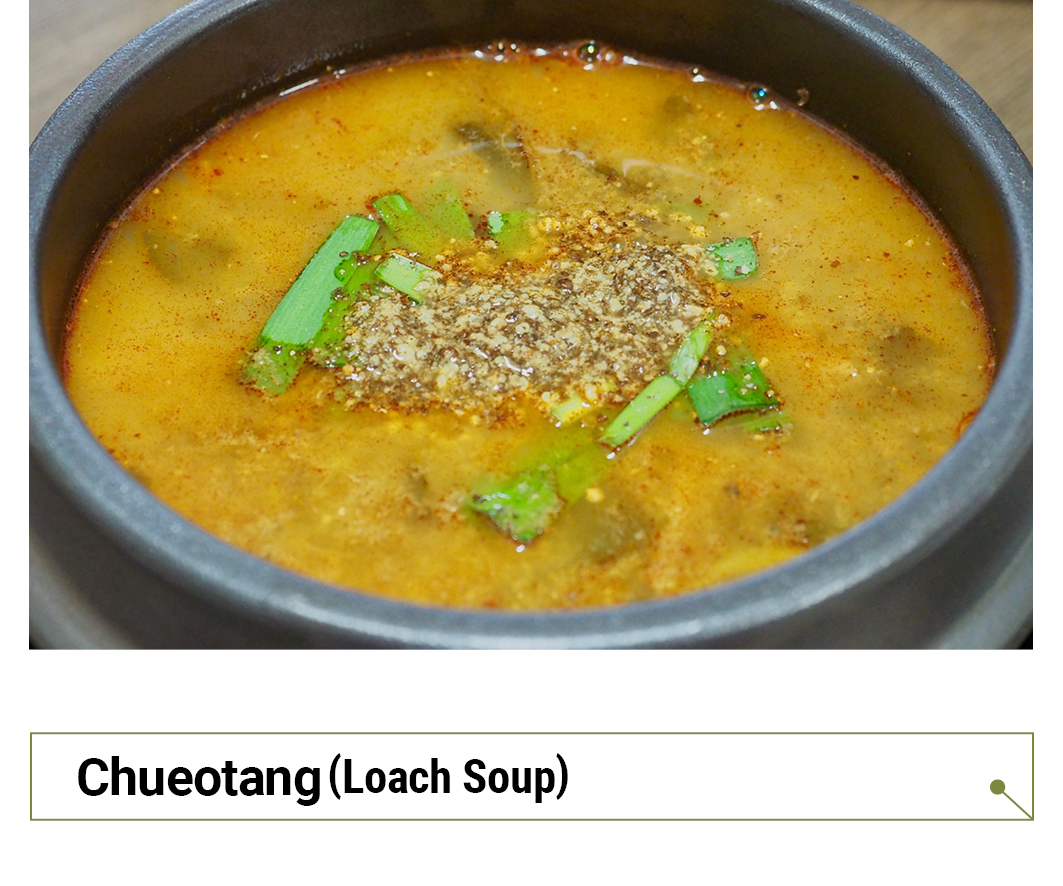
Ingredients
400 g loach, 150 g boiled taro stem, 100 g boiled kimchi cabbage leaves, 50 g boiled bracken, 50 g mung bean sprouts, 30 g chives, 35 g green onion, 15 g green pepper, 2L water, 2 tbsp soybean paste, pumpkin leaf, Korean mint leaf, soy sauce, salt, chopi(Korean pepper) powder
How to make it
① Sprinkle salt on the loach, rub it with a pumpkin leaf, and clean it thoroughly.
② Pour water on the loach, boil it, and strain it through a sieve to remove the bones.
③ Squeeze out the water and chop the kimchi cabbage leaves into small pieces, and season with soybean paste.
④ Boil the mung bean sprouts, and cut the taro stem and bracken into 4-cm lengths.
⑤ Cut the chives into 4-cm lengths, chop the green onion and green pepper, and tear off the Korean mint leaf.
⑥ Put the loach broth, kimchi cabbage, mung bean sprouts, taro stem, and bracken in a pot, and boil while seasoning it with the soy sauce.
⑦ When the soup boils thoroughly, add the chives, green onion, green pepper, and Korean mint leaf, and boil it a little more.
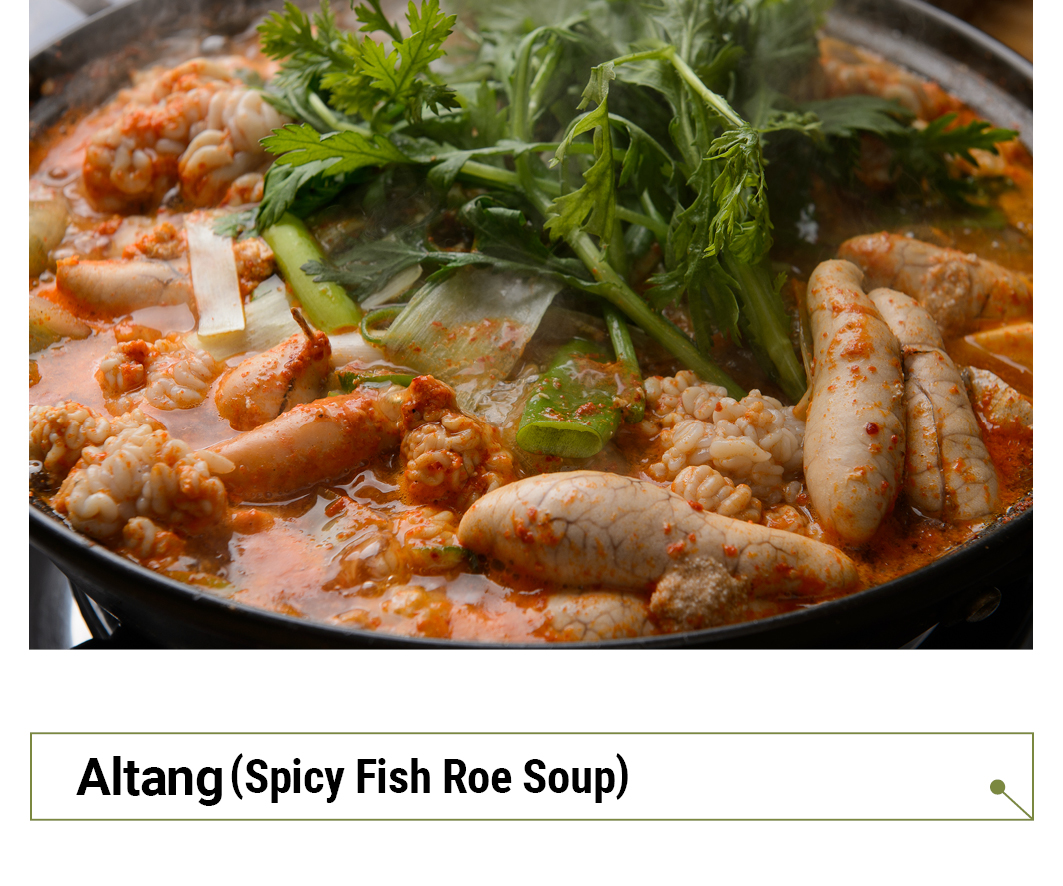
Ingredients
8 pollack roe, 120 g radish, 90 g bean sprouts, 90 g water parsley, 1 green onion, 2 green peppers, 30 g crown daisy, 1.5L water, a little bit of salt Sauce(2 tbsp red chili powder, 3 tbsp water, 2 tbsp soy sauce, 1 tbsp rice wine, 2 tbsp chopped green onion, 1 tbsp chopped garlic, 1/2 tsp ginger juice, a little bit of salt and pepper)
How to make it
① Shake the pollack roe in salt water to clean it, and then drain the water.
② Cut the radish flat, wash the bean sprouts, and remove both ends.
③ Cut the water parsley stem only into 4-cm lengths, and cut the crown daisy leaves short.
④ Cut the green onion and the green pepper with its seeds removed diagonally.
⑤ Put the radish, bean sprouts, pollack roe, sauce, and water in a pot, and boil over high heat.
⑥ Boil until the radish is cooked, season with salt, and add red chili, water parsley, green onion, and crown daisy, and simmer it a little more.
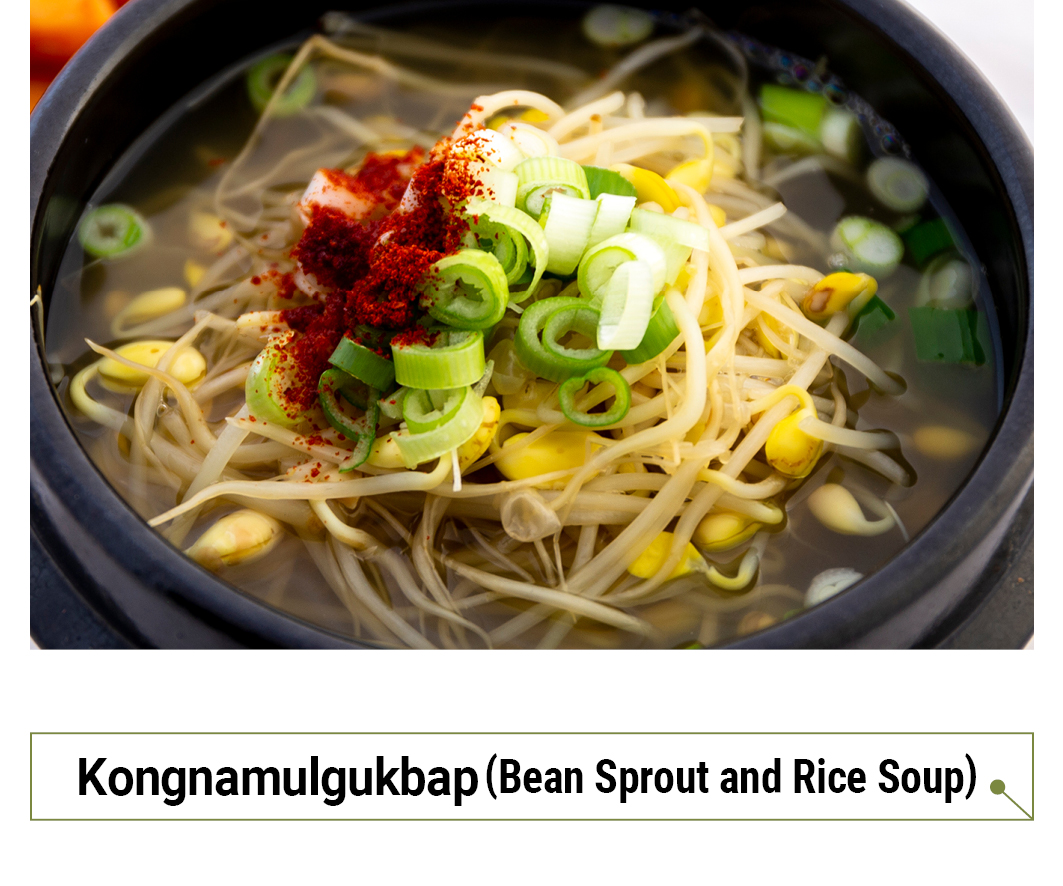
Ingredients
3 handfuls of bean sprouts, 1 squid, 1 cheongyang chili pepper, 1/2 cup cabbage kimchi, 1/4 green onion, 6 cups of kelp anchovy stock, a little bit of red chili powder, 1 tbsp salted shrimp, 1 tbsp cooking wine, 1/2 tbsp minced garlic, a little bit of pepper, cooked rice
How to make it
① Wash the bean sprouts thoroughly, remove the seasoning from the cabbage kimchi, and cut it into small pieces.
② Chop the cheongyang chili pepper and green onion, remove the intestines from the squid, and wash it thoroughly.
③ Put the kelp anchovy stock in a pot, and when it boils, put the squid in it and boil it, then cut it into bite-sized pieces.
④ Put the bean sprouts in the squid stock and boil for 3 to 5 minutes, then take it out.
⑤ Season the bean sprout boiled stock with the salted shrimp, cooking wine, chopped garlic, and pepper.
⑥ Put the rice in a bowl, top it with the boiled bean sprouts, green onion, squid, cheongyang chili pepper, kimchi, and red chili powder, and pour the hot broth to serve.