


한식에 대한 다채로운 이야기를 전하는 온라인 매거진
Vol 26. Namul - Gyeonggi Provi
Gourmet travel for regional food ingredients
Greens calling Spring
Gourmet travel for regional food ingredients
Edited by Lee Kyung-hee - Photographed by Han Heeseok
Published by Korean Food Promotion Institute Foundation
Hansik glossary
Naengi - Shepherd’s purse
Dallae - Wild chive
Ssuk - Mugwort
Mindeulle - dandelion
Naengi coming from and breaking up the ground in the winter sleep
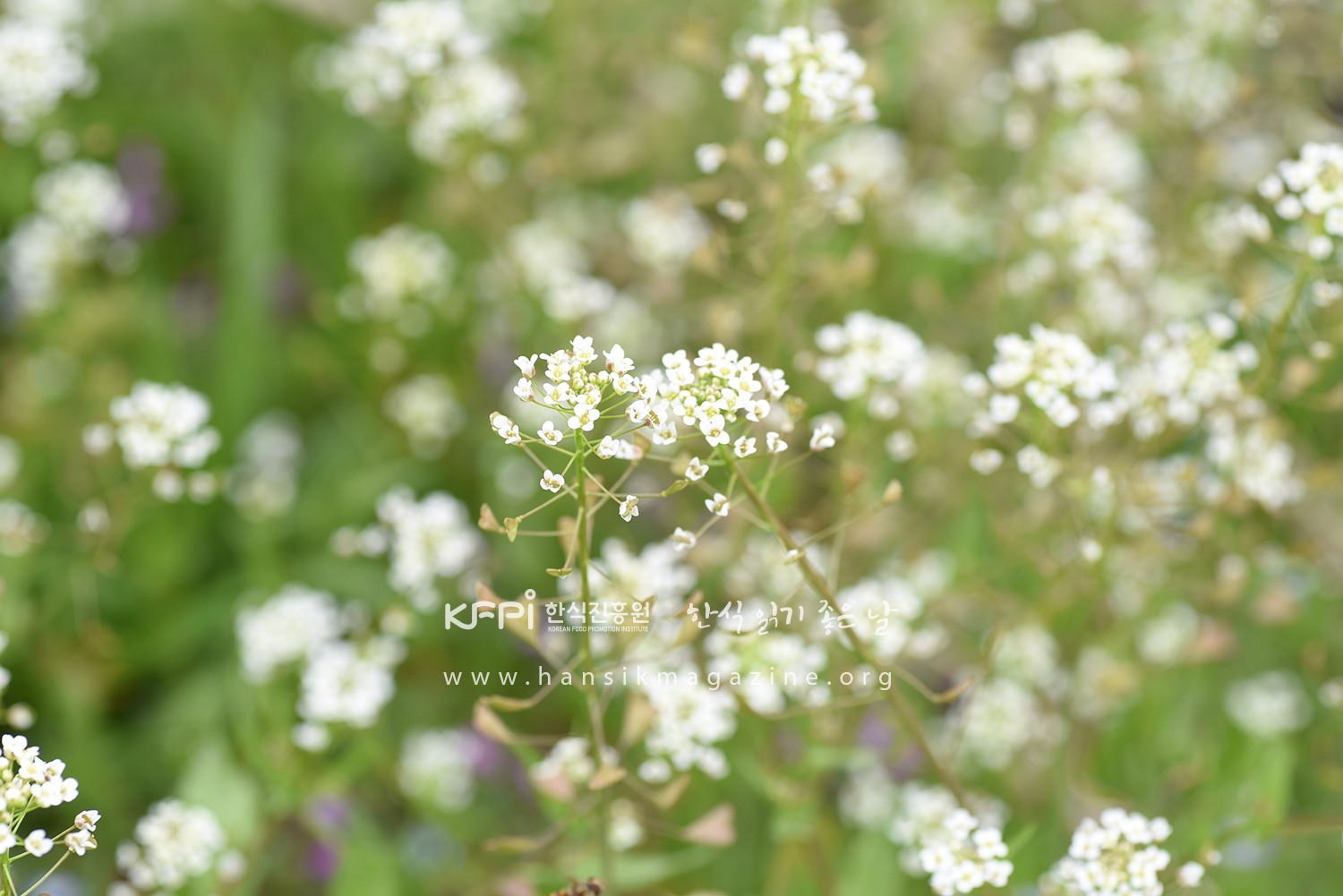
I returned home at the end of fall 10 years ago. In the rural life, we can spend winter by saving ‘goods’ during spring, summer, and fall diligently. Picking greens in spring, coolness without tropical nights in summer, rich foods and colorful nature in fall, which are 'goods' that have been saved from the rich nature, We can endure a long winter by taking out and having these ‘goods’. As soon as I came back, I would have encountered winter with a minus loan. However, the moment I deeply breathed the fragrance of naengi(shepherd's purse), I felt like I paid off all my debt at once. Even though the classification of seasonal food disappears and the refrigerator is full of food, there is something left ungratified in our mind. As a convenience, we can eat all kinds of namulbap(wild greens rice) in 3 minutes in the microwave, but the fragrance can be enjoyed only by the one who picked greens.
The greens that emerge before the ground wakes up from the winter sleep completely are naengi. Naengi grows well in any sunny ground because it is a good-natured green, it grows all over the world. Although it varies slightly from region to region, it is collectible and eaten from March to Hansik(Arbor Day). At the beginning of April, the stem of its flower rises, and a wick is formed at the root so that the fragrance becomes weak and less tasty. Spreading many seeds from its flower that has bloomed in the spring, these sprout in the fall and endure the winter, then come to us in spring with a mature fragrance.
Every part of naengi is edible without throwing any part away. Greens seasoned with soybean paste, red chili paste, and sweet and sour red chili paste are also good. It is excellent if we put and boil clams or short-necked clams into the water from washing rice. When there are no other particular ingredients, it is also great to put naengi in soybean paste soup. In China's original book 'Botanical list for great doctor', it is written that "making kimchi or porridge with leaves has a good taste." In 'Jeungbosallimgyeongje' which was written in the reign of King Yeongjo, Joseon Dynasty, it is said to be beneficial to the internal organs as its nature is warm, and boiled porridge with naengi is good to the liver and brightens eyes, and it is the best when you feel hungry. If you want to make the children who are not familiar with greens tried, it is not bad starting to serve them with ramen with naengi and naengitwigim(deep-fried shepherd's purse).
Naengi has the most protein among spring greens and is also rich in calcium and iron. It has a lot of vitamin A and dietary fiber, which is good for fatigue recovery and replenishment of energy, and helps to overcome spring fever in the spring afternoon. Minerals contained in naengi are not destroyed by boiling. It is good to eat when the yellow dust and fine dust are severe in the spring because it is said that the roots of naengi are good for eye health.1) In addition, it not only helps digestion and discharges waste products from the body, but also improves liver function.
Dallae looking soft and tender but with the acrid taste
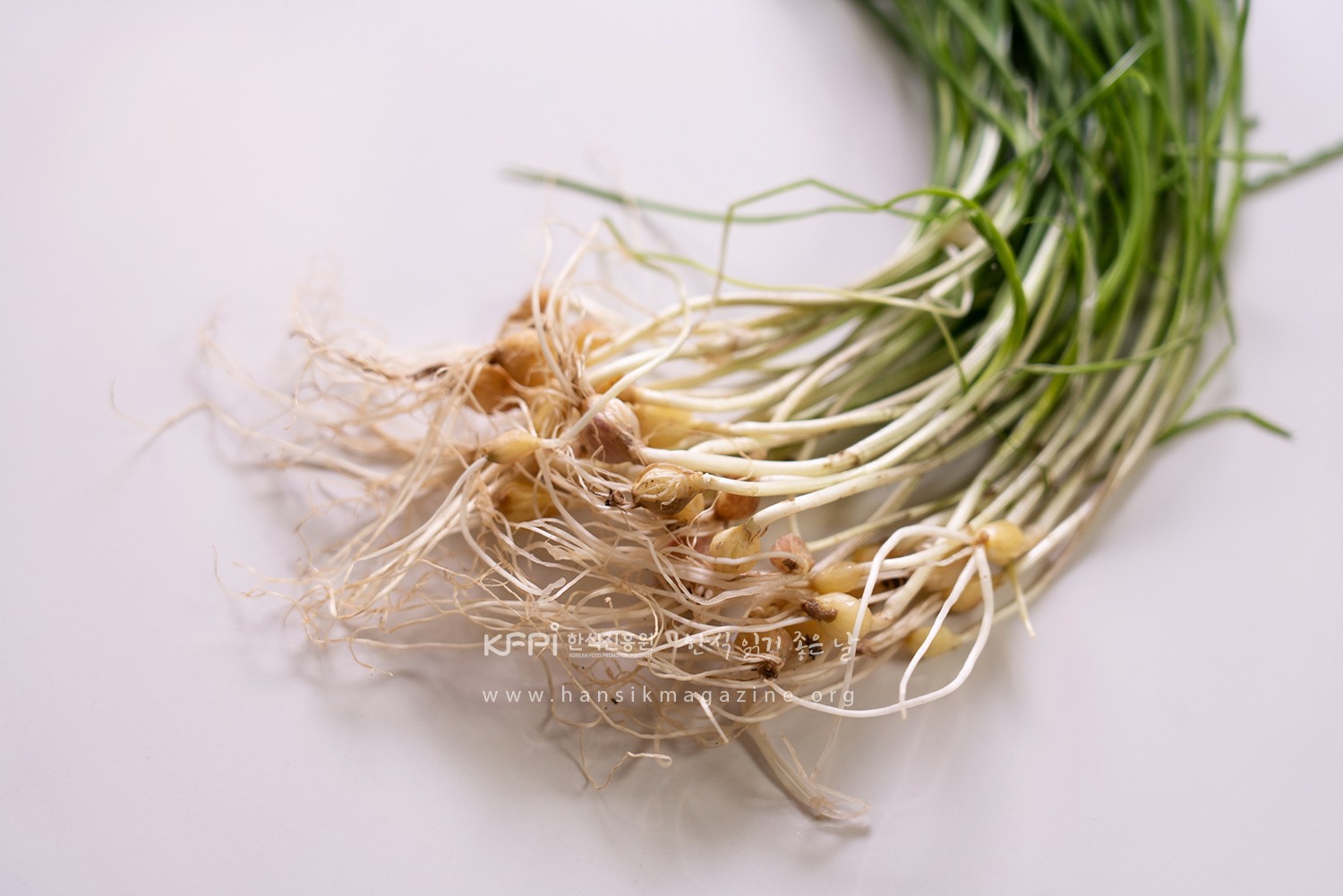
Around the time when the naengi blooms, you can see something pops up which looks like the chive, but it seems tenderer than the chive. It is the dallae(wild chive). As dallae come up in a hurry before weeds dominate the ground, it is relatively noticeable even if it looks young. It is a perennial green, so it is necessary to be careful when digging up its white stems and roots in the ground because it breeds not only seeds but also roots. Gathered dallae should be picked up carefully after opening the surrounding soil with a shovel, and then gently crushing the agglomerated soil to pull out the dallae. And, if the soil is tramped to the original position again, it will still be there the next year.
The ones bought in the supermarkets are grown on farms, so they are less fragrant, but when you wash the wild ones, the spiciness will rise up to your nose. Someone claim that the garlic taken by Woongnyeo in Samgukyusa was actually dallae.2)
In the spring of 2020, COVID-19 is threatening the world without weapons. Korean people, who disclose their true value in the midst of crisis, encourage each other with humor and wit. A Twitterrian said, “Self-isolation act is our merit in the national mythology. Let's endure a little bit more!”. Starting with it, many people are passing through the crisis with smiles.
All of a sudden, I was curious about why Woongnyeo, a pioneer of self-isolation act', took ssuk(mugwort) and garlic(or wild chive)? And why was it 100 days? As I am not a historian, I conceded the questions to the scholars and made a guess based on my living. In the countryside, winter is very difficult. It is said that winter seems half a year. The bitter cold continues about 100 days. The winter starting from late November approximately ends early in mid-March. The eateries that signal the end of winter and the beginning of spring are naengi, dallae, and ssuk. As naengi is easy to eat as it has a sweet taste, whereas dallae mainly has an acrid taste and ssuk a slightly bitter one.
I imagined that Dangun myth might be rhetoric that, to be a human, he should have experienced the spiciness and bitterness of life in advance by taking dallae and ssuk, the symbol of the first vitality after winter, which overcame the bitterness of winter.
Dallae has been known as a tonic from old times. It is said that it is good for anorexia and agonism with its rich vitamin C and calcium, and its vitamin A strengthens the immune system. Trimming this is tricky, but cooking is relatively simple. Dallaejang(wild chive sauce) itself - chopping the trimmed dallae mixing with sugar, garlic, and sesame in soy sauce adding a small amount of sesame oil - can be an excellent side dish. It is also good to make fresh kimchi and then take it with tofu or muk(jelly) or boiled pork slices and if you have enough amount, it is also OK to make kimchi with it. Someone griddles pancakes to eat with it, however, it is recommended to eat it raw as it has rich vitamin C.
Ssuk that is both an eatery and a valuable medicine
Poet, Yoo So-rim, expressed ssuk(mugwort) in this way:
If the roots of dallae grow into a loosely linked communal destiny,
ssuk is a very sticky and strongly connected fate community.
When the blue one comes into my eyes unexpectedly, I look at it diligently, but, Oh my god, it's boring ssuk. (This ssuk, the ssuk with its gnarly roots that endlessly invaded all over our fields, but what should I do with ssuk as it was a true pioneer. I had only to allow such fearless adventurers to reside in my flower garden for the time being.3)
Nowadays, hospitals are easily accessible when you get sick, however, in the past ssuk was very thankful. It was both a food and a precious medicine. Compare with other green salads it has a stronger scent so that it is cooked as a soup or griddled pancake or a fried dish etc. rather than raw food, of which the most familiar food is the ssukguk(mugwort soup). Dodarissukguk(flounder mugwort soup) containing flounder which is admired as the best fish in spring, enough to be called 'flounder in spring, trout in fall' is served as the best nourishment. As the flounder of high protein has contained fat for spawning, it has the best taste. Moreover, if it has the flavor and taste of ssuk, it is said you haven't eaten once albeit there is one who hasn't eaten at all.
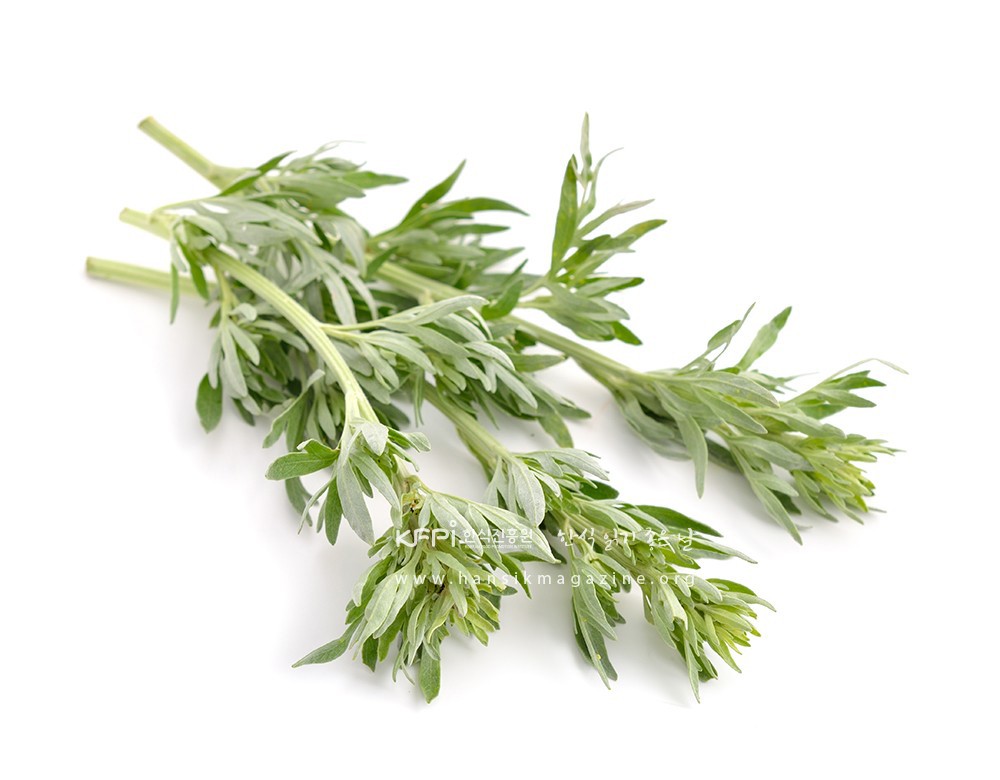
Ssuk is also widely used for rice cake. It is not difficult to make ssukbeomuri, ssukgaetteok(a sort of mugwort rice cake), so it is cooked easily by any house. Ssuktteok(mugwort rice cake), ssukjeolpyeon(patterned rice cake fg mugwort) and ssukgaraetteok(rice cake stick of mugwort) are also common eateries. Small ssuk picked up in early spring is mainly used for soup, and ssuk for rice cakes is grown-up ssuk. It is said that ssuk used for medicine is collected and dried in Danoh in May, which has the best medical effect. When it is used for medicine, it is boiled in hot water or used as raw juice or simmered in liquor. However, if you have poor eyesight, it is better not to use it, and if a man takes it for a long time, it is said that it eliminates vigor. So, it may be better to yield to a woman.
It is widely known in daily life the ways to bathe in the boiled water with ssuk or to fumigate with dried ssuk or to apply moxa to help the blood circulation and increase body temperature. Overgrown ssuk was also used to smoke out mosquitoes after dried during summer days. There are a lot of usages as ssuk grows everywhere in spring and if you go there and pick it up and dry it in the shade. Ssuk in fall can be collected if you miss the chance to collect in spring.
Ssuk is warm in nature and is good for the intestines and promotes the secretion of digestive juices. It is said that 80g of ssuk satisfies the necessary demand of vitamin A per day. Its rich vitamin C and chlorophyll are good for cold prevention and also prevent various respiratory and allergic diseases. In addition, it is effective in dieting as it helps fat metabolism.4)
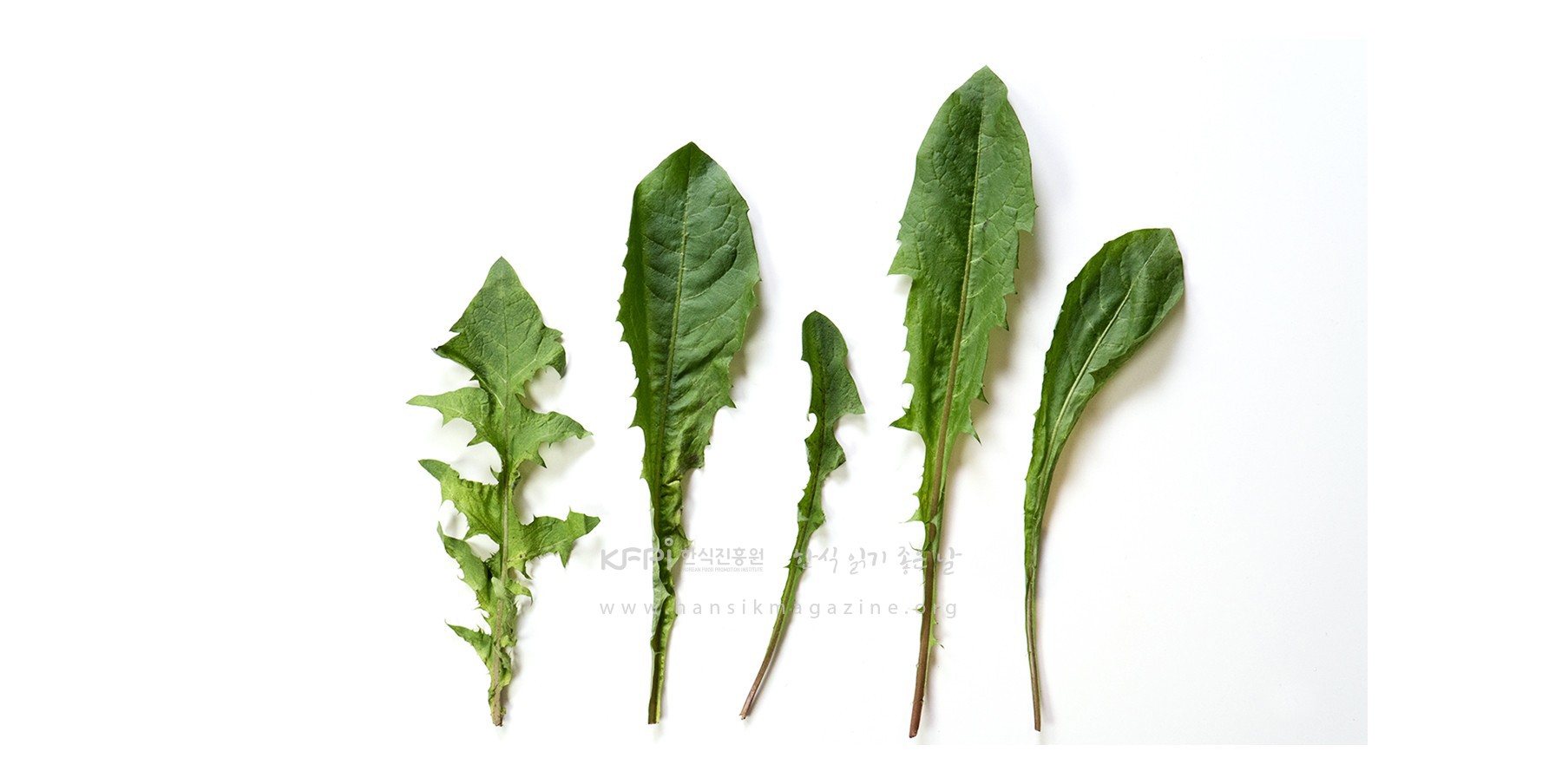
Mindeulle like a bluebird being always with us
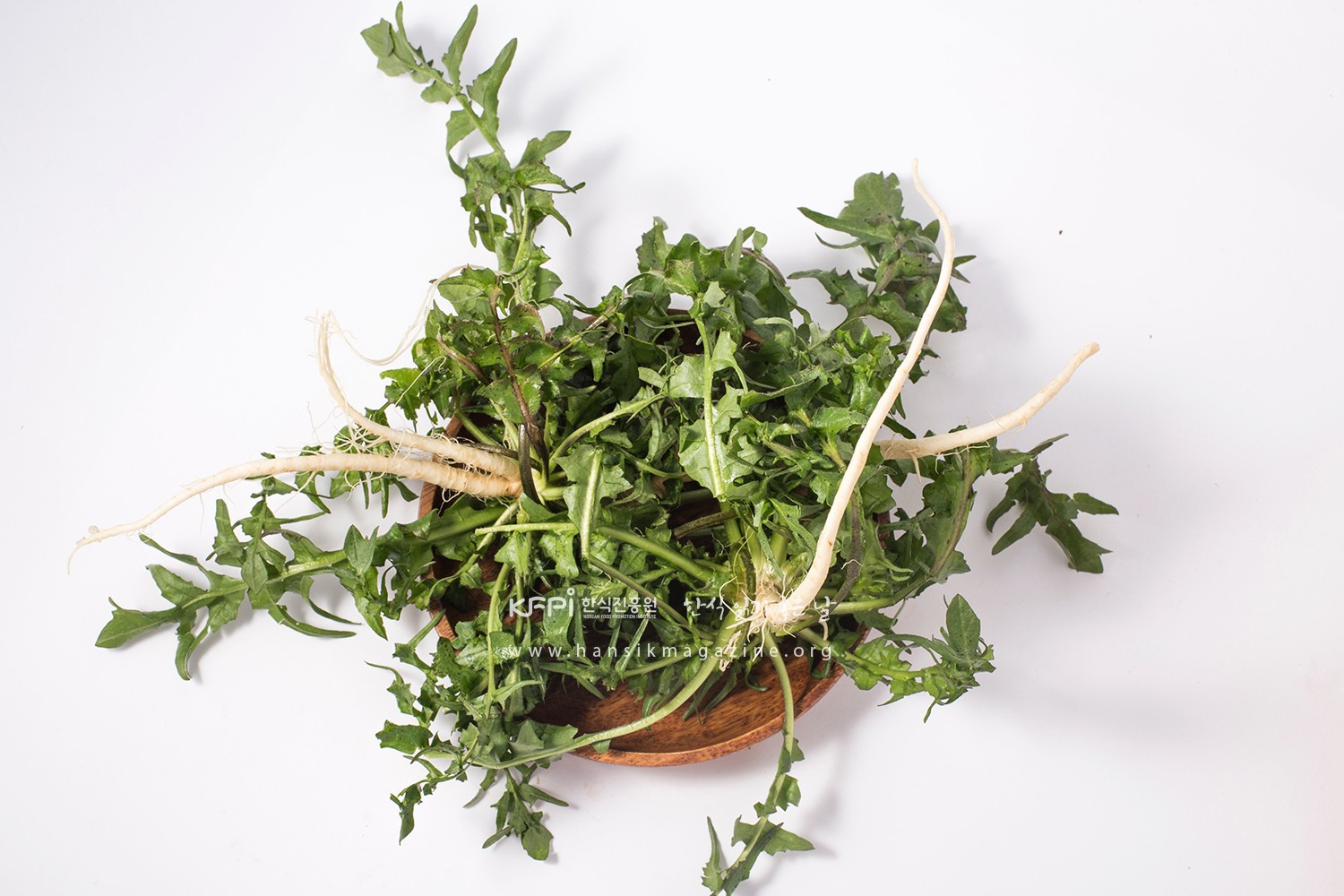
The last spring green to be introduced is mindeulle(dandelion). It is a figure of the metaphor of a people who are resurrected even if they are stepped on because of their strong vitality. For this reason, naengi, dallae and ssuk introduced above are familiar with us, but mindeulle is more likely to be treated as weeds.
Mindeulle has a variety of effects, including the effect of relieving inflammation and big sores, and it has antibacterial and detoxifying effects, by which defeating harmful bacteria that have infiltrated the body. It is also effective for gastrointestinal protection, indigestion, chronic gastritis, acute gastritis and esophageal cancer. Particularly, it is good for those who suffer chronically due to weak stomachs by drying and boiling the roots.5)
Wild green can be collected in the mountains, however, greens such as naengi, dallae, ssuk and mindeulle are common in the surroundings. Even elderly people with poor behavioral energy and children with small hands could easily harvest. It is a blue bird-like green that is always with us.
If you want to meet the greens full of vitality that has overcome winter, it is good for you to visit the 'Yangpyeong Yongmunsan Mountain's Wild Green Festival' held every three days from the end of April to the beginning of May. The festival, which began with the wild greens collected in Yongmunsan in 2008, has been expanded to a variety of food ingredients such as caster leaf, thistle, satsia shoot and mushrooms, which were harvested and cultivated in 12 towns in Yangpyeong. It is regarded as one of the representative festivals in Gyeonggi-do. Wild greens produced in Yangpyeong where forests occupy more than 70% of the land have the excellent taste and flavor to the extent that there is a record called 'The Yongmunsan wild greens are the best of the gifts for the King' in the Dongkukyejiji published in the middle of Joseon Dynasty. It is the extra service of the farmer's speech about the story of greens as the producer of Yangpyeong firstly appointed as the eco-friendly agricultural zone directly sell the goods.
In addition to selling greens, there is also an exhibition and an experiencing center of the wild greens and a cooking class for wild greens, and a program to demonstrate to present the wild greens as well as the event to share bibimbap in large-scale, which were cancelled due to the breakout of COVID-19, but as it used to be held every year, I recommend you go there once.
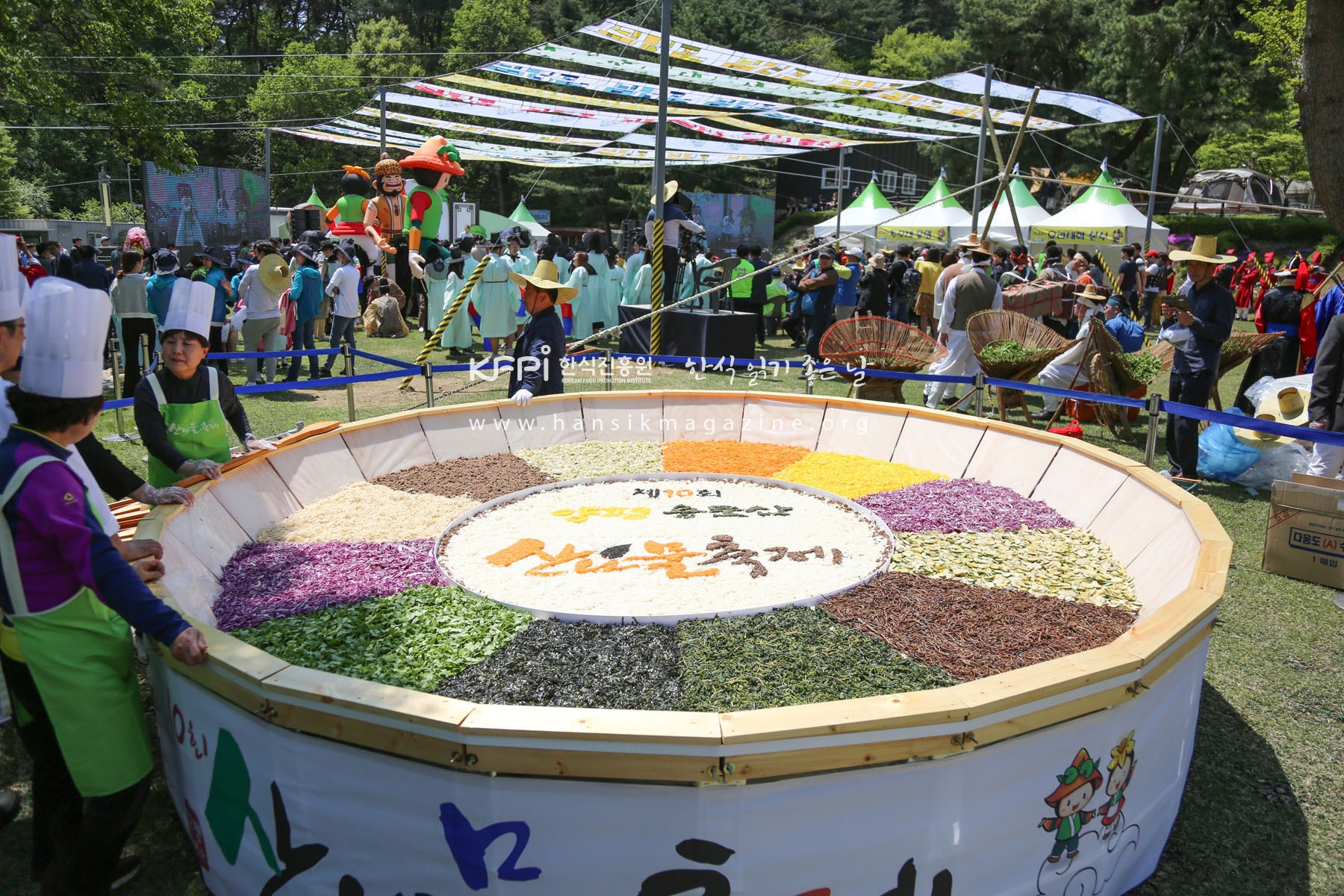
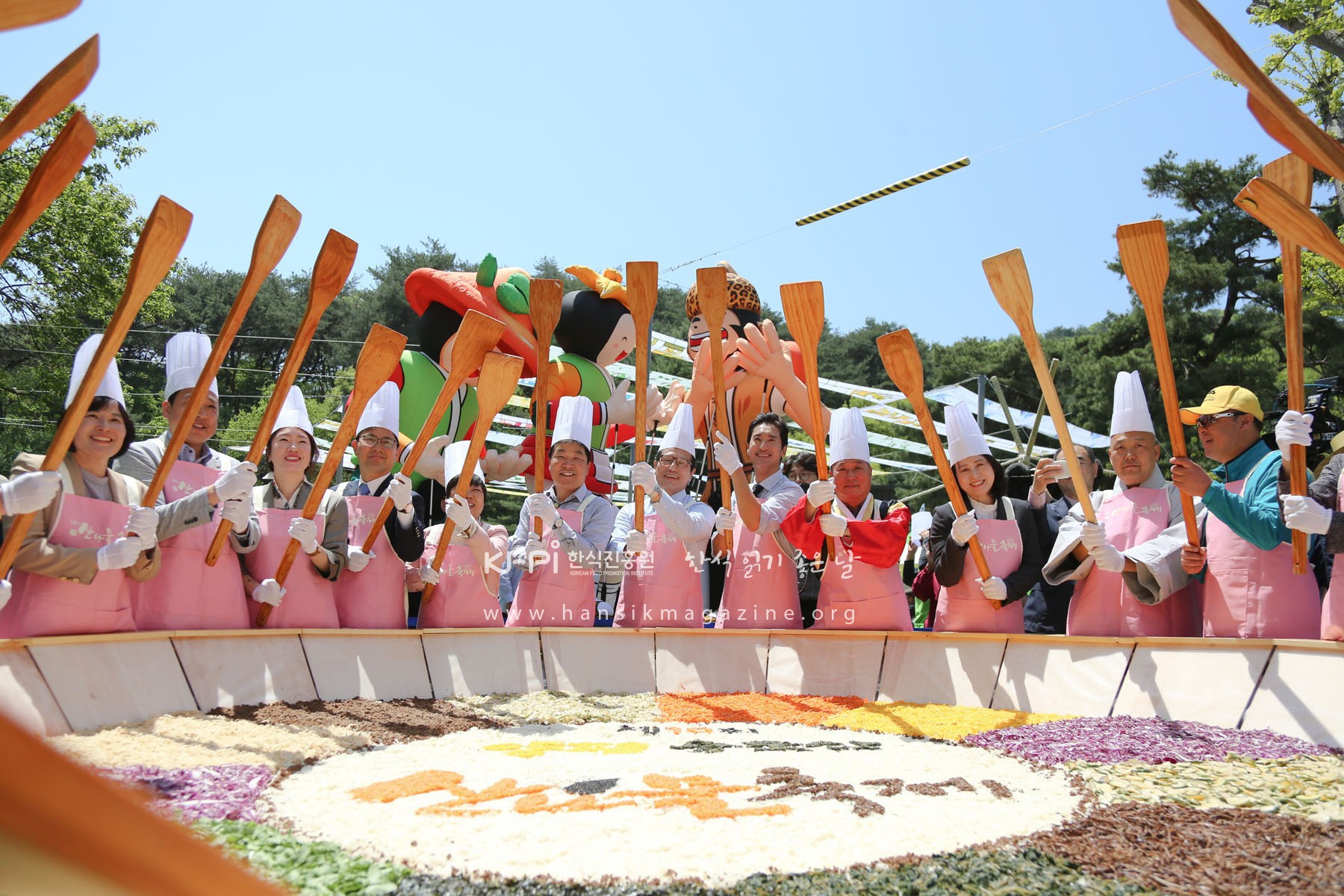
ⓒ Yangpyeong Yongmunsan Wild Greens Festival Committee
Closing my writing,
I would like to tell you the origin of the mindeulle's floral language.
Once upon a time, there was a deluge. When the whole world was submerged in water and mindeulle was also soaked to death in the water, the mindeulle was so afraid that his head turned white. As the water reached the bottom of the chin, the mindeulle prayed earnestly to God. 'Please save me, God'. At that time, the wind from somewhere blew the mindeulle seeds high into the sky and brought them to the sunny hills. The following year, mindeulle sprouted on the spot. Mindeulle look up at the sky with a bright face, thanking God for his grace.
Mindeulle's floral language is 'mind to thank, happiness'. It is a time when the fear and discomfort caused by COVID-19 are overflowing. Our heads are going to be white, too. However, let's live our lives like a mindeulle smiling at the sky while barely living in the gap between the sidewalk blocks between the obscure buildings. Let's thank,
as we already have spring in us!
Editor Lee Gyeonghee
Leader of the book reading club under the name “Day of book reading’ while currently operating Daily Peace Research Laboratory in a village. She sometimes writes for magazines and newspapers, etc. while also planning books. She hopes that writings illuminate life, and life proves the writings.
-
1) Kim, Jeongsuk, 'Natural taste saving my body, wild greens and field greens', Academy Book, 2017
2) “It is not garlic that Woongnyeo took in Dangun myth ate,” JoongAng Ilbo, 2017.10.3
3) Yoo Sorim, 'Pilgrims in the backyard', Green Criticism, January-February 2007, Consecutive No. of Volumes. 92
4) Ssuk, 'General Survey of Korean Food Products'
5) Kim, Jeongsuk, 'Natural taste saving my body, wild greens and field greens', Academy Book, P.52