


한식에 대한 다채로운 이야기를 전하는 온라인 매거진
Vol 43. Harmony The Flavor and Beauty of Hansik
On Bountiful Chuseok, Make Food Plentiful and Share Them Happily
Chuseok is the time to end the year of farming that started in the spring, and is the day of feasting to enjoy and share the joy and gratitude for a bountiful harvest. For the longest time, Korea has enjoyed the richness of Chuseok by making and eating ogok-baekgwa(五穀百果: 5 grains and 100 fruits: different types of grains and fruits) that are in season during this period.
The dishes made with the ingredients in season are called sesi(seasonal) food. The taste and form of the seasonal food vary, depending on the food ingredients in season, but it always contains the harmonious taste and beauty of making plenty of food to share with the neighbors and to wish for health and peace. The food made on Chuseok, a time when food ingredients are more abundant than ever, overflows with abundant kindness. “No more or no less, but just as much as Hangawi(Chuseok: Korean Thanksgiving).”
Our seasonal holidays are agricultural rites, meaning they are deeply connected with farming. Among them, Chuseok is the time when agricultural products, which were well-ripened through the spring and the summer, are harvested.
Due to the nature of the seasonal dishes made with fertile and flavored ingredients of each season, crops become the main ingredients of Chuseok holiday dishes. What sets Chuseok dishes apart from other holiday season dishes is that the former is made with newly harvested grains and fruits. Chuseok songpyeon made with the newly harvested rice is called “oryeo songpyeon,” and is distinguished from “nobi songpyeon,” which is made by unfolding the stacks of rice straws that are stored upright on Junghwajeol(when farming starts at around Feb. 1 on the lunar calendar). “Oryeo” is “olbyeo,” meaning early-ripening rice. The rice that is cooked with newly harvested rice is glossy, and is exceptionally delicious.
These foods were first served in the morning of Chuseok. They were an offering of gratitude to ancestors who helped the grains to grow abundantly. The Chuseok service table is not so different from the New Year’s table, but it is special because it is made with fresh grains and fresh fruits.
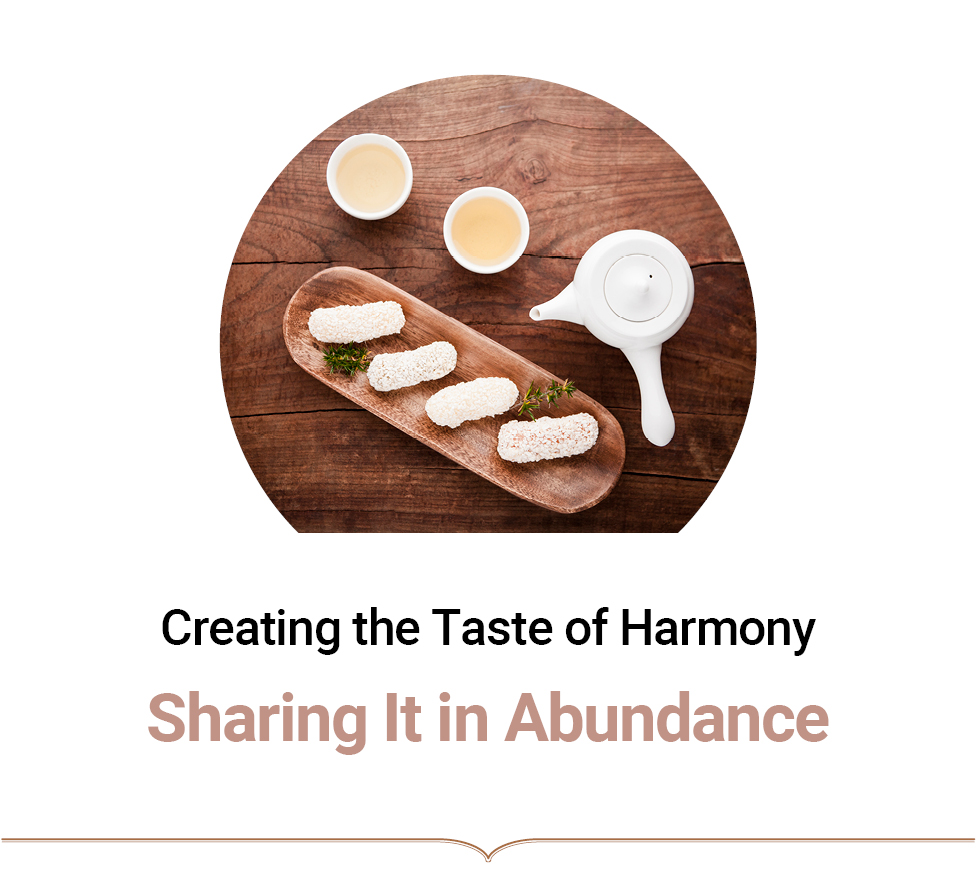
On Chuseok, all family members and relatives gather. This beautiful scene of sitting together, making holiday food, and catching up on each other’s lives is a quintessential look of the traditional Korean Chuseok.
As it is a time for abundant food, the Chuseok holiday food is also very generous. It is natural for the food to be plentiful because many people gather to eat. However, the virtue of this generous Chuseok food also emphasizes “sharing.” Sharing holiday food with neighbors and serving guests is one of Korea's unique traditional customs.
At weddings, 60th birthdays, and feasts and holidays, alcohol is an essential part of hospitality. Then, on Chuseok, guests are treated with sindoju(rice wine made with newly harvested rice). Naturally, during Chuseok, when the joy of harvest and the expectation for a bountiful harvest are high, people are more generous with wine.
The generosity of Chuseok can be seen in the following example. During Chuseok, the daughters-in-law were given time off to visit their parents’ home, and they were usually given rice cakes, a bottle of wine, and a chicken or eggs to bring home.
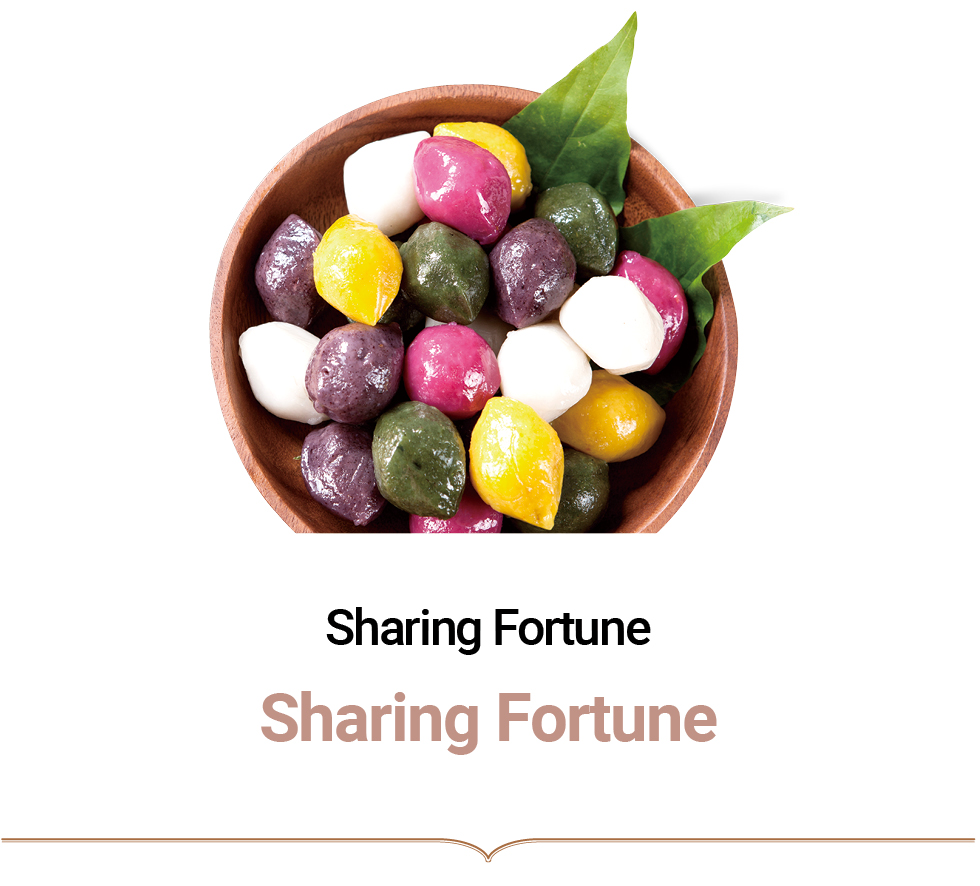
The basic songpyeon is made by grinding white rice and kneading it with hot water, but it is also completed in different colors by adding other food ingredients. <Joseon Recipes> states that “ssuk(mugwort) songpyeon” is made by adding mugwort to the songpyeon dough, while “mosooip(ramie leaf) songpyeon” is made by adding ramie leaves to the dough.
In <Dasan Simunjip(Dasan’s Poetry Collection)> by Dasan Jeong Yakyong, there is poetry that describes a feast consisting of various new dishes bestowed by the king. Here, “daechoo(jujube) songpyeon,” which is made with honey given by the king, is added to the stuffing.
Similarly, Chuseok holiday food symbolizes splendor, and it is natural for Chuseok holiday dishes to be made with colorful food ingredients.
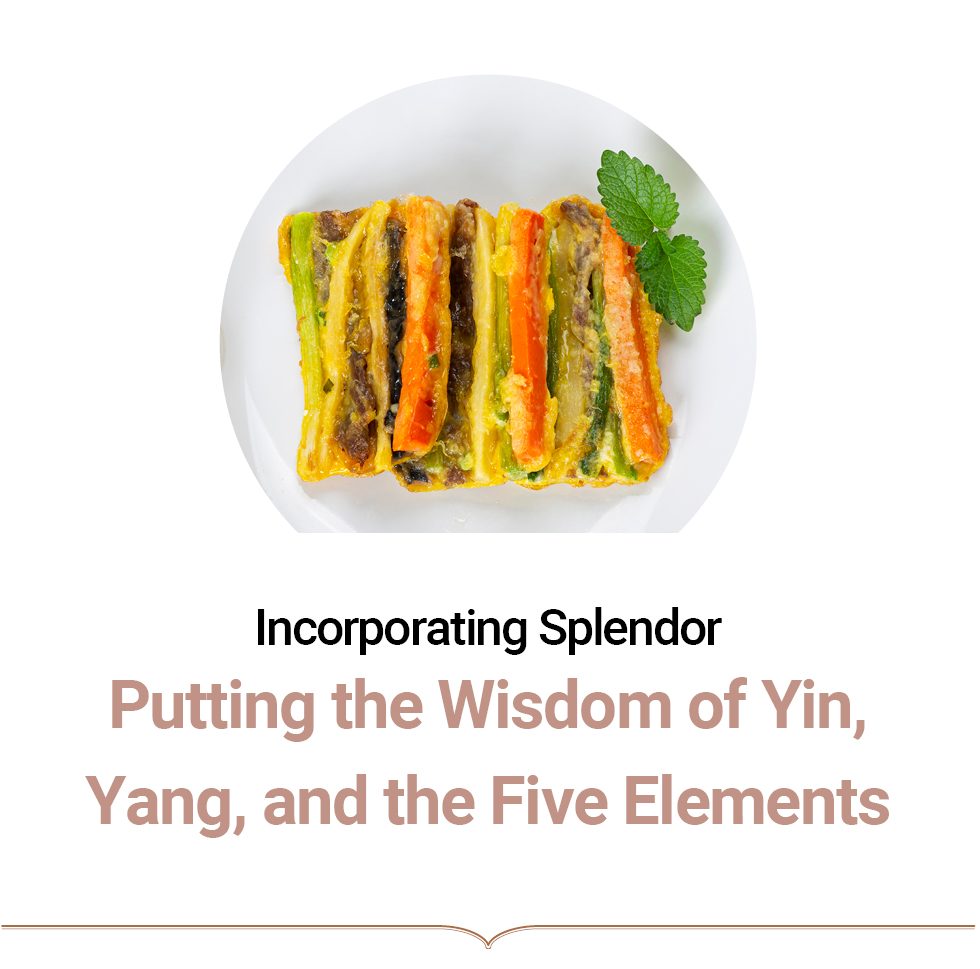
Such beauty was expressed in “ohbangsaek(five cardinal colors),” which contains the wisdom of yin, yang, and the five elements that block bad energy and boost longevity. One of the Chuseok dishes, “hwayangjeok(beef and vegetable skewers)” is made by lightly cooking bellflower root, beef, carrot, mushroom, and green onion, then skewering and pan-frying them. It is made with an emphasis on the harmony of color and shape rather than its nutritional aspects.