


한식에 대한 다채로운 이야기를 전하는 온라인 매거진
Vol 43. Harmony The Flavor and Beauty of Hansik
Bibimbap(Mixed Rice Dish), Our Dish Created with the Aesthetics of Harmony
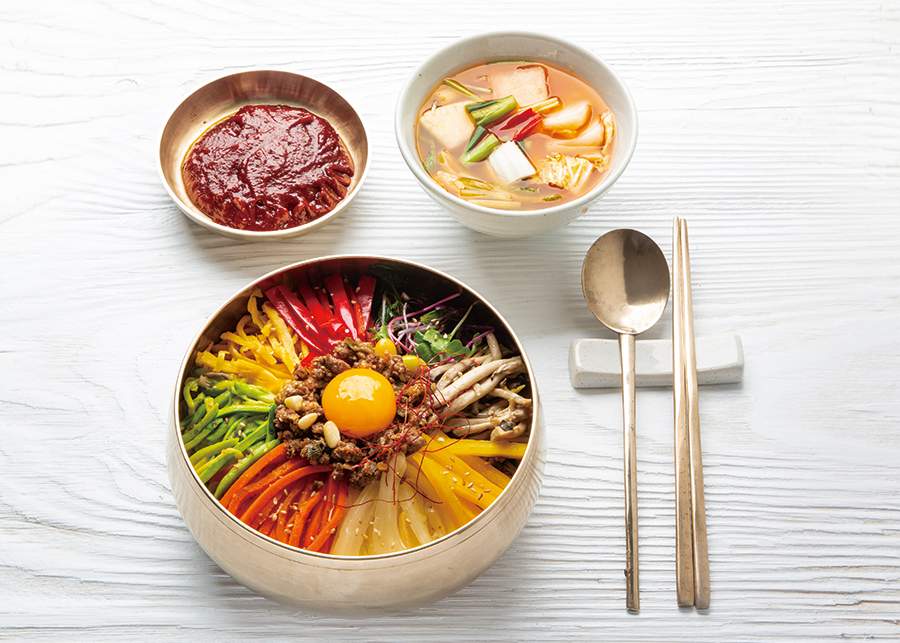
The Chuseok holiday food is great by itself, but it is also a great ingredient in itself. You can rediscover the taste by adding other ingredients, and applying new recipes. How about rediscovering the Chuseok holiday dish with the taste and beauty of harmony as bibimbap that boasts of consistency?
Materials and source. <Bibimbap, a Healthy Korean Dish Containing Nature> (Jeon Jiyoung, Leescom)
Bibimbap, an Epitome in a Bowl When it comes to a Korean dish in which you can experience the flavor and beauty of harmony, bibimbap is by far the first to come to mind. Bibimbap, which produces a harmonious taste with different ingredients, is already being recognized for its excellence by people around the world.
Healthy Taste
Bibimbap is a dish that has a good balance of the five macronutrients. Since it has different nutrients, such as carbohydrates, proteins, and fats, that our body needs, it provides most of the nutrients with one meal. Bibimbap uses seasonal ingredients that are full of necessary nutrients, and Korean traditional fermented foods, such as gochujang(red chili paste), doenjang(soy bean paste), and ganjang(soy sauce) that are nutritionally excellent, are used as seasoning for bibimbap.
Bibimbap with raw and seasoned vegetables has fewer calories than bread and noodles, and has a longer digestion and absorption time to keep you full for a long time. This is the reason bibimbap is attracting attention as a healthy diet dish in the time of excess nutrition. The capsaicin component of gochujang in bibimbap also helps with diet as it promotes the excretion of waste products by making the body sweat.
Brilliant Taste of Five Cardinal Colors
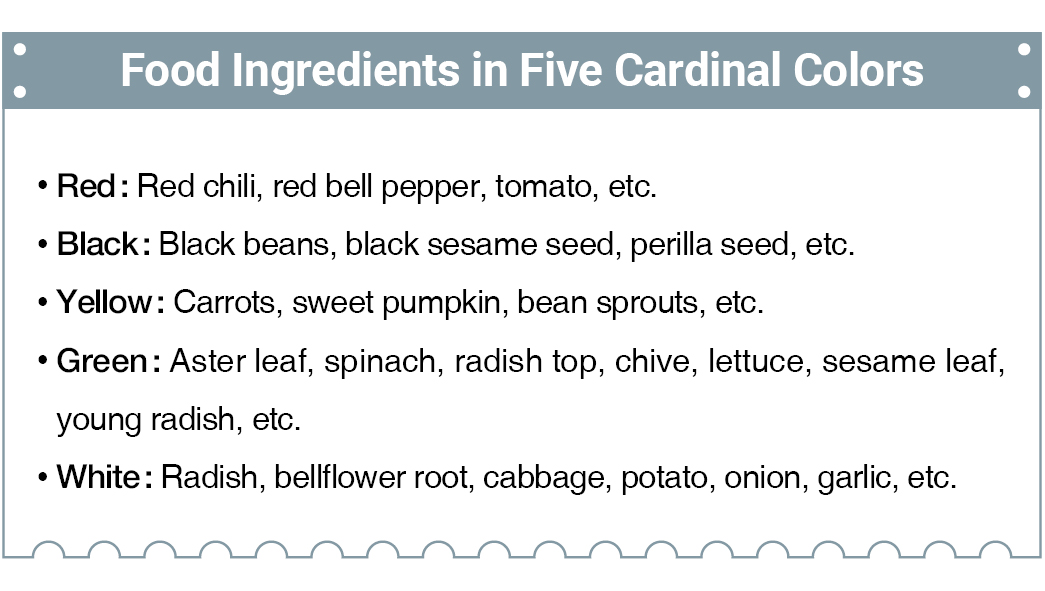
Bibimbap contains all five colors: white, green, red, yellow, and black. The five colors are based on the traditional Oriental yin-yang and the five elements theory about the energy of yin and yang on being created and becoming heaven and earth, and, by extension, creating the five elements of fire, water, earth, wood, and gold.
Bibimbap with the brilliant form of presentation containing colorful food is called hwaban(flower pot), etc. It means flowers are in bloom. Food expert Jeon Jiyoung described bibimbap as, “a dish that is like a beautiful watercolor painting showing nature.” The colorful essence of bibimbap changes depending on the ingredients used. This is the colorful beauty of bibimbap.
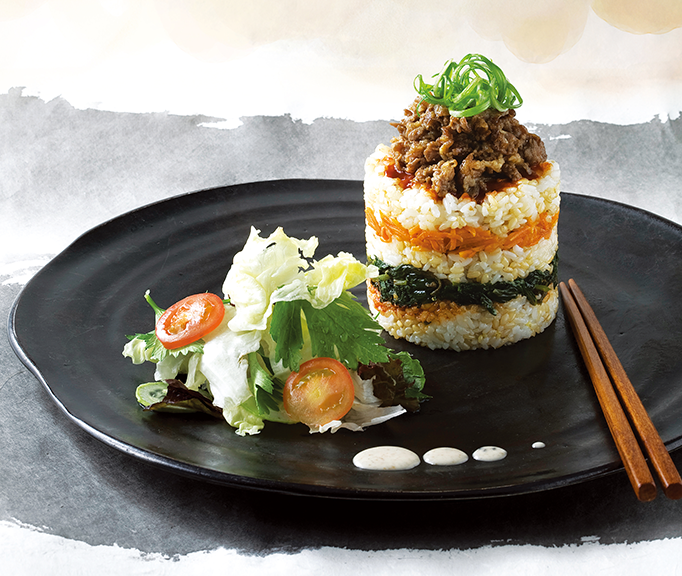
Bulgogi BibimbapEveryone loves the combination of sweet bulgogi and spicy gochujang. If you press it into a round frame and serve it, it's a good dish for guests. It is especially good when introducing our food to foreign guests. Press the brown rice in a circular frame, apply the seasoned red chili paste, and add seasoned sesame leaves, brown rice, stir-fried sliced carrots, and brown rice. Apply gochujang on top, and place bulgogi on it. Place the bulgogi bibimbap and salad greens on a plate, and make and apply perilla seed dressing.
The Taste of Harmony“Cook the rice well, marinate the meat and stir-fry it, and fry the jeon and put it in slices. Stir-fry and season various greens, and fry and crush good kelp before adding it. Add plenty of red chili powder, sesame salt and oil, mix it, and put it in a bowl. Fry an egg and cut it into the size of a domino and add as garnish. Finely mince the meat, marinate it, make it into the size of a marble, coat it with a bit of flour, and then add the egg, and fry it. Add the meatball as garnish. Serve bibimbap with soup.”
This is the recipe for “bibimbap” from 《Siuijeonseokkk》.
This one-bowl recipe, in which the rice is mixed with the dishes made from different recipes, and then mixed together, captures the characteristics of bibimbap, the harmony of different flavors.
 Harmonious Taste
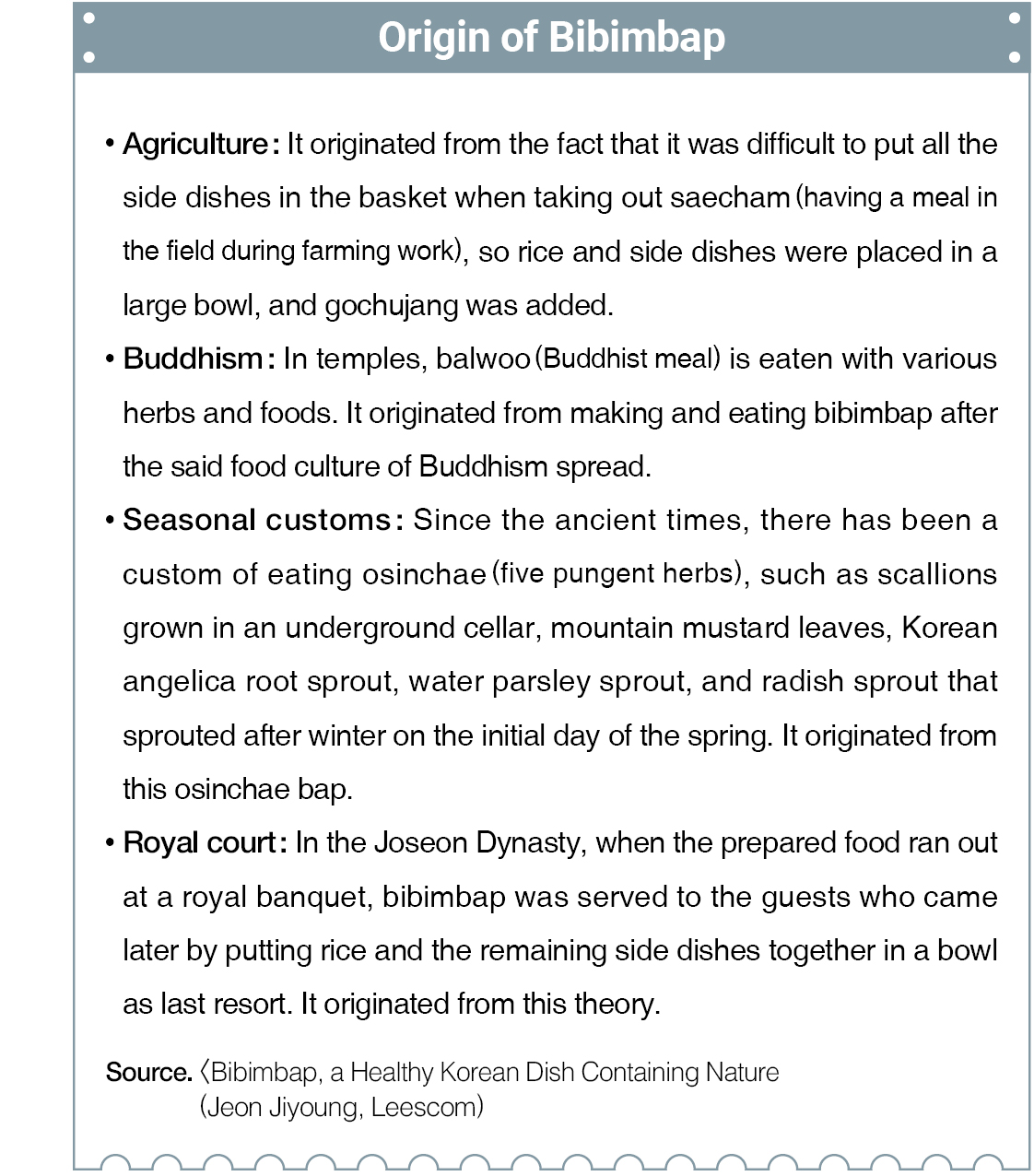
Bibimbap is a dish made with different ingredients, such as meat, fish, seaweed, eggs, and vegetables, but there are virtually no restrictions on the ingredients. Depending on the region, season, preference, and taste, various food ingredients can be used as ingredients for bibimbap. For example, you can make bibimbap with leftovers from Chuseok dishes. Actually, one of the many theories about the origin of bibimbap is the one where it originated from ancestral rites.
Another characteristic of bibimbap is that the ingredients made from different recipes harmonize in one bowl. Roasted, grated, and raw food ingredients are put and mixed together in one bowl.
The sauce that complements different food ingredients in harmony are also diverse, such as gochujang, doenjang, and ganjang. It creates new tastes, depending on the ingredients, and the seasoning put into each sauce. Bibimbap, in which various ingredients are put in and mixed together to create a harmonious taste, is excellent as a one-course meal or an à la carte dish in itself. It is a one-dish feast. A well-prepared table can be served with it and just add kimchi and soup.
Taste of Variation
Bibimbap, in which ingredients with different tastes and styles are mixed in one bowl to create a harmonious taste, can create different tastes and styles, according to region, season, preference, and taste. This means that you can enjoy a variety of bibimbap according to your taste and mood.
You can make “namul bibimbap” by adding various types of greens, such as dried radish tops, bellflower roots, or “flower bibimbap” by adding edible flowers, such as mini roses, mini carnations, tropical orchids, and small chrysanthemum. If you are on a diet, you can use diet foods, such as chicken breast, as ingredients.
White rice is the basic ingredient, but you can make bibimbap with multigrain rice, brown rice, or barley rice. You can also use the rice cooked with bean sprouts or radish.
Jeon Jiyoung, a food expert and the author of <Bibimbap, a Healthy Korean Dish Containing Nature>, said, “When you are busy, make it simple with the ingredients you already have. If you have more time, you can enjoy more special bibimbap. If you prefer a little change, you can make a variety of bibimbap depending on the palate of the eaters and the surrounding atmosphere.”
Taste of Rediscovery
Bibimbap is great on its own, but bibimbap itself is a great ingredient. You can create a different taste by adding other ingredients, and applying new recipes. Let's rediscover recipes that will enrich the taste of harmonious bibimbap.
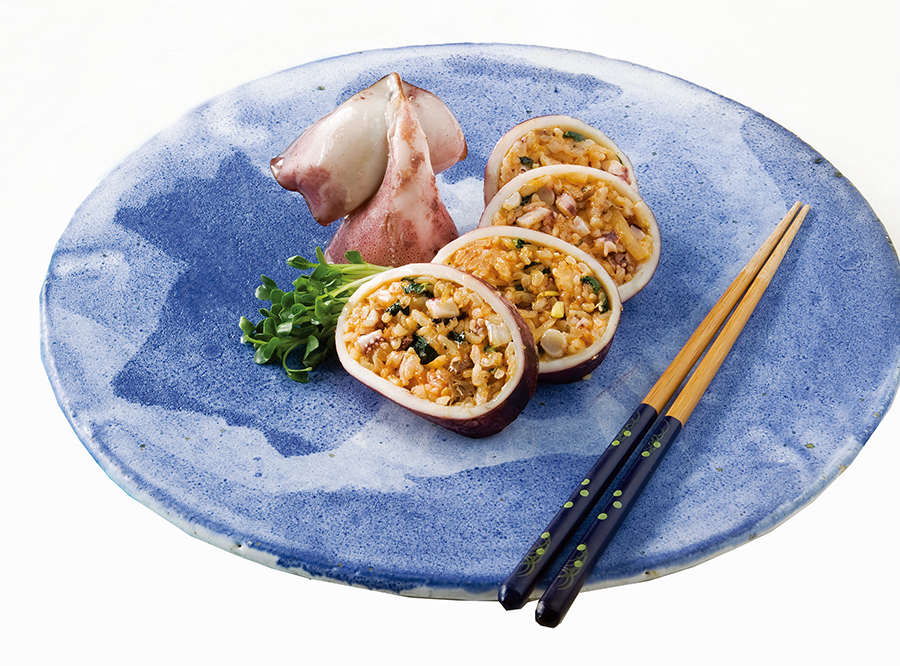
Squid Stuffed with Bibimbap
The body of round squid is stuffed with bibimbap. It is easy and simple, yet plenty of effort is put into it to make it presentable to guests. Make basic bibimbap by mixing ingredients, such as chopped vegetables and greens in warm rice, and mixing them with red chili paste and sesame oil. Add chopped squid legs as well.
Coat the body of the squid with a little flour, fill the bibimbap to 2/3, and then thread the mouth of the squid with a skewer, and steam for about 20 minutes in a steamer. Serve with oyster sauce.
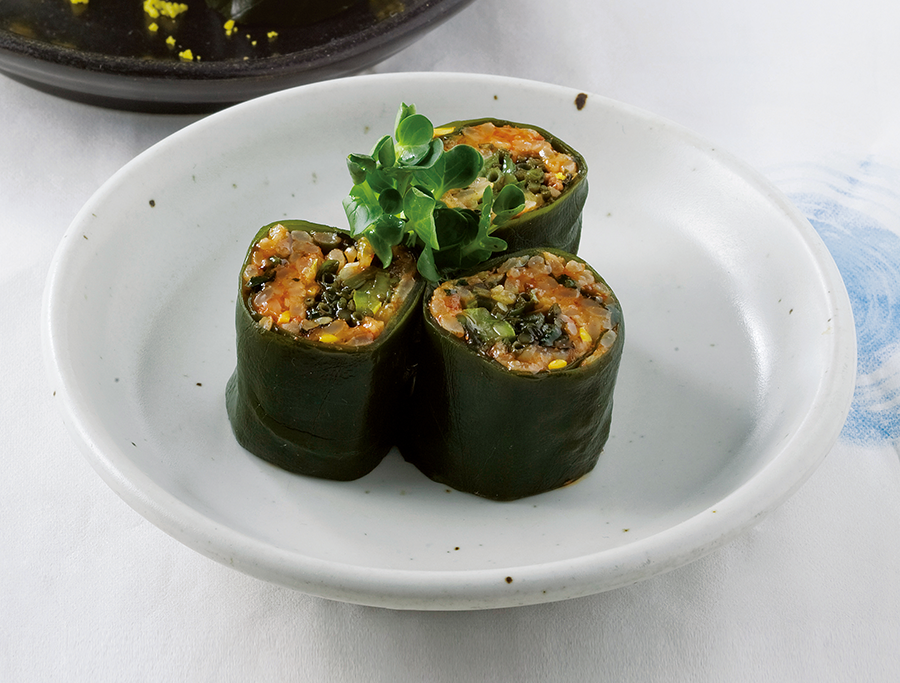
Seaweed Roll Bibimbap
It is made by wrapping bibimbap in seaweed and kelp to make it easy to eat in one bite. Seaweed is rich in minerals, such as iodine, iron, and potassium, which supplement nutritional imbalances. Boil seaweed, kelp, and tot (brown sea vegetable) in boiling water, blanch slightly, and rinse in cold water to drain. Spread it on the kimbap net, spread the bibimbap thinly, and add the sliced cucumber, tot, and flying fish roe, and roll it like kimbap. Cut into bite-sized pieces, put in a bowl, and top with radish sprouts and egg yolk powder. Serve with chogochujang (sweet and sour red chili paste). You can also use edible seaweeds, such as gulfweed, tot, seaweed fulvescens, and sea staghorn.