

한식에 대한 다채로운 이야기를 전하는 온라인 매거진
Vol 40. Nourishing Summer Food
the Delicious Encounter of Pork and Sea Eel
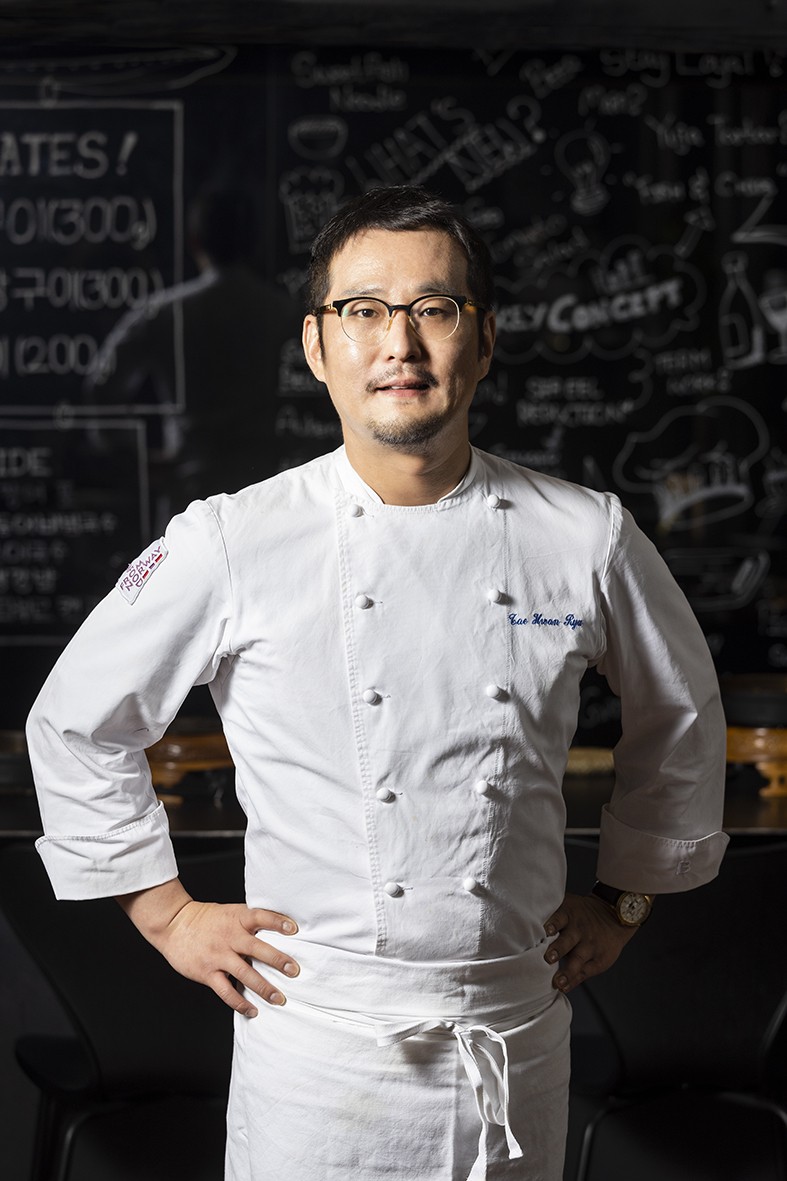
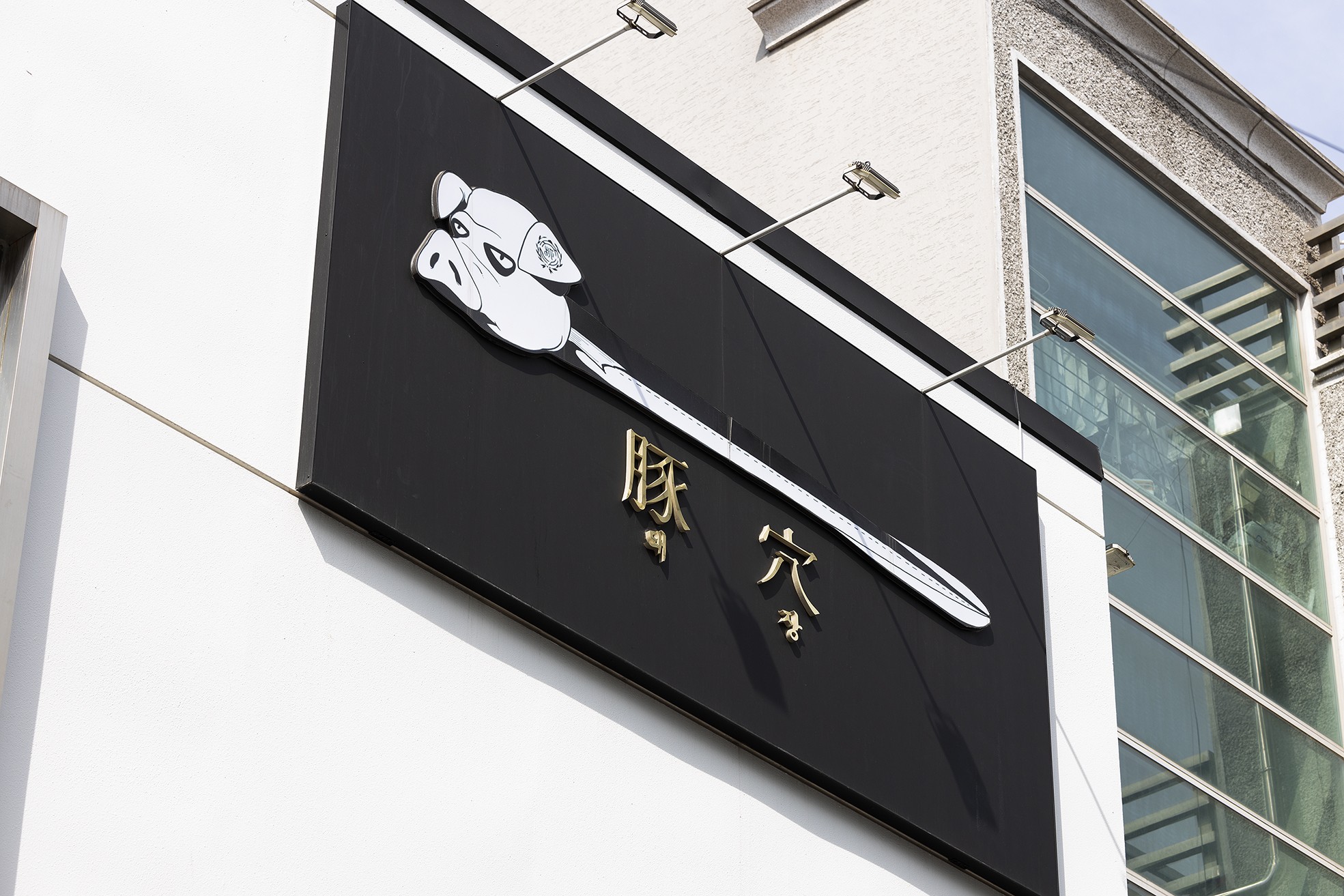
Ryu Taehwan, the head chef of fine dining, “Ryunique”, recently opened the casual restaurant, “Dwaejang”, which has a unique expression that resembles a pig’s head and an eel’s body. The flavor of this place has been perfected with recipes inspired by the chef’s dream, and it is already becoming the talk and taste of the town.
<A Good Day to Read About Korean Food> met with Chef Ryu Taehwan, who combined pork from Yesan, Chungnam with sea eel from Tongyeong, Geyongnam. Ryu, who pioneered hybrid cuisine, is famous for making modern Korean dishes by applying Japanese and French recipes to Korean food ingredients.
Article. Yoo Seonmi Photo. Kim J
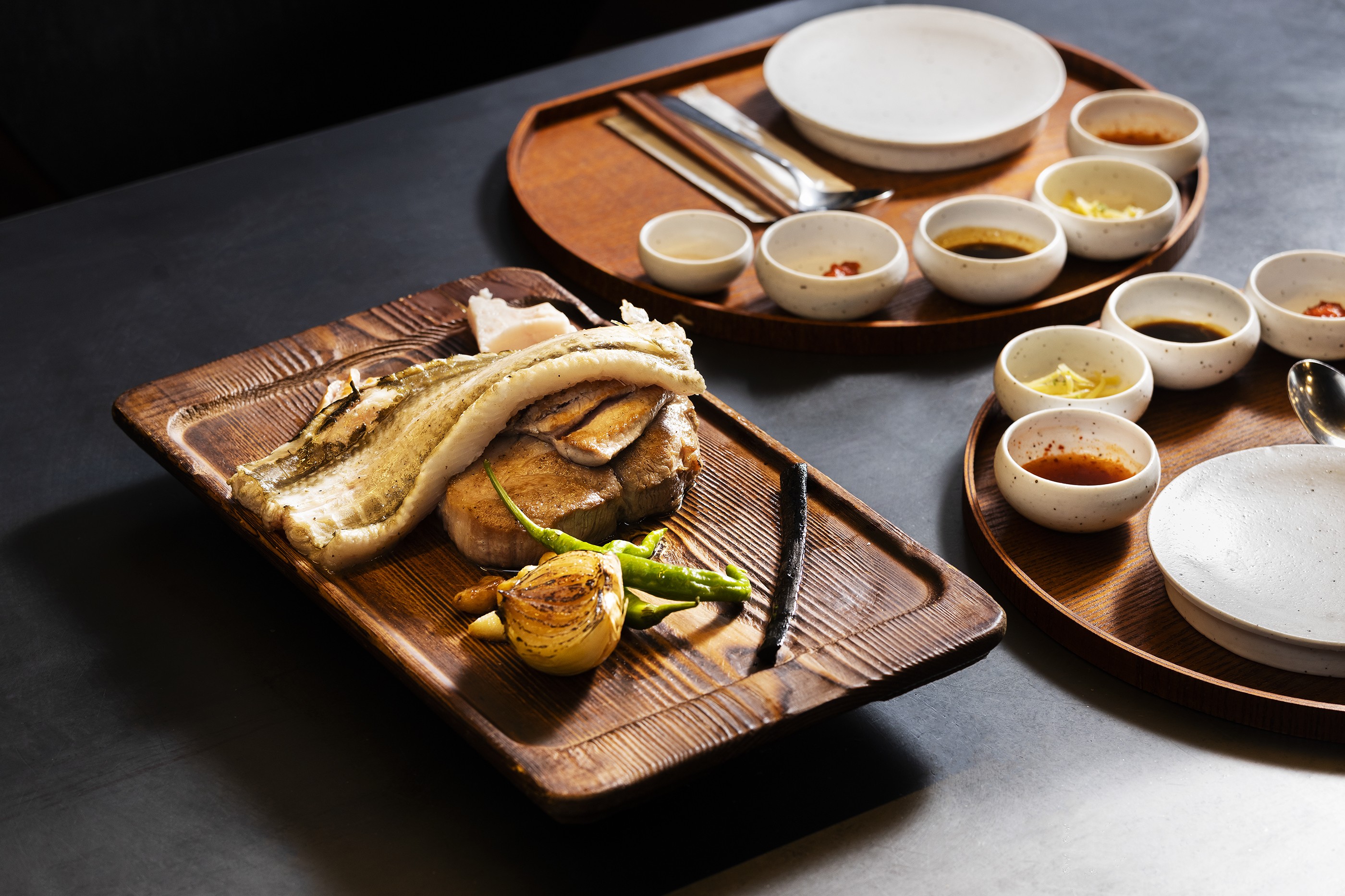
Grilled pork neck + sea eel
First, the pork neck is grilled to medium or medium well on a thick casting plate on the stove, and then the sea eel in pork fat is initially grilled on a straw fire. The sea eels are selected for its large size because of their high oil content, and they absorb the straw flavor well.
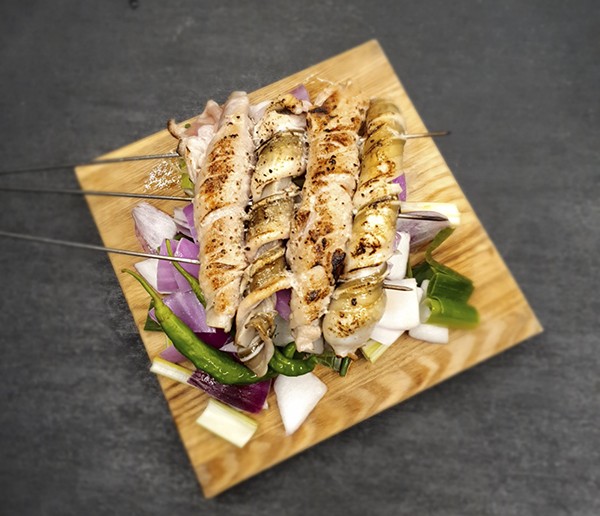
Grilled gochujang pork
This dish is a reinterpretation of “yahata maki”, a dish of the Yahata region of Kyoto. Burdock is skewered after being wrapped in pork and eel. Here, Dwaejang’s signature gochujang sauce is added.
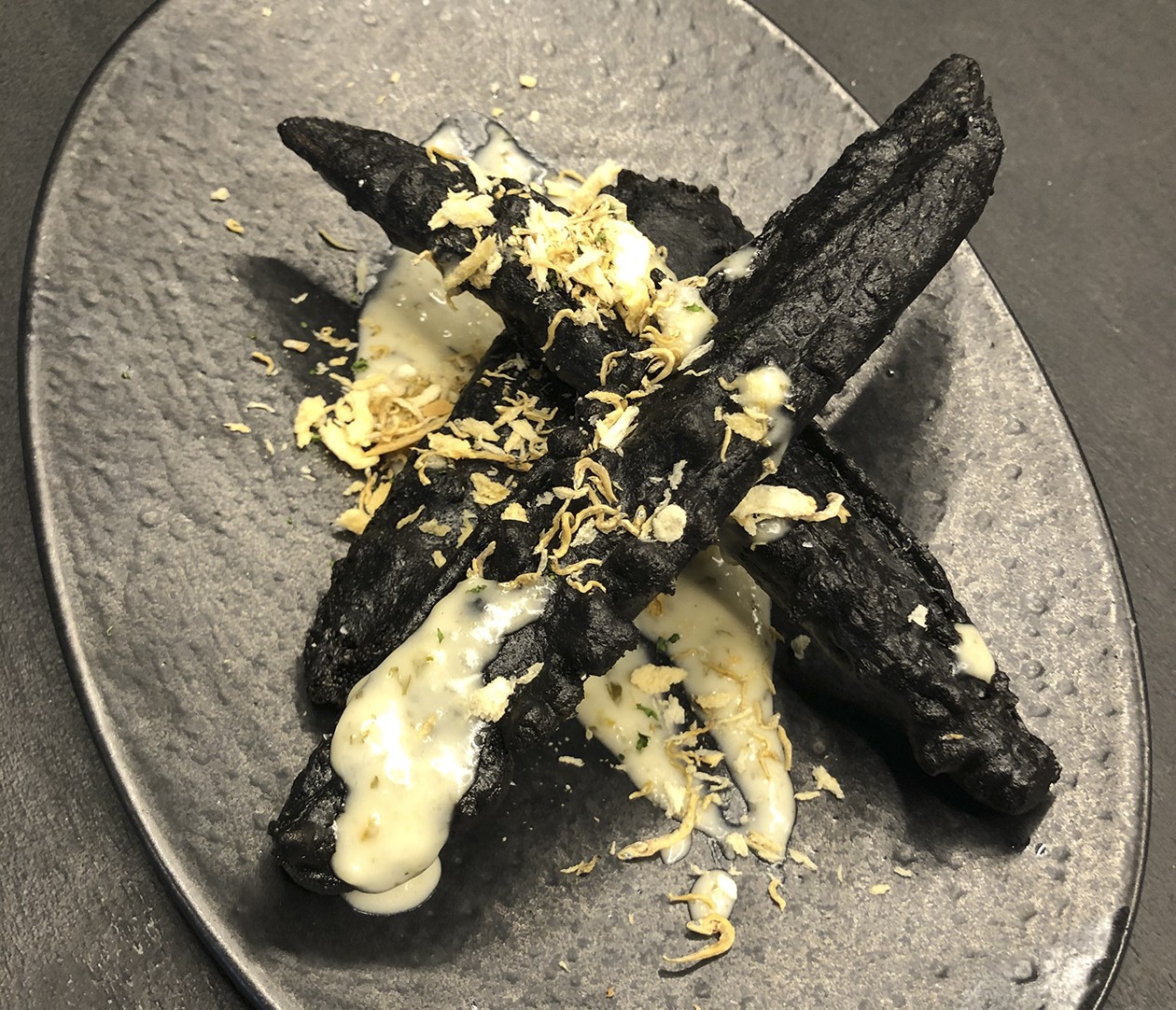
Fried sea ee
The sea eel in squid ink batter is fried and served with yuja (citron) tartar sauce.
Q. You've been running a fine dining restaurant, so Dwaejang came as a surprise.
Well, I decided to come up with dishes that would be available to the public. It was time to open a space and prepare dishes for the public based on the experience and know-how accumulated from managing a fine dining restaurant. I thought it was the right time, so I planned a casual dining project and one of them is “Dwaejang”.
Q. The combination of pork and eel is quite uncommon.
When I started this casual dining project, my initial plan was to present a dish using seafood since I like seafood. However, seafood alone was somewhat lacking. I thought about the food ingredients that are familiar and popular, got inspiration from a dream, and selected pork. The pairing is based on surf and turf. They have different properties and characteristics, so they don’t seem to go well together. However, they are in perfect harmony because of their differences. At Dwaejang, the pork neck is grilled and the eel is grilled in pork fat. You can experience flavors that are both familiar and different.
Q. I’m guessing it took a lot of effort to create a dish with a harmonious taste using these two ingredients with different characteristics.
I wanted to take a different approach from the existing grilled pork and eel restaurants, and
I hoped that it would be viewed as both sensational and valuable. So, I had a lot of things to consider in the whole process of exploring how to use the fire and grill plate, studying about aging and grilling methods, developing sauce, and others. I visited Andong, Tongyeong, Goheung, Seocheon, and Yesan many times and studied, but it wasn’t easy. Still, thanks to the process, I was able to come up with the accurate reference unique to Dwaejang, and unfold its values and story. It was also a worthwhile time to go on trips based on the geographical indication system.
About the Importance of Using Domestic Seasonal Food Ingredients
Q. You are famous for traveling around the country for food ingredients.
Exploring food ingredients is more than just a means of learning about them. It also includes an examination of the history and heritage of the area. Therefore, it’s a search for almost everything related to that area. Even boutique producers are included in the study. Actually, thanks to that, I was able to incorporate the influence of various cultural artists into Dwaejang.
Q. The public’s awareness for domestic food ingredients has recently increased.
It is important to use seasonal ingredients to reduce environmental pollution. In order to achieve this, it is essential to use domestic food ingredients. Even though it can be difficult to use domestic seasonal ingredients only due to various reasons, my rule is to use domestic seasonal ingredients. In fact, it is necessary to study domestic seasonal ingredients and how to use them. You’ll discover that studying the ingredients teaches you about the area. I believe that learning about an area is very important for anyone. In addition, this could be the direction where the area can develop.
Q. You've been insisting on using seasonal domestic ingredients only.
I made connections with so many producers while studying food ingredients in various regions across the country. I realized how much it costs producers to grow crops based on soil and climate. They are really putting their heart and soul into their crops. Unfortunately, there is no financial reward for their effort. So, I thought, if the demand in Korean restaurants is supported to some extent, it will be helpful to the producers. Actually, one aspect that I personally felt proud of when opening Dwaejang was that I could repay the producers by establishing a network, albeit a small one. I only use domestic food ingredients at Ryunique, but this does not help the producers in a significant way. However, popular consumption is achieved at Dwaejang, resulting in a larger volume.
Q. I think that in-depth research on domestic food ingredients is an essential part for the development of HANSIK(korean food).
Well, this may not be the right answer to your question. I think HANSIK (korean food)has already made a lot of progress, and its recognition has also increased a lot. What I mean is that “HANSIK (korean food)” should not be limited to the category of “HANSIK (korean food)”, but it should be classified more broadly. For instance, it is necessary to evaluate and respect the value of all restaurants in Korea, including Chinese, Japanese, and French, not just Korean restaurants. In Korea, there are a lot of really talented and skilled chefs working in restaurants. Furthermore, there are many who are called the gods of F&B. They contribute to the development of HANSIK (korean food) culture in ways beyond the development of Korean food. Moreover, they use the ingredients from the land and sea of Korea.
Q. I expect you to play a major role in the future for the development of HANSIK (korean food) and Korean food culture.
My plan is to open two more restaurants in the future, and Ryunique will also move to a new location. I am hoping to hear that all of them will be recognized as places that offer new values, and I have been making efforts to achieve this. I will continue to discover Korean food ingredients by traveling to various corners of our country, and strive to make great dishes with them. I hope that it will at least contribute to the development of Korean food culture. I will continue to carry out my duties as a chef as I have done in the past.