

한식에 대한 다채로운 이야기를 전하는 온라인 매거진
Vol 39. Jang
Korean Sauces Become Global Condiment
Jang with the Essence of Korea
The Korean Wave hit our sauces as well. Earlier this year, Shake Shack Burger, one of the top 3 American hamburger chains, temporarily presented a menu based on gochujang (red chili paste) in its 160 stores in the US. Likewise, a large British supermarket released and started distributing gochujang (red chili paste) as its PB product. According to the Ministry of Agriculture, Food, and Rural Affairs, the exports of Korean sauces in the first quarter of this year was worth about KRW 25 million, a 17.1% increase from the previous year.
Reference. 「The Intangible Cultural Heritage Value of Soybean Paste Culture in Northeast Asia and Korean Traditional Jang
(Sauce) Culture」, Yoon Deokin, Emeritus Professor, Catholic Kwandong University
「Cultural Tradition and Meaning of doenjang (soybean paste), the Oldest Korean Food」,
Bae Youngdong, Professor, Andong National University
<Humanities in Korean Food>, Kwon Daeyoung, Health Letter·<Traditional Fermented Food>,
Rural Development Administration
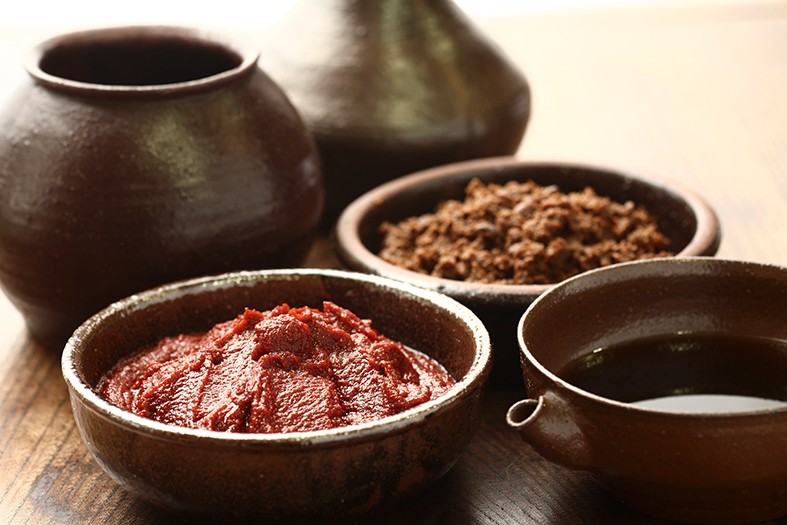
Due to the COVID-19 pandemic, the home-cooking culture began spreading around the world, leading to the people’s interest in exotic sauces. The increased interest in Korean sauces, such as ganjang (soy sauce), doenjang (soybean paste) and gochujang (red chili paste) , is in line with this trend. Korean sauces, which are made with Korea’s unique fermentation technology, boast of authentic fermented tastes that cannot be found anywhere else in the world. Kwon Daeyoung, the author of <Humanities in Korean Food>, assessed in his book, “Korea is a country that has developed a fermentation technology, using effective microorganisms to season food and extend its storage period.” He added, “A technology that ferments grains and vegetables is completely different from the dairy fermentation technology that is based on milk; thus, Korea has an authentic, global fermentation culture.”
Korean recipe Completion of Jang flavor
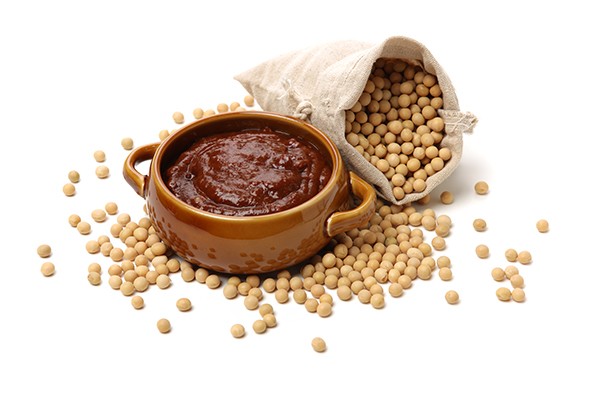
Korean sauces are made from soybean paste that is produced from beans. Good beans are selected and boiled, and then they are pounded to make meju (fermented soybean lump). The lumps are then put into brine to be fermented and matured. Then, it goes through the “jang separation” process of separating the water and the fermented lumps. At this time, the sauce water becomes ganjang (soy sauce) , and meju (fermented soybean lump) becomes doenjang (soybean paste).
The soybean paste culture developed mainly in the three countries of Northeast Asia, namely, Korea, China, and Japan. However, Korea is the only country with the method in which soybeans are boiled and pounded to make meju (fermented soybean lump), and the lump is then dried to make ganjang (soy sauce). Also, straw is used to dry meju (fermented soybean lump), as the hay bacillus in the hay liberates amino acid by resolving the soy protein. During the process, a unique aroma of the Korean sauce flavor is generated, including savory and sweet tastes. The deep and nutty tastes of Korean soy sauce begin here.
Meju (fermented soybean lump) fungus, a useful microorganism, plays an important role in the flavor of the sauce. According to data from the Rural Development Administration (RDA), about 101 types of fungi are found in Korean meju (fermented soybean lump), including mucorales, mycorrhiza, penicillium, eurotium, and microascus. This is a contrast to Japanese miso, in which a single species called Aspergillus oryzae N041 determines its taste. The list of fungi varied, depending on the process of drying meju (fermented soybean lump) and the region of origin. The RDA explained that it is “the reason each region boasts an authentic taste.”
Korea’s Distinct Sauces Representative Korean Taste
You can’t forget cheonggukjang (fast-fermented soybean paste) and gochujang (red chili paste) as the representative Korean sauces. gochujang (red chili paste), which is fermented after mixing red chili powder with barley malt and meju (fermented soybean lump) powder, symbolizes the spicy flavor of Korea. The use of chili powder in preparing sauces cannot be found anywhere in the world. This is the reason gochujang (red chili paste) is leading the export of Korean sauces.
Cheonggukjang is a fermented soybean food that uses hay bacillus, like ganjang (soy sauce) and doenjang (soybean paste), but the fermentation period is only 3-4 days. It is often compared with Japanese natto, but it is different from the start as natto is fermented by inoculating strains. There is also a distinction between how to eat it and how to cook it. Actually, “ssamjang (a mixture of doenjang (soybean paste) and gochujang (red chili paste))” cannot be left out when it comes to the representative flavor of Korean sauces. We can’t deny that ssamjang, which is made by mixing doenjang (soybean paste) and gochujang (red chili paste) and adding different food ingredients according to the one’s preference, was a pioneer in the globalization of Korean sauces. Our sauce culture of creating new flavors by mixing difference types of sauces and other food ingredients is another distinction of our sauces.
Harmonious Sauce Flavors Taking a Part of the Cosmopolitans’ Table
The basic Korean meal is set by starting with rice, and then the dishes that are made with a variety of food ingredients from the land and the sea, based on diverse recipes. Placed at the center of this table is a small dish of jang (sauce). This small sauce dish considers the palate of the eater, and is a medium that achieves the harmony of different tastes. That is, jang is the focal point that completes the table of harmony.
The flavors of Korean sauces are all different from each other, but they have clean properties that go well with any recipe. Our sauces can perfect the taste of harmony on the tables of other countries, where different food ingredients are used and different recipes were developed. This is the key reason Korean sauces naturally blend into the tables of people around the world.