


한식에 대한 다채로운 이야기를 전하는 온라인 매거진
A testament to food and culture: The secrets of Korean tableware and utensils
Hansik Insight
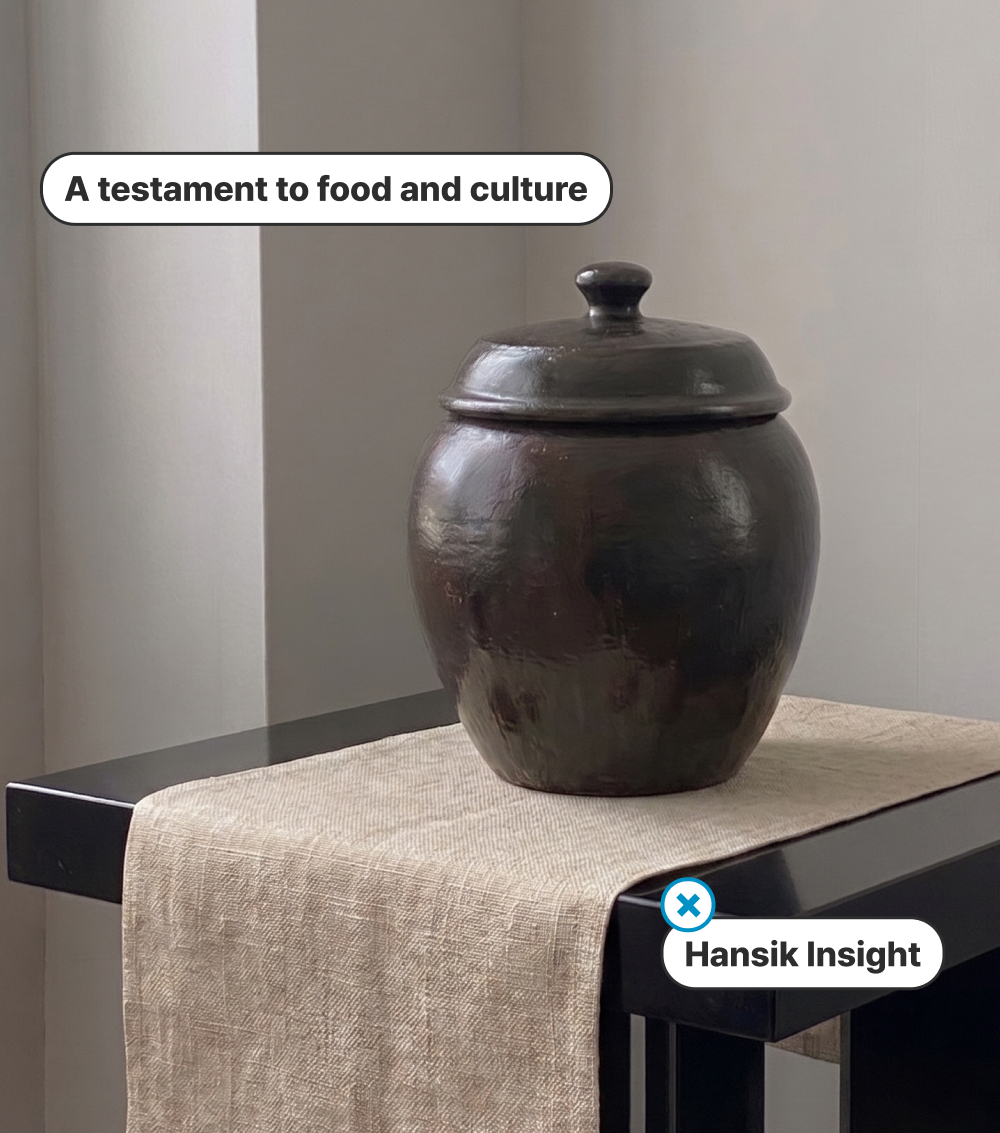
The objects we use are statements about who we are, with the bowls, spoons, and chopsticks used daily by Koreans being no exception. To understand Korean culinary culture, one must be just as knowledgeable about the tools used to cook or serve the food as well as the food itself, as the former reveal just as much about Koreans and how they thought about the world as the latter.
The Korean meal takes on a spatially defined order as opposed to the temporally defined order of the Western (course) meal. All of the food eaten in a meal is served at the same time on one table, with the utensils and tableware used to serve it—rice bowls, soup bowls, side dish plates, sauce plates—each designed in a way to ensure the meal’s balance. Korean Recipes, a book published in 1939, recommends the lids of the tableware for an adult’s table to be removed in the following order: soup bowl à rice bowl à kimchi plate. This is indicative of not only a strictly hierarchical family culture but also the degrees of importance carried by each of these items. Furthermore, this sequence continues to influence the order in which Koreans eat today: first taking a spoonful of soup and then alternately taking bites of rice and side dishes. The following are a few examples of tableware and vessels that not only effectively store food but are also a reflection of Korean social and culinary mores.

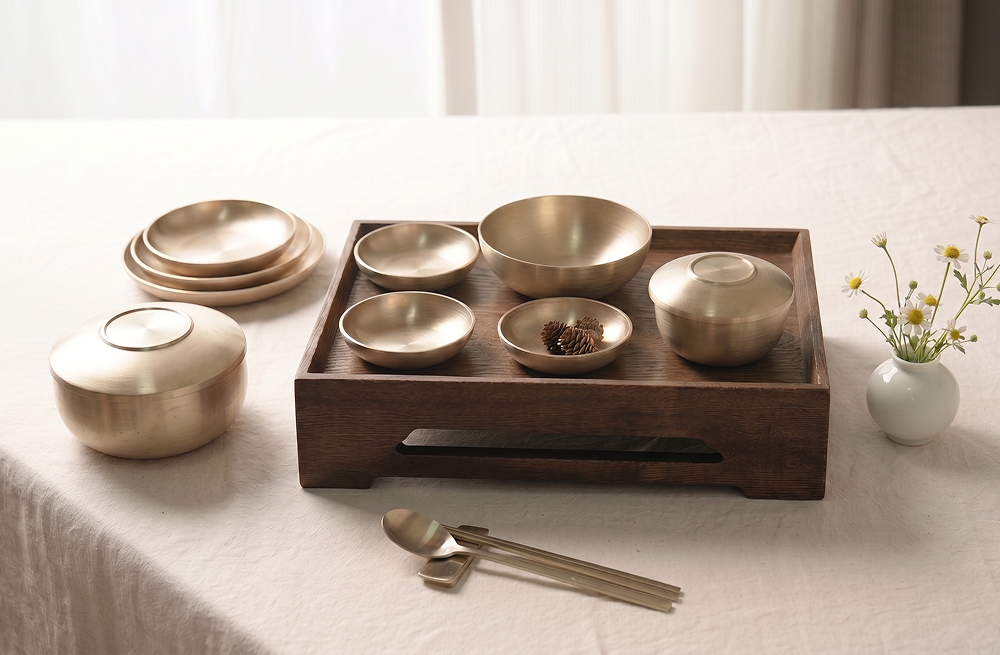
In premodern Korea, meals differed by social class by the number of sides dishes served. Excluding rice, soup, and jang (pastes and sauces), the number of cheop (for jangcheop (plate)) represented the class of the person eating. Commoners had three cheop, while members of the upper classes had five, seven, or nine-cheop meals. The king, under the most formal dining conditions, ate from a 12-cheop table.
Another distinguisher of social class was the material from which the bowls were made. The royal court used various types of high-quality ceramicware (e.g. white porcelain, blue-and-white porcelain) depending on the season. The nobility of the Goryeo and Joseon dynasties enjoyed bangjja yugi, a type of thin yet durable brassware. It was so popular that, toward the end of the Joseon dynasty, people were secretly melting down coins in order to make brass tableware for themselves, resulting in the practice being strictly banned. Today, the art of beating brass with a hammer is still considered to be the highlight of traditional metal crafts. Commoners, on the other hand, used bowls made from much cheaper materials such as clay or wood.

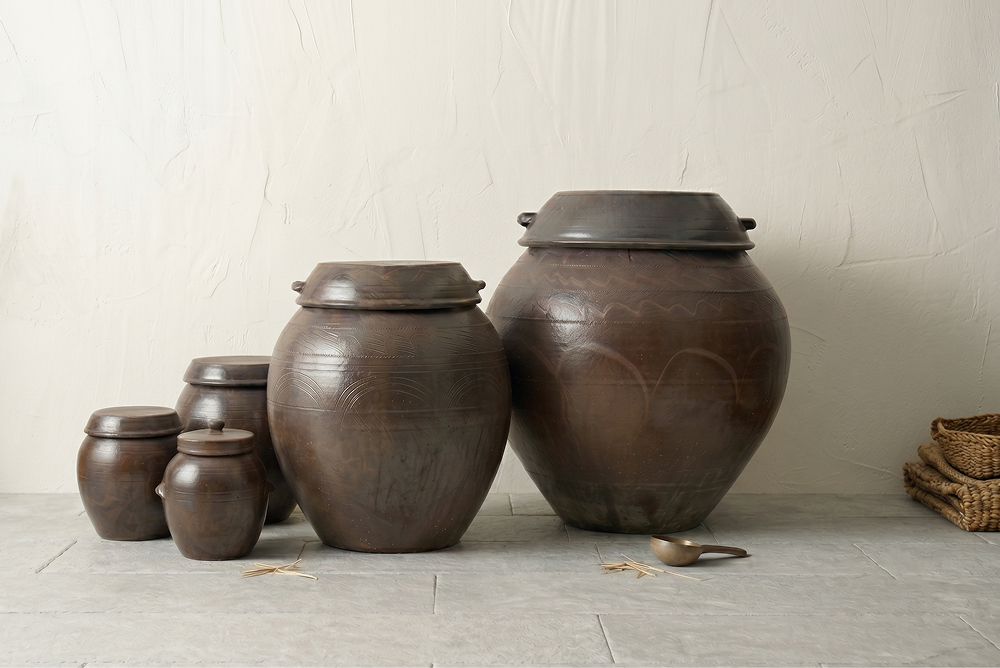
Korea’s fermentation culture cannot be understood without first understanding the hangari, or earthenware jar. Doenjang (soybean paste), soy sauce, and kimchi are all the result of the earthenware jar’s unique structure and the custom of burying these jars underground. The jars were made with a soft clay used specifically for ceramicware and baked at a relatively low temperature—a process that created miniscule holes throughout the jar that block moisture while letting air in. The environment formed in these jars, which allows microorganisms to thrive, is the secret of the “breathable jar.” Ancient Koreans buried the jars underground, where temperature change is minimal, to store foods such as kimchi and radishes. Liquor, vinegar, jeotgal (salted seafood), and jang (pastes and sauces) were stored at room temperature or in caves to guarantee adequate fermentation.
Another interesting trait of the jars is how their shape varied by regional climate. In the southern provinces, which receive plenty of sunlight, jars were extremely wide at the middle and had narrow mouths to minimize heat and moisture loss. In the central and northern provinces, jars were made thinner and taller to maximize exposure to sunlight and heat. In other words, it is possible to know where a jar comes from simply by looking at it. The same clay used to make hangari was used for various other items, including muldonggi (water container), ssaldok (rice jar), siru (steamer), and yaktanggi (pots used to prepare herbal medicines), having a broad impact on all areas of everyday life.

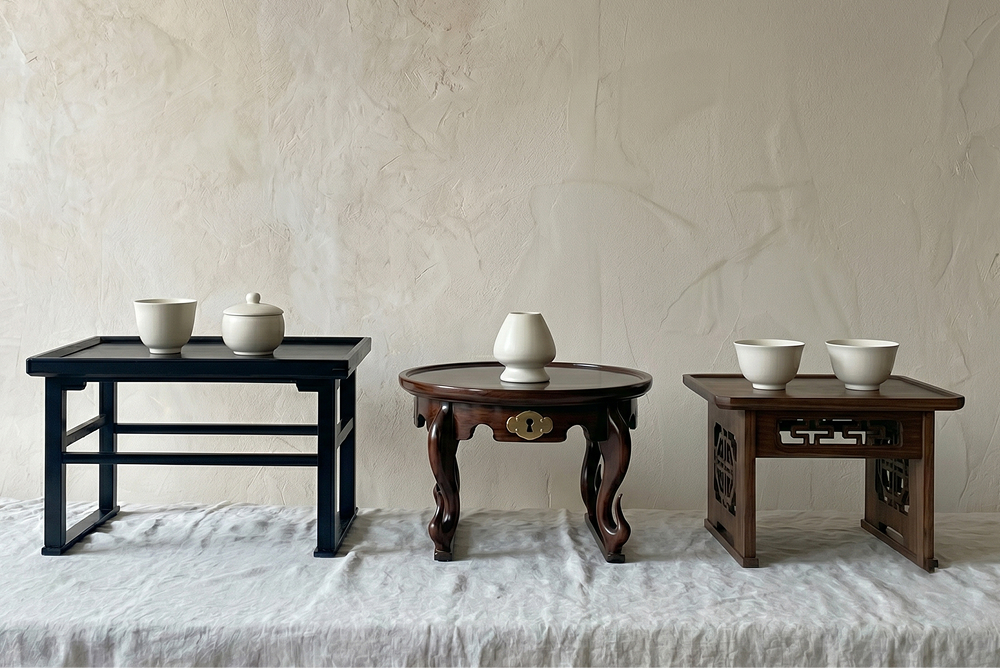
Educator and writer Lee O-young described the soban as something that “only appears when people need to eat and is then taken away, like an empty bowl.” In premodern Korea, the dining table was something that was kept stored away and only brought out for meals. It was produced in various shapes and sizes, with the soban regarded as the finest of them in terms of both its utility and artistry. The soban itself was broken down into multiple categories depending on the shape of the tabletop (e.g. circle, rectangle) or legs (e.g. tiger leg, dog leg, columnal). But even more important than the soban’s sophisticated execution was the spirit it embodied: the notion that each person deserves to be served properly. Until the final days of the Joseon dynasty, everyone, from the lowest commoner to the king, dined at a soban, and it was considered customary to set and serve a soban meal even to beggars. The soban embodies the traditional notion of hospitality—that food was to be brought to the person instead of having the person come to the food.

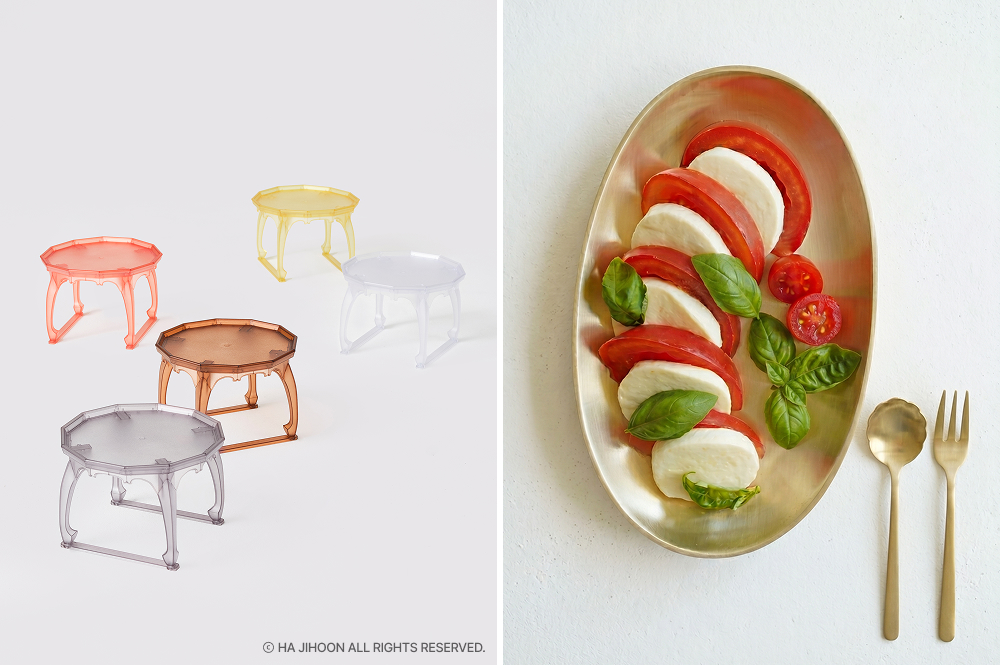
Traditional tableware is not a relic of the past. Rather, it is constantly evolving to meet the needs of the times. Bangjja yugi, which almost disappeared with the use of coal briquettes in the late 20th century, made a comeback due to recognition of its anti-bacterial properties and appreciation of its burnished gold color. Recently, titanium yugi (stainless steel coated with titanium) items began appearing on the market as a lightweight alternative to traditional brassware that imitates its color and gloss. The soban is also popular among younger consumers as a displayable object in and of itself or as a tea table. Traditional tableware is even making an appearance at renowned fine dining establishments worldwide. Korean cuisine is expanding—not solely in terms of food, but with the tableware and utensils it is served with as well as the history and worldviews they embody.
References
Siuijeonseo, Writings by Yeonyrojip, Writings on Food, Thoughts on the Culture of Food, Joseon Moosang Sinsik Yori Jebeop, Food in the Joseon Royal Court I, Korean Recipes, K FOOD: Secrets of Korean Flavors, Fermented Foods of Korea, Jeungbo Sallim Kyongje (Economy of Agriculture and Forestry Expanded Edition)
Photo source
Ha Jihoon