

한식에 대한 다채로운 이야기를 전하는 온라인 매거진
Vol 38. Kimchi
Chef from the Joseon Dynasty A Wisdom in Kimchi Shared by Seo Yu-gu
The beauty of nature exists in kimchi. Sincerity exists in the heart of the person who chooses and uses the ingredients of kimchi to contain its flavor and aftertaste according to the season. In the culinary encyclopedia <Jeongjoji (Food and Brewery)> by Seo Yu-gu, a scholar of the Realist School of Confucianism and the author of 《Imwon Gyeongjeji (Encyclopedia Koreana on Rural Living)》, the author discusses the categories of kimchi, stemming from his question on the definition of kimchi. Let’s reflect on the true value of food to people by making kimchi in <Jeongjoji>.
Organized by. The Editorial Room
Source. <Chosun Chef’s Kimchi>(by Pungseonk Cultural Foundation Culinary Research Institute)
Eomjangchae, the Most Primitive Kimchi
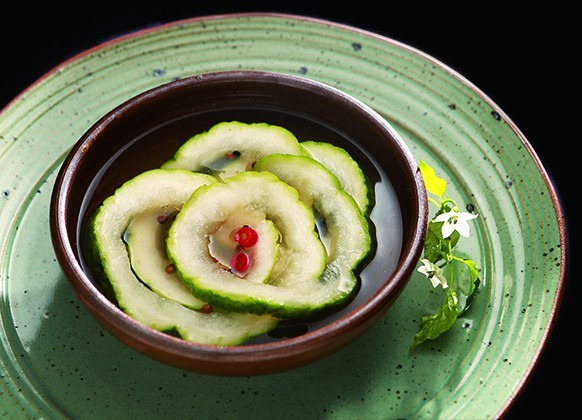
Eomjangchae(醃藏菜) is the first item in the 4th volume of 《Imwon Gyeongjeji》<Jeongjoji>, Vegetable Food. Seo Yu-gu described the Eomjangchae by starting with the outline, and citing his book, 《Ongchi Japji》. He stated that Eomjangchae is the most primitive form of Kimchi.
“Chives that usher in Joo-ong’s spring and napa cabbage from the late autumn are so delicious! But they vanish when the greens in the garden dry up, so this leads to the eomjang method.” Seo Yu-gu’s 《Ongchi Japji》
Eomjangchae literally means storing vegetables (greens) by pickling them. Salt, brewer’s grains, and spices are used to pickle vegetables. It is pickled only with salt or mixed with salt and brewer’s grains. Spices such as licorice, dill, and fennel can be added. Lime or alum powder is added to the vegetables and fruits, while garlic and eggplant are used to remove the spicy and acrid taste, eliminate toxicity, and stabilize color. A variety of storage side dishes were made by using the flavor and the preservation of the brewer’s grains. The method of processing and removing the toxicity from the ingredients was also done well.
Eomwageobang, Nothing to Throw Away from the Lettuce
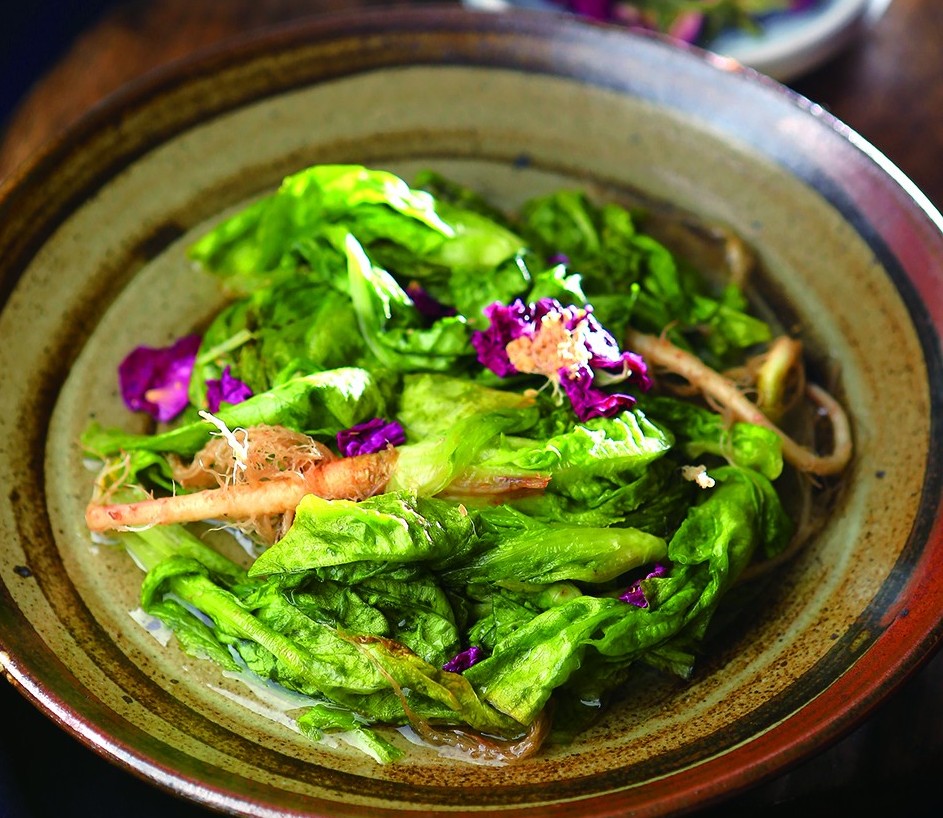
Add 1.4 geun of salt to 100 roots of lettuce, and leave it overnight. After drying it in the sun early the next morning, boil the original salt water, cool it, add lettuce again, and dry it in the sun before storing it in the jar. Add rugosa rose between the lettuce leaves and stack it in a jar together to improve the taste and make it more flavorful. 《Daneungjip》
We usually eat lettuce leaves, but not lettuce stems. Just a generation ago, people used to eat lettuce stems as kimchi, or raw together with lettuce leaves by peeling the outer layer. The lettuce roots in the ground were discarded, but people ate it by pickling them for kimchi. The lettuce roots are thin and frail but, at the same time, tough. The saltiness and bitterness in the root are in harmony with the scent of rugosa rose. Perhaps, it is a kimchi that you can eat and enjoy with the eyes, as the soft, green color of the lettuce and the red color of the rugosa rose go together.
It is a beautiful kimchi that adds the sweet lettuce leaves and the scent and color of the rugosa rose to the lettuce root, thus lessening its bitterness.
Ingredient
100 lettuce roots, 525g salt, 20 rugosa rose bunches
Direction
- Add 525g of salt to 100 lettuce roots and brine overnight.
- Dry the brined lettuce roots in the sun early the next morning, put in a jar, and pour boiled then cooled salt water.
- Dry the lettuce roots in the sun and soak them in salt water. Repeat this 2-3times.
- It will taste better and more flavorful if you put rugosa rose in between.
Tip
This is a type of kimchi in which you can eat the active ingredients of the lettuce roots. However, if you don’t like its bitter taste, soak the lettuce roots in rice water to remove the bitterness before making kimchi.
Eomjang Woongsobang, the Scent of Ragwort that Lightly Lingers on the Tip of Your Tongue
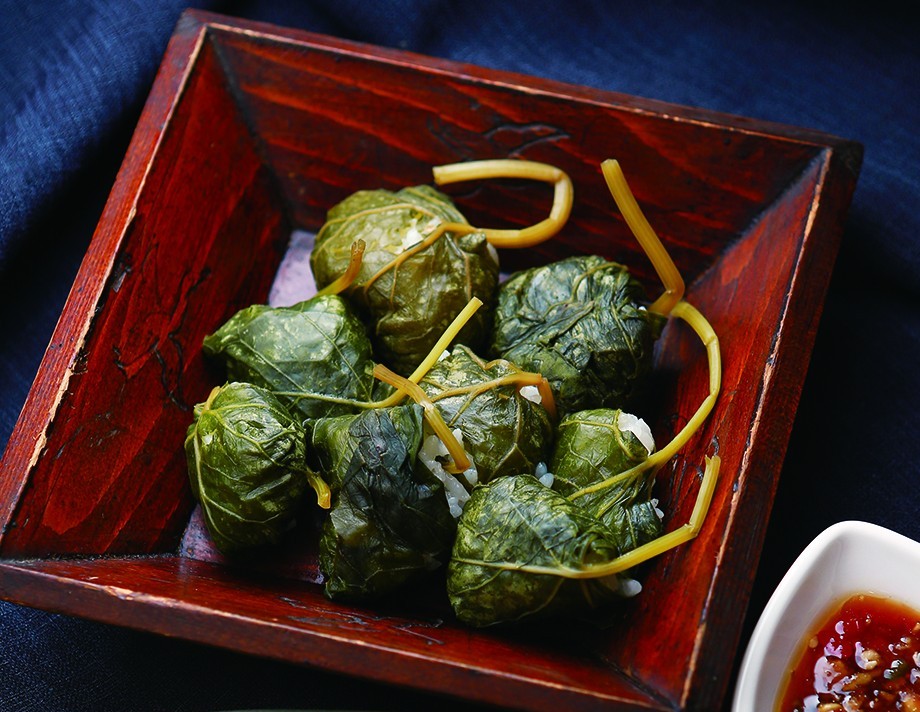
When silkworms go on a trail in April, pick the ragwort leaves. Remove the ones that are cracked and damaged, and choose only the clean and good ones. Pile them in layers, soak it in a bit of water in a gourd, and rub it against the gourd to drain the juice. Put it in a jar, press it with a stone, and pour water to submerge the leaves. When it is taken out in the winter, its color is yellow and light. It is very good to use it to wrap around the rice before eating it. 《Sanlim Gyeongjebo》
It is made by rubbing the ragwort leaves to soften them without salt, and maturing them by pouring water and pressing them against the stone. The ragwort leaf is rather tough, so this technique is used to make it into soup or preserved vegetables. Here, its greenish taste was removed, and its toughness is softened by rubbing it against the gourd. You can get a glimpse of the wisdom of making a side dish without throwing away tough vegetables.
Ingredient
100 ragwort leaves, 5C water
Direction
- Pick and wash the ragwort leaves.
- Drain them and stack several leaves together. Pour a bit of water into a gourd, and rub the leaves against it to drain the juice.
- When the leaves are softened, put them in a jar, press them against a stone, and submerge them in water.
- When the leaves turn yellow in the winter, take them out, and eat them by wrapping rice around them.
Jechae, Which is Similar to Today’s Kimchi
Jechae(薺菜) is the fifth item in the 4th volume of <Jeongjoji>, Vegetable Food.
Seo Yu-gu said, “Je(薺) and ja(鮓) are in the same category, but ja is fermented with salt and rice, while je consists of all salty and spicy things, such as jeotgal(salted seafood), jang(paste), ginger, and garlic… These are their differences.” If jechae(鮓菜) is prepared by “fermentation,” it is characterized by its salty and spicy ingredients, such as salt, paste, ginger, garlic, which are similar to today’s kimchi.
Haejeup Donggwabang, a Kimchi Made with Wax Gourd as a Jar
Take a large wax gourd after the frost falls. Cut it in a round shape about 1 chon of its radius around its tip, but do not damage the skin. After removing its seeds inside, boil a large bowl of salted seafood juice, and pour it into the wax gourd. Put other ingredients, such as sesame seeds roasted with ginger and licorice. Close the wax gourd with the cut tip, and skewer it to fix it. Place it in a container that is neither cold or warm. When the salted seafood juice is permeated into the flesh of the wax gourd, cut it with a knife and eat it. It can be of any size, depending on the person eating it.《Ongchi Japji》
It is a type of kimchi made in a fun way because the inside of a large vegetable is removed, and is filled with seasoning to be preserved. Nowadays, it is hard to find wax gourd, but it was used in different ways as an ingredient for making kimchi or honey-preserved fruits. A wax gourd is a low-calorie vegetable in the Cucurbitaceae family since more than 90% of it is water. It cools the body, and it is advisable to be cooked for those with a low body temperature.
It is crunchy, soft, and watery, so it tastes cooked when it is made as kimchi.
Ingredient
1 Wax gourd(3kg), 400ml Brine, 1/2Tbsp shredded ginger,
1/2Tbsp licorice, desired amount of roasted sesame seeds,
2C salted yellow croaker juice
Direction
- Wash the surface of the wax gourd well, cut out the area around its tip, and remove it from the inside.
- Pour the brine with the ratio of salt and water to 1:6 into the wax gourd, based on its size.
- Prepare salted fish juice, pour it into the gourd, and add ginger, licorice and roasted sesame seeds.
- Close the lid, and leave it at room temperature.
- When the salted fish juice is permeated into the flesh of the wax gourd, cut it out, and it is ready to eat.