

한식에 대한 다채로운 이야기를 전하는 온라인 매거진
Vol 38. Kimchi
Taste of Longing in Movies
Mother’s dishes, which are clean yet flavorful, bring back old memories when the character was endlessly loved.
The movies, <Little Forest> and <The Wandering Chef>, which explored stories on food, motherhood, and longing by putting the pieces together and presenting the scenery of four seasons and seasonal tables, fill the viewers’ hungry hearts and stimulate their palate. Let’s talk about Korean food in movies that can be enjoyed with the eyes, ears, and heart.
Article. Lee Eunhye Still photo. Little Forest_ Megabox Central, Plus M·The Wandering Chef_Atnine Film

<Little Forest> That Fathoms the Mother’s Heart Through Cooking
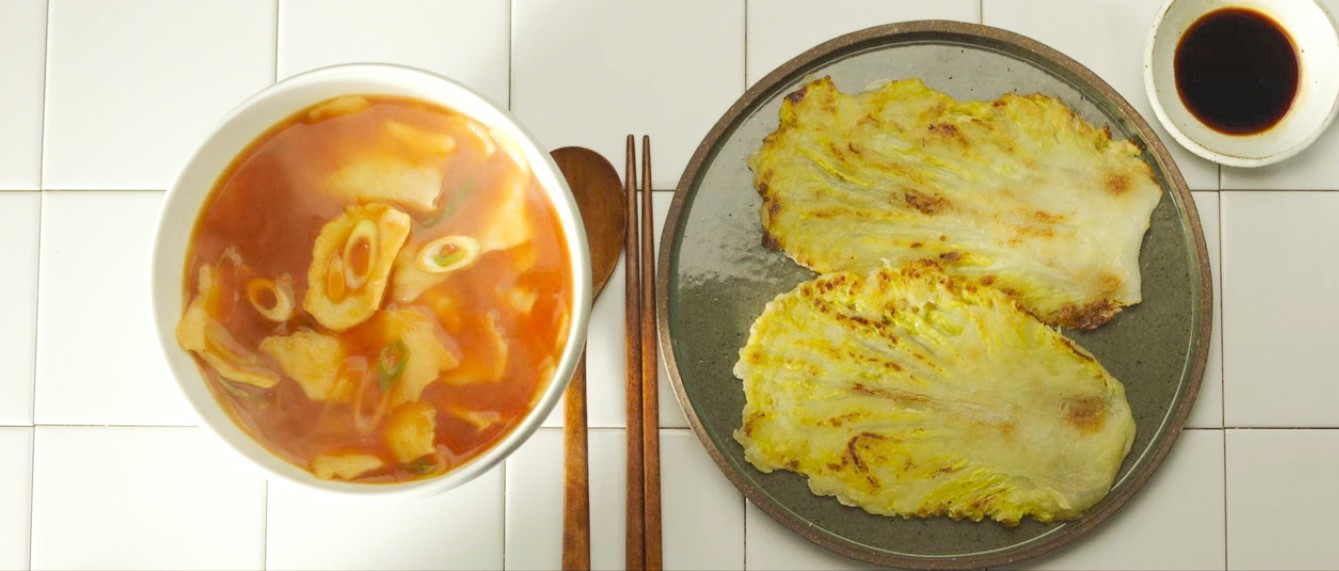
The movie begins with Hyewon(played by Kim Taeri) plodding along in the snowed road that looks like rice powder. Tired from preparing for the teacher’s certification examination and working part-time jobs, she comes home without any plan. At home, where no one is there to welcome her, she cooks a small portion of rice, and makes savory baechu-doenjangguk(cabbage soybean paste soup) after obtaining a winter napa cabbage from the snowed field. It was a simple meal only, with a bowl of rice and baechu-doenjangguk(cabbage soybean paste soup), realizing that she is finally home where peacefulness rests.
<Little Forest> is a healing movie that the director Yim Soon-rye finely adapted from an original Japanese movie to fit our sensibility. It shows the changes of four seasons in a Korean rural village and vegetarian Korean dishes made with food ingredients native to Korea. Hyewon skillfully makes Korean dishes, and her cooking teacher is none other than her mother (played by Moon Sori). The mother and the daughter share their hearts through food.
The mother shows Hyewon a new world through her dishes, and demonstrates solid support amid Hyewon’s despair.
Likewise, the warm memory of the dishes that her mother made helped Hyewon fill the void left by her mother, who left home suddenly one day.
The flavor of fresh and honest-to-goodness Korean dishes cannot be found in an instant, and those of delivered food lingers on my tongue throughout the movie. The dishes representing the cook’s devotion, from sirutteok(steamed rice cake) with well-blanched spinach and gardenia seeds, makgeolli(unrefined rice wine) and kimchijeon(kimchi pancake) boasting of in-depth ripened taste, kongguksu(noodles in cold soybean soup) with cucumber, and crispy fried acacia flower, a delicacy in the rural springtime, fill the screen. As Hyewon’s resentment toward her mother is gradually healed through the dishes, she starts to understand her mother’s heart. Her mother’s words, which must endure the cold winter to fill its flesh with sweetness, become the reverberation of courage that helps her face problems, rather than avoiding them. Her mother’s dishes provided excellent nourishment, keeping her mind and body healthy. <Little Forest> tells us that the secret of making tasty food with ordinary ingredients was proof of unconditional love.
<A Wandering Chef>, A Table that Seasoned Longing with Hands
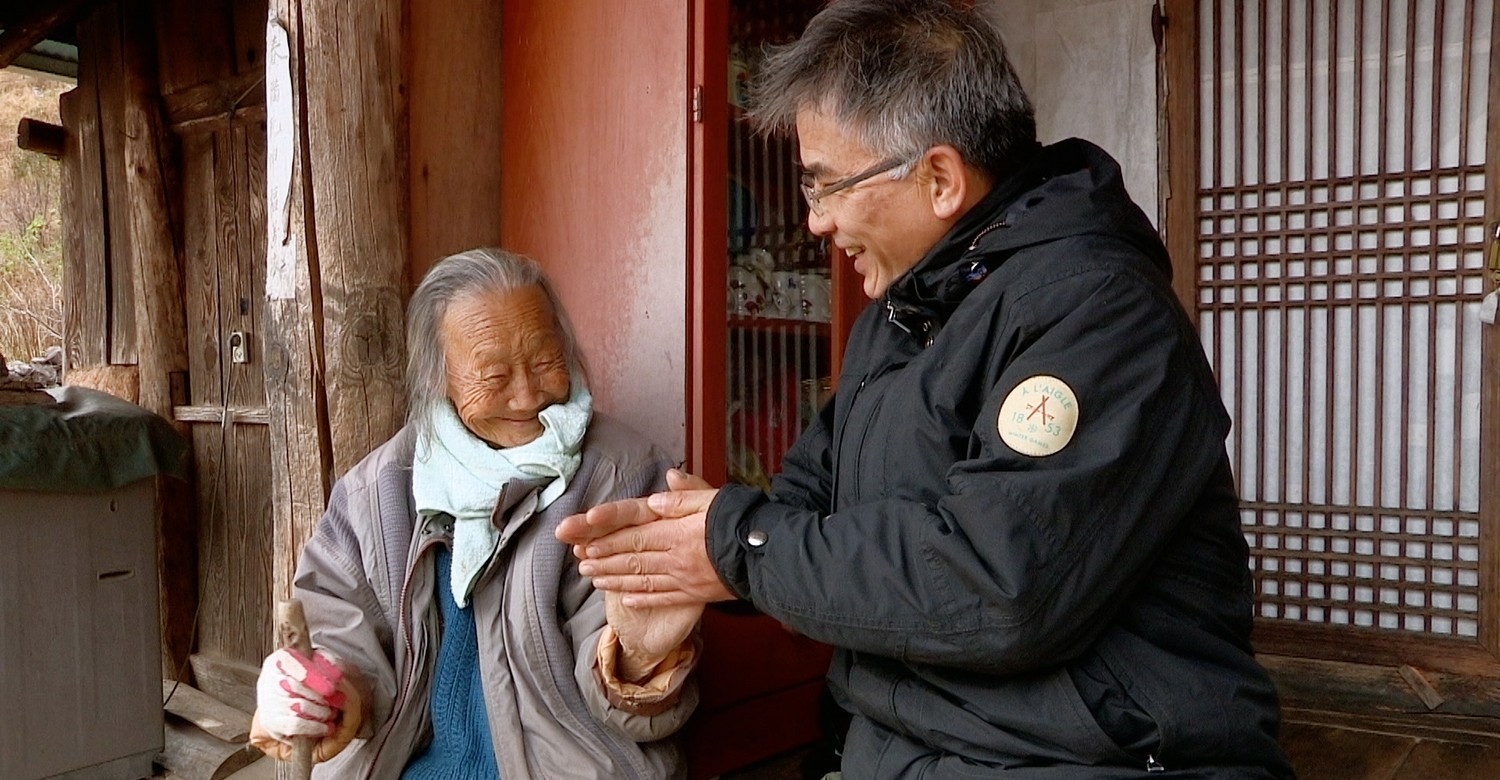
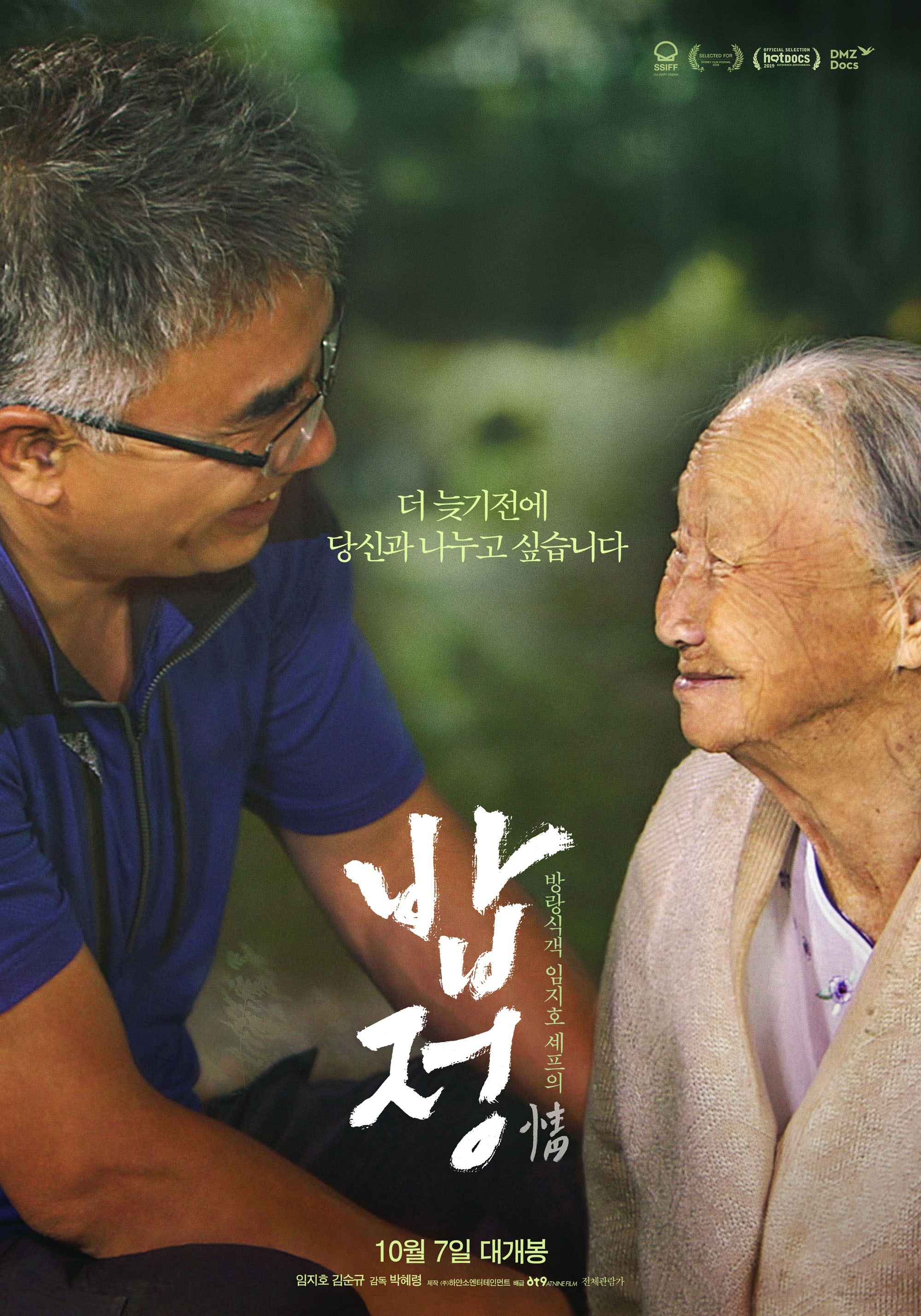
The documentary film, <A Wandering Chef>, an autobiographical story of Chef Im Ji-ho, nicknamed “Wandering Houseguest,” reminds me of a heart-breaking yearning for a mother’s love. He has three mothers: a birth mother whose face he can’t remember, a stepmother who raised him, and a third mother whom he met randomly and shared a sense of affection with her. Chef Im treats numerous mothers he meets on the road, while wandering all around the country with a table symbolizing utmost devotion. This movie is a record of his 10-year journey.
His philosophy that nothing from nature can be thrown away is his basis for dealing with food and people.
A pine cone that was picked up in the forest is used to make broth kalguksu(noodle soup) and mossy branches, and stones are used as the most expensive plates.
The wild edible greens, such as lyre-shaped hemistepta and colt’s-tail, which are neglected for being so common, and moss in the stone are reborn as food, and are comparable to fine dining dishes.
So, his dishes contain the creative and unique world of Korean food that only he can produce. He dwells on his longing for his mother, while wandering the snow field during a snowstorm and climbing deep into the mountain to obtain food ingredients. The person who soothed his aching heart was Ms. Kim Soon-gyu, an acquaintance for over 10 years. It was a genuine embrace of a mother, to whom he could share his temperature while holding her wrinkled hands. His devotion for making honeyed quince so that the old couple does not catch cold, and preparing a taro dish that is good for the bones of Ms. Kim’s ailing legs is no different from that of any child.
Chef Im, who experienced another parting with a mother during his busy days as a world-class Korean food chef after several seasons, decides to make a feast for his mother by gathering the food ingredients from places throughout the country. After spending four days to make the dishes,
he completes 108 dishes without any help. This was his way of expressing his heart-rending devotion to his mother.
The movie ends with Chef Im sharing a feast that fills up the attached floor with Ms. Kim’s remaining family members. <A Wandering Chef>, filled with the state of visual rapture by Korean dishes and the warmth of life through sharing of food, presents the taste of heavy longing.