


한식에 대한 다채로운 이야기를 전하는 온라인 매거진
Diving into the 2025 Hansik Overseas Consumer Survey
An Insight into Korean Cuisine, Hansik
The year 2025 put Hansik, Korean cuisine squarely in the global spotlight—Netflix’s K-Pop Demon Hunters streamed worldwide, NVIDIA’s Jensen Huang publicly crowned “Korean-style fried chicken the best on earth” But beyond the headlines, how has this cultural moment actually shifted international perceptions of Korean cuisine? Last November, the Korean Food Promotion Institute and the Ministry of Agriculture, Food and Rural Affairs released their 2025 Korean Food Consumer Survey. Here's what the data reveals.
Q. How familiar are international consumers with Hansik? 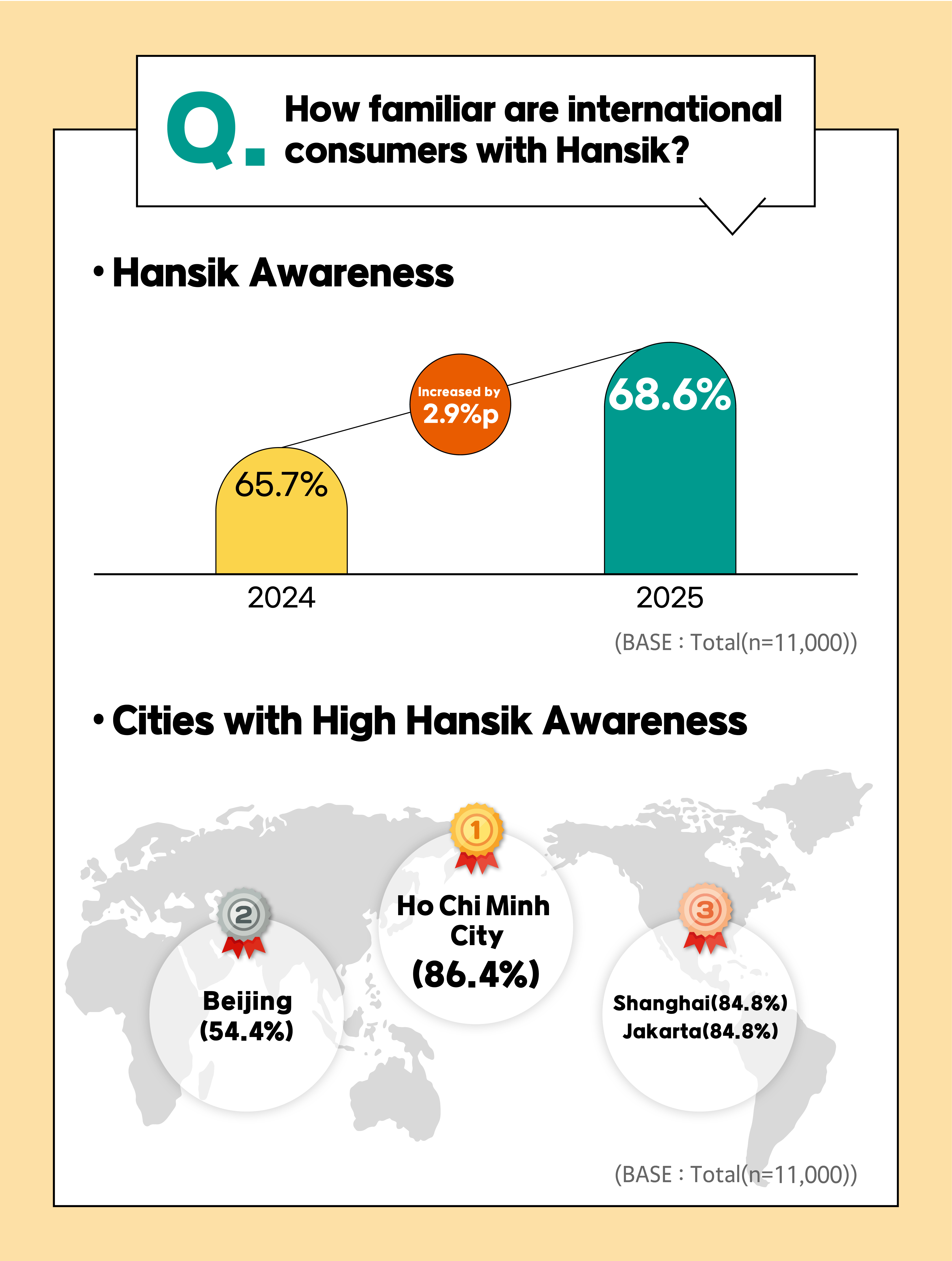
Hansik awareness stands at 68.6%, up 2.9 percentage points from the previous year, continuing a steady upward trend over the past five years. Ho Chi Minh City leads in recognition at 86.4%, followed by Beijing at 85.4%, with Shanghai and Jakarta tied at 84.8%.
Q. How much has Hallyu (Korean Wave) content influenced perceptions of Hansik?
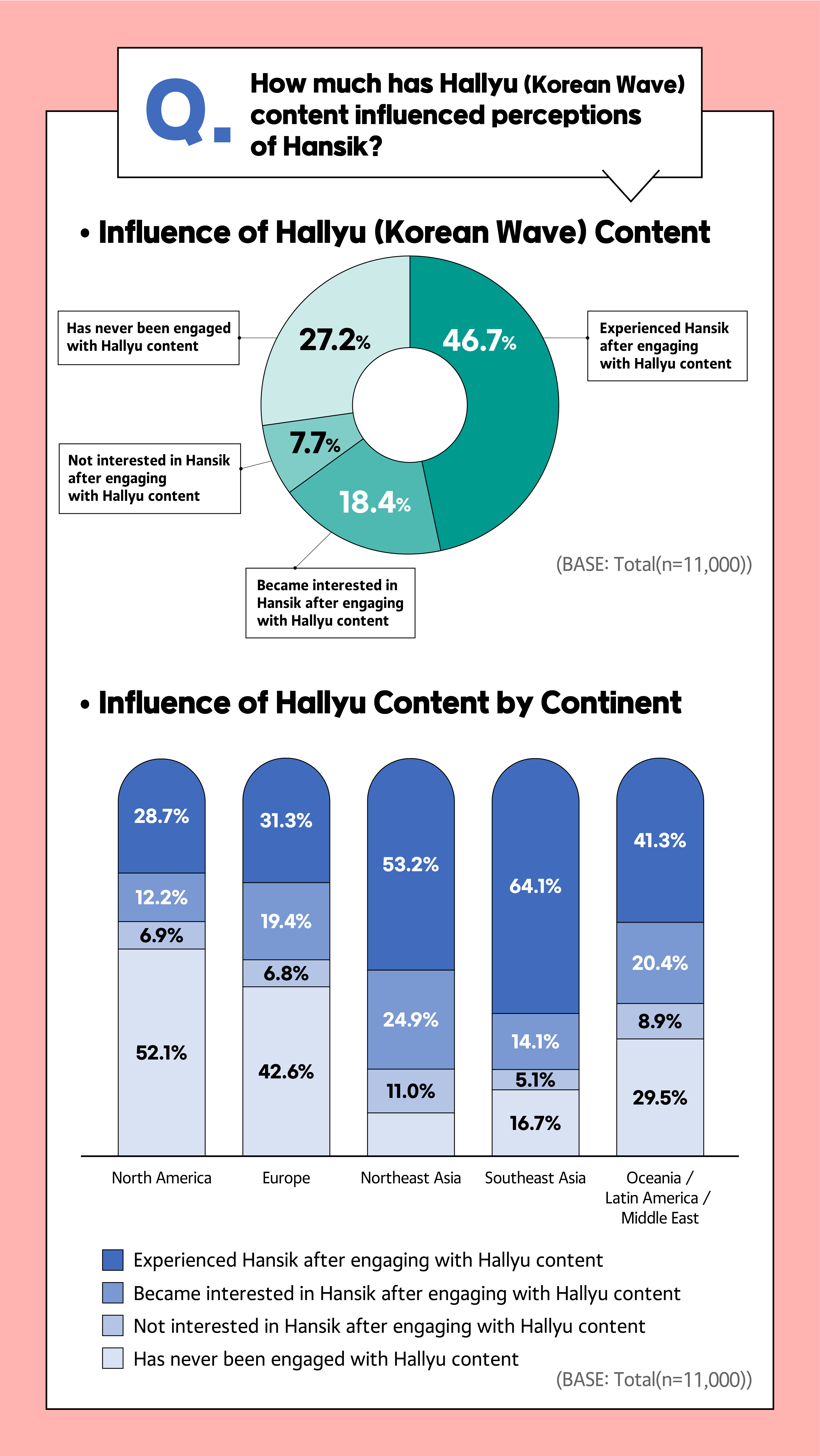
The highest proportion—46.7%—actually tried Hansik after engaging with Hallyu (Korean Wave) content. Another 18.4% reported growing interested in Hansik, while 7.7% remained uninterested. Looking at regional patterns, Southeast Asia (64.1%) and Northeast Asia (53.2%) showed the strongest connection between Hallyu (Korean Wave) content and actual Hansik consumption. Oceania, Latin America, and the Middle East came in at 41.3%, followed by Europe (31.3%) and North America (28.7%).
Q. Which Korean foods are the most popular, and what do people actually eat regularly?
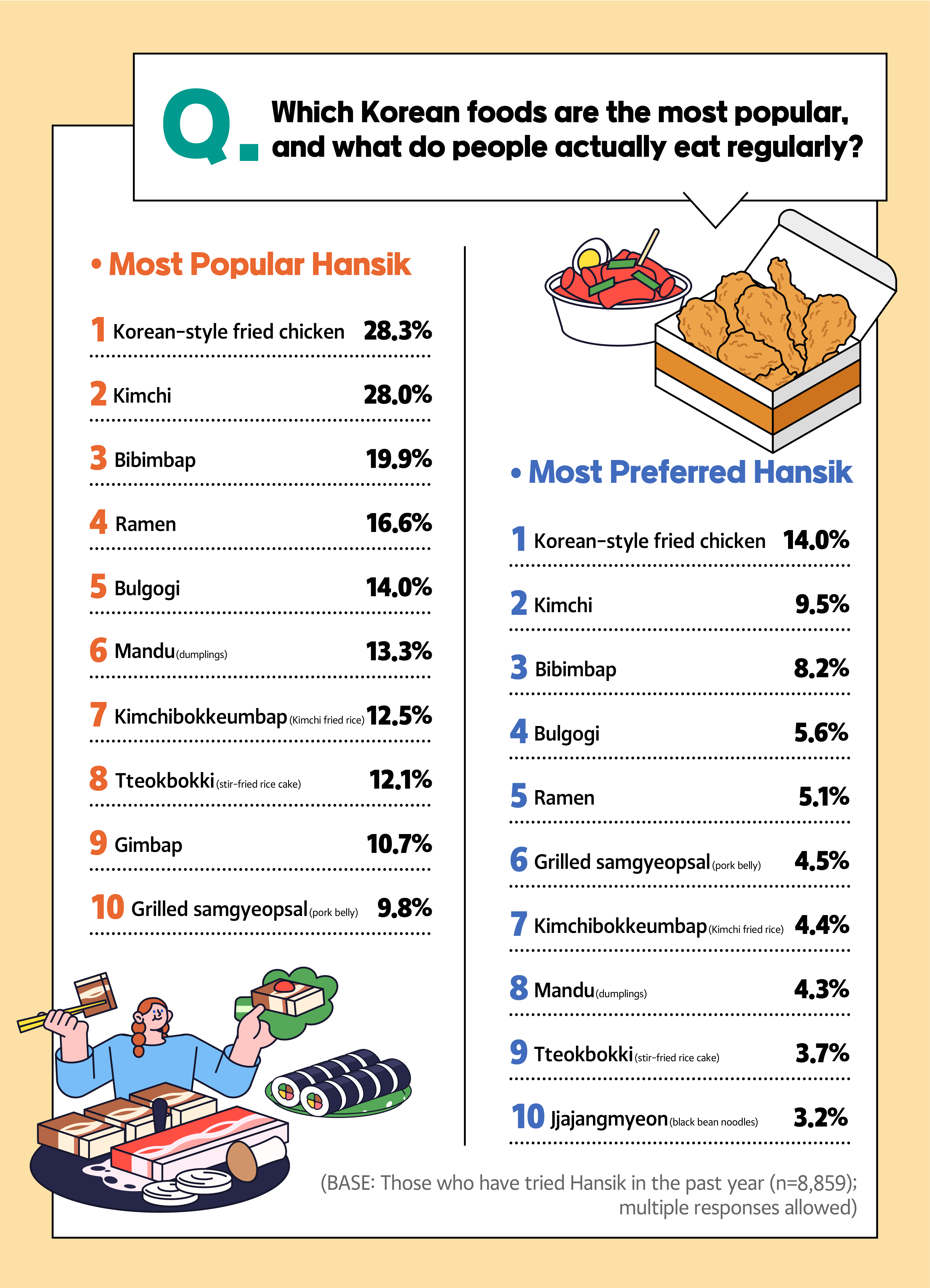
Korean-style fried chicken topped the list as the most frequently consumed Korean dish over the past year, at 28.3%. Just behind it was kimchi at 28.0%, followed by bibimbap (19.9%), ramen (16.6%), and bulgogi (14.0%). These same dishes—Korean-style fried chicken, kimchi, bibimbap, and bulgogi—have also dominated the “most preferred menu” rankings for four consecutive years, cementing their status as steady international favorites.
Q. What images come to mind when people think of Hansik?
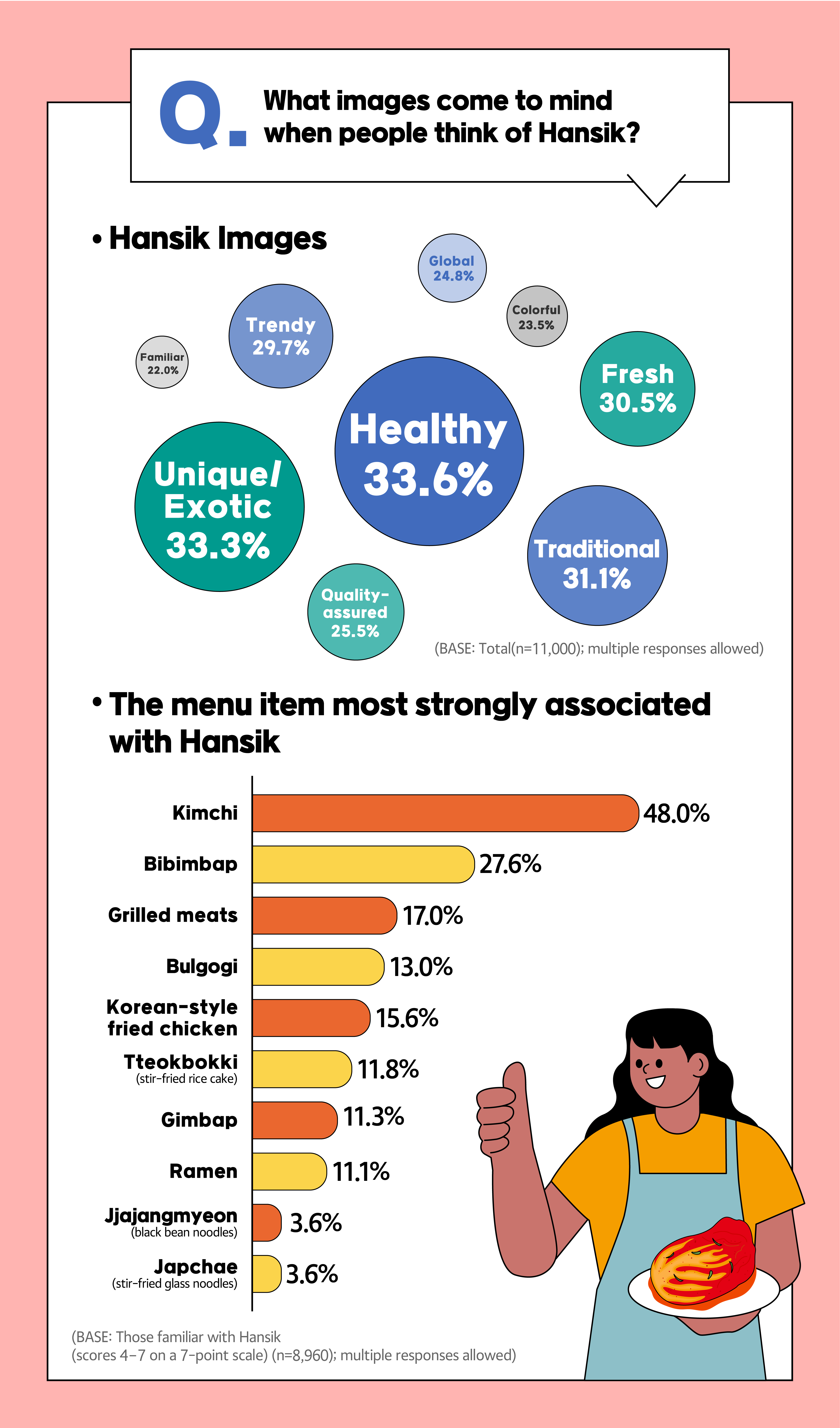
The top descriptors global consumers associate with Hansik are “healthy” (33.6%), “unique/exotic” (33.3%), “popular” (32.8%), and “traditional” (31.1%). Particularly striking is the “trendy food” metric, where Hansik outpaced other national cuisines by 8.2 percentage points—a clear signal of its prominence in the global food culture trends. When asked which dishes they associate with Korean cuisine, respondents overwhelmingly named kimchi (48.0%). Bibimbap came in second (27.6%), followed by grilled meats (17.0%), bulgogi (15.6%), and Korean-style fried chicken (13.0%).
Q. How satisfied are international consumers with Hansik?
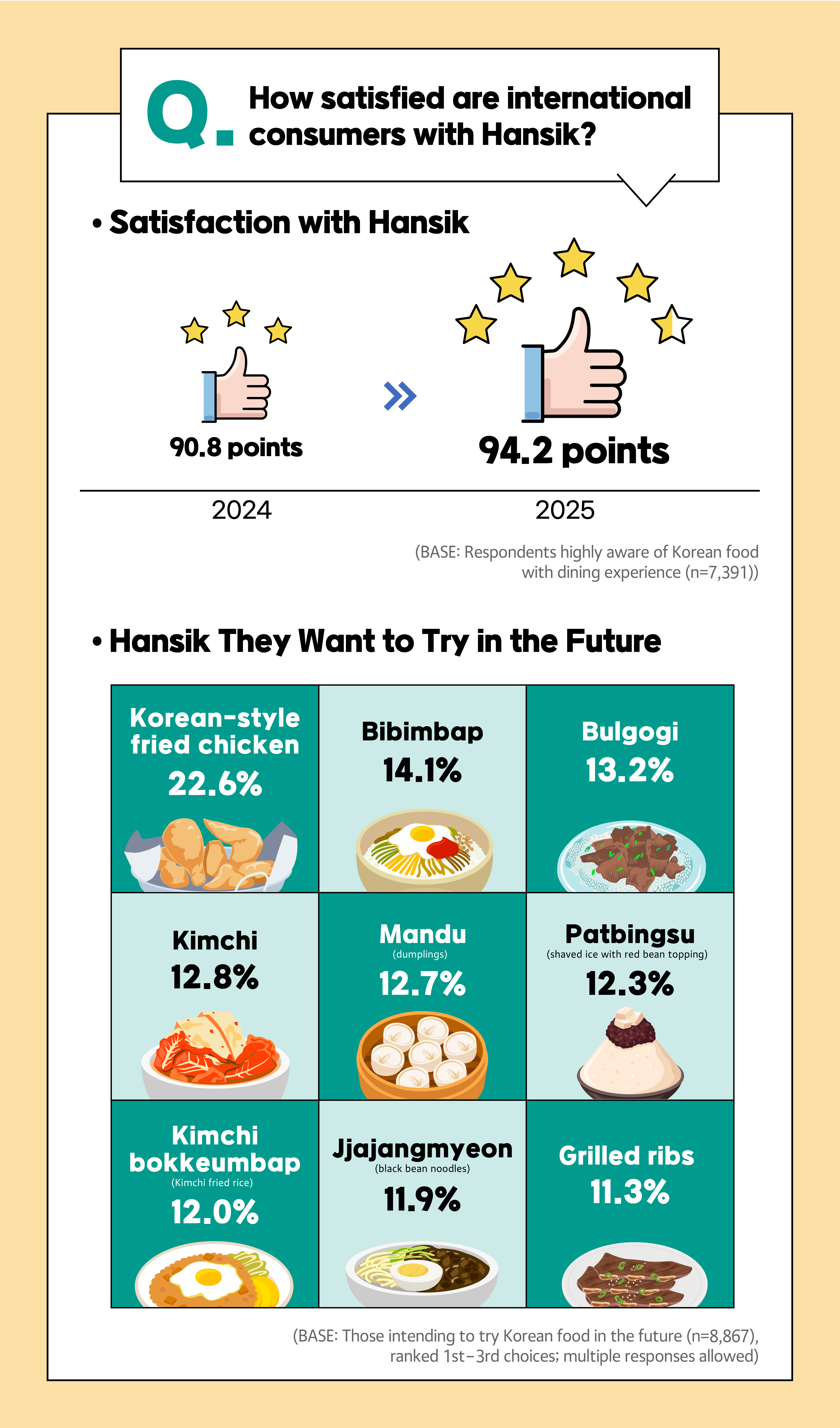
Satisfaction among Hansik diners stands at 94.2%, climbing 3.4 percentage points year-over-year and remaining at a remarkably high level. Looking ahead, Korean-style fried chicken leads as the dish people most want to try (22.6%). Bibimbap follows at 14.1%, then bulgogi (13.2%), kimchi (12.8%), and mandu (12.7%).
Hansik Now, and What Comes Next
The survey shows Hansik gaining ground as food that’s “healthy and fresh,” with consistent expansion across diverse regions. Given the upward trajectory in awareness, preference, and satisfaction, the Korean Food Promotion Institute plans to broaden its certification of outstanding Korean restaurants overseas while strengthening region-specific strategies that respond to local dining patterns—pushing Hansik’s international presence even higher.