

한식에 대한 다채로운 이야기를 전하는 온라인 매거진
Desserts Reimagined Through Authentic Korean Aromatics Pâtissier Kim Beom-joo
Explore the World of Hansik
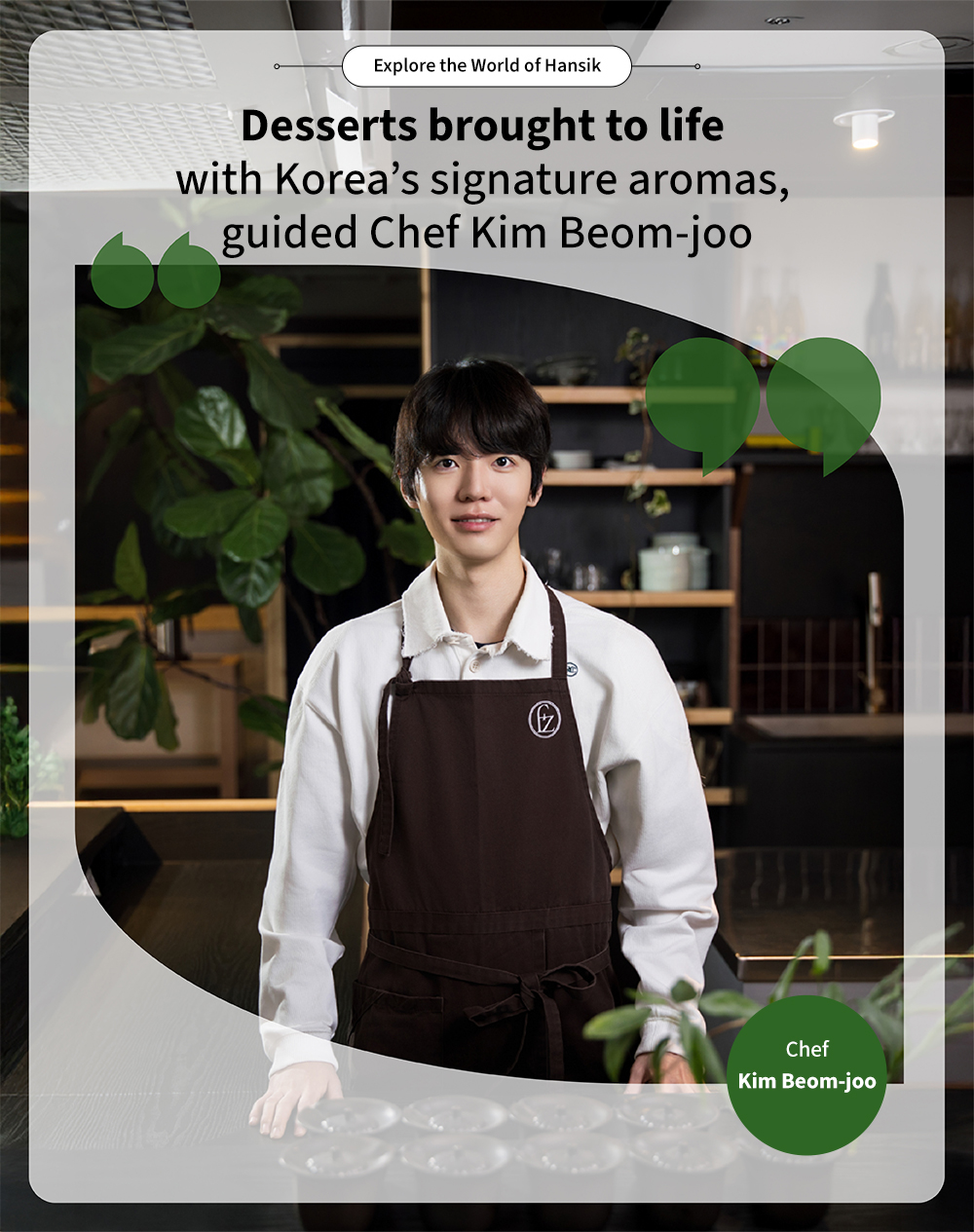
Dessert has traditionally spoken in a Western vocabulary, its ingredients and flavor profiles shaped by long-standing conventions. Pâtissier Kim Beom-joo, however, quietly disrupts this familiar language. Drawing on rice, bellflower root, and other ingredients grown in Korean soil, he teases out aromas that form entirely new expressions of flavor—an expansion of what dessert can be. We sat down with the pastry chef who is reshaping Korean taste beyond the limits of conventional dessert forms.

Q. Tell us about yourself and FINZ.
I spent my formative years developing desserts for Mingles, a fine dining restaurant rooted in Korean cuisine. That experience laid the groundwork for FINZ, the dessert brand I operate today. Here, we’re engaged in a specific kind of translation—taking the distinct scents and tastes native to Korean ingredients and articulating them through the medium of pastry. The result is something familiar in origin but innovative in expression.
Q. What led you to focus on desserts made with distinctly Korean ingredients?
Food has been a familiar presence for as long as I can remember. My father loved to cook, and my grandmother shaped yakgwa (honey cookie) and other traditional sweets by hand. For this reason, the connection to Korean desserts felt less like discovery and more like inheritance. When I first learned to cook in middle school, that early immersion naturally sparked my curiosity, and it ultimately set me on the path I follow today as a pâtissier.
Q. How did your time at Mingles, the fine dining Korean restaurant, shape your approach?
Working in a Korean restaurant naturally required the desserts to align with that identity. I began building my dessert palette with rice, tteok (rice cake), makgeolli (unrefined rice wine), burdock root, and bellflower root. Through this process, I learned how to translate texture, aroma, and culinary memory into a finished dessert. I realized I could create unconventional desserts, such as sesame oil ice cream. That phase of exploration ultimately clarified the path I wanted to follow: a dedication to flavors that are unmistakably Korean.
Q. You’ve spoken about “creating taste through aroma.” Can you walk us through this philosophy?
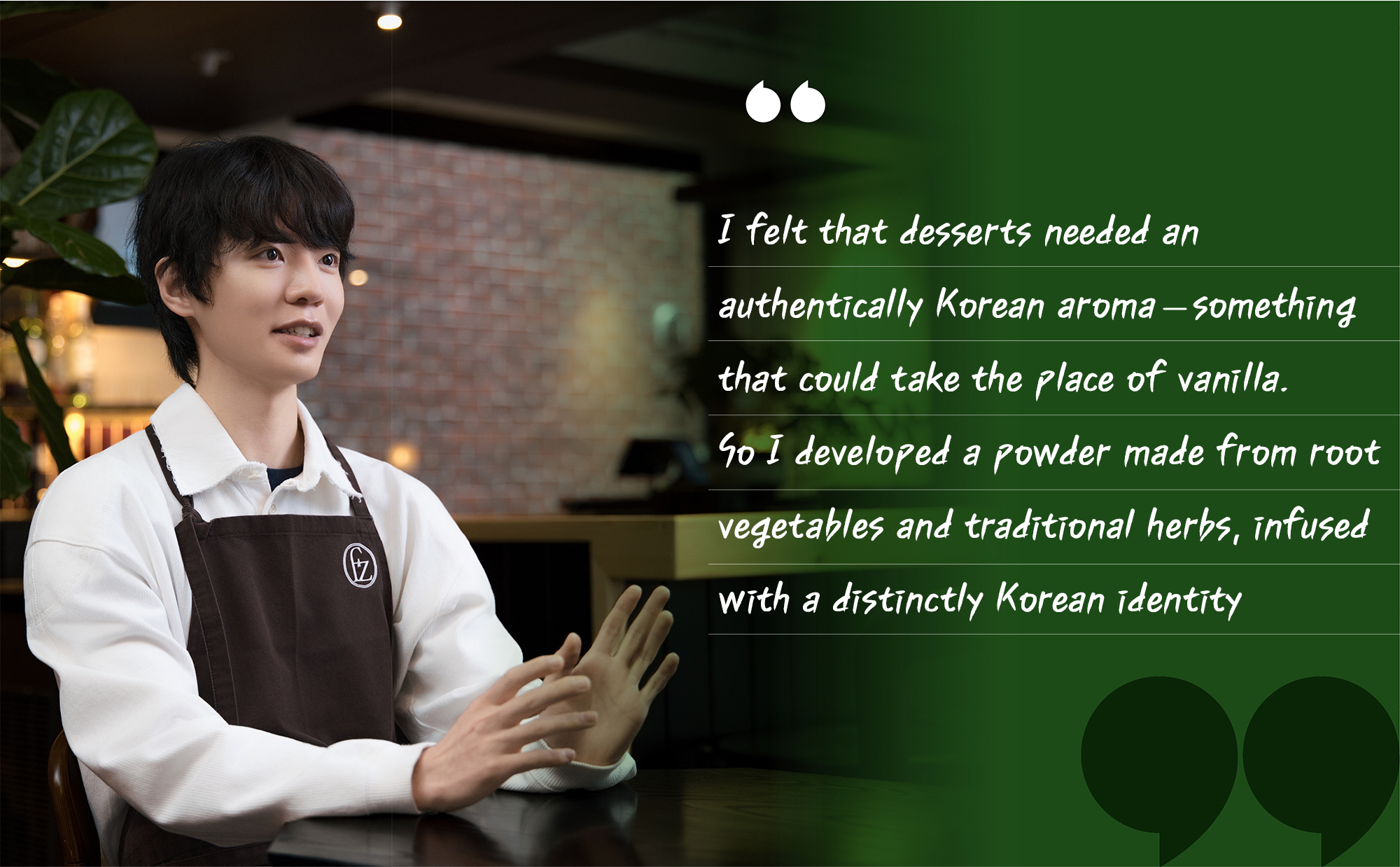
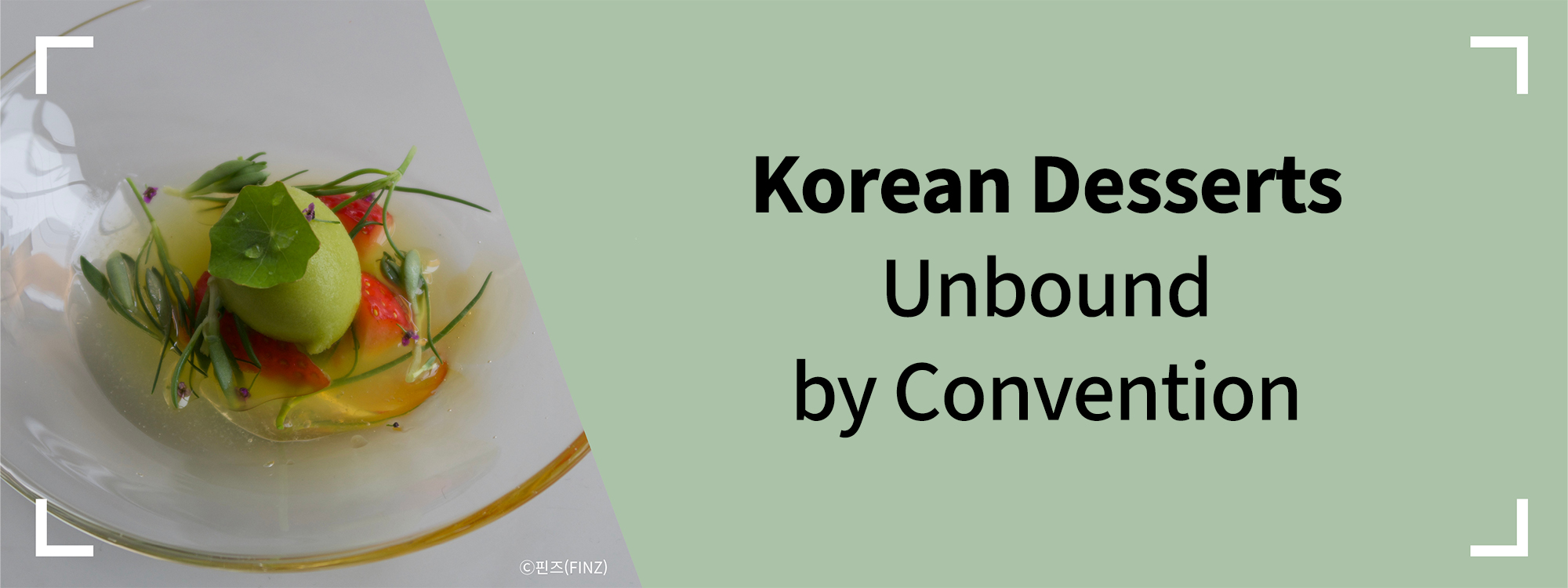
Aroma has always resonated with me more than any other element in the kitchen. While others might start by defining a flavor profile, my process begins with scent. I’m captivated by how ingredients shift when they come together—the new fragrances they create, and how those very aromas shape the direction of flavor. This process led me to develop what I call “Finz Powder.” Vanilla is the universal base note in Western pastry. I realized Korea needed its own equivalent, something rooted in our culinary identity. By blending root vegetables with traditional herbs, I created a powder that holds the essence of Korean fragrance.