

한식에 대한 다채로운 이야기를 전하는 온라인 매거진
Hands That Shape the Past, Hearts That Craft the Present Chefs Cho Eun-hee & Park Sung-bae
Explore the World of Hansik
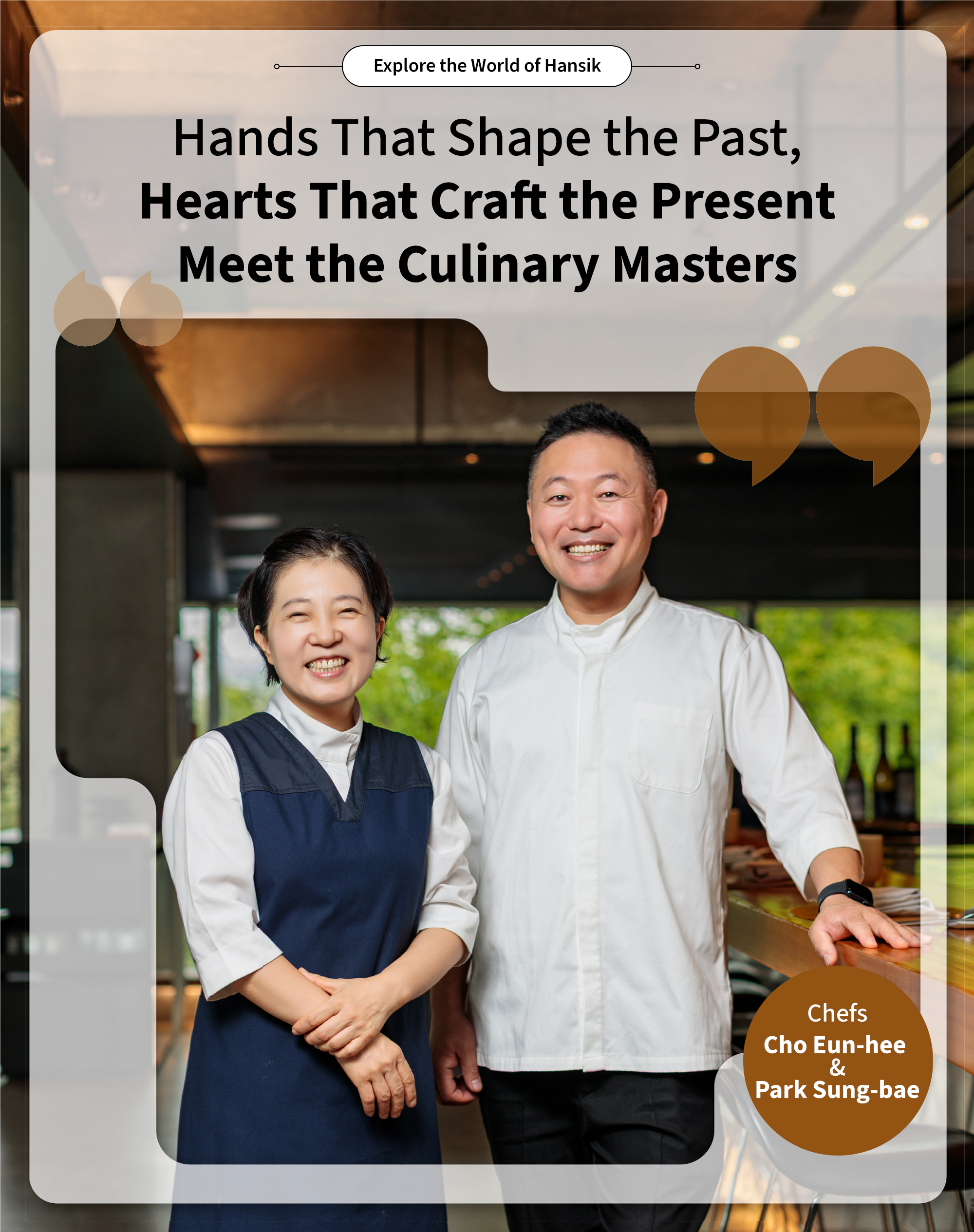
Past the refined cream-colored façade that graces Gyeongbokgung’s walking trail, beyond glass doors that capture the rhythmic flow of ancient stone walls like ripples on water, Onjium restaurant emerges as a crossroads of eras. Here, ancestral wisdom layers upon each dining table like sediment of centuries, while contemporary sensibilities settle gently over this foundation. Within every carefully crafted dish, “tradition” and “present time” interweave in harmony, while the kitchen’s experiments continue to forge new pathways for Korean cuisine, Hansik. At the heart of this culinary confluence stand Executive Chefs Cho Eun-hee and Park Sung-bae. Together, they mine contemporary menus from ancient recipe manuscripts, explore the intricate interplay between traditional liquors and Hansik, and nurture the emerging talents who will shepherd this tradition into tomorrow. In their hands—seeking profound resonance rather than superficial grandeur—the complete arc of Hansik’s past, present, and future are being wholly reimagined and carefully crafted.
Q. Please share some information about Onjium restaurant.
Executive Chef Cho Eun-hee (hereinafter referred to as Chef Cho): Onjium functions as a traditional culture research institute —one that honors our heritage while actively shaping today and tomorrow. We examine the profound wisdom and philosophy woven into our ancestors’ approach to clothing, food, and shelter, seeking to bridge those timeless values and principles with the rhythms of contemporary life.
Executive Chef Park Sung-bae (hereinafter referred to as Chef Park): Within Onjium, we have three distinct workshops: one dedicated to traditional garments, another to architectural heritage, and a third to culinary arts. Onjium Restaurant represents the culmination of our culinary workshop’s research, where we reimagine traditional Hansik through a contemporary lens. The restaurant’s name reflects this philosophy—"onjium” translates to “crafting with completeness,” combining “on” (whole) with “jium” (to build, to create).
Q. Your menu clearly reflects inspiration drawn from ancient recipe texts and traditional cooking methods. Could you share any dishes you'd particularly like to highlight?
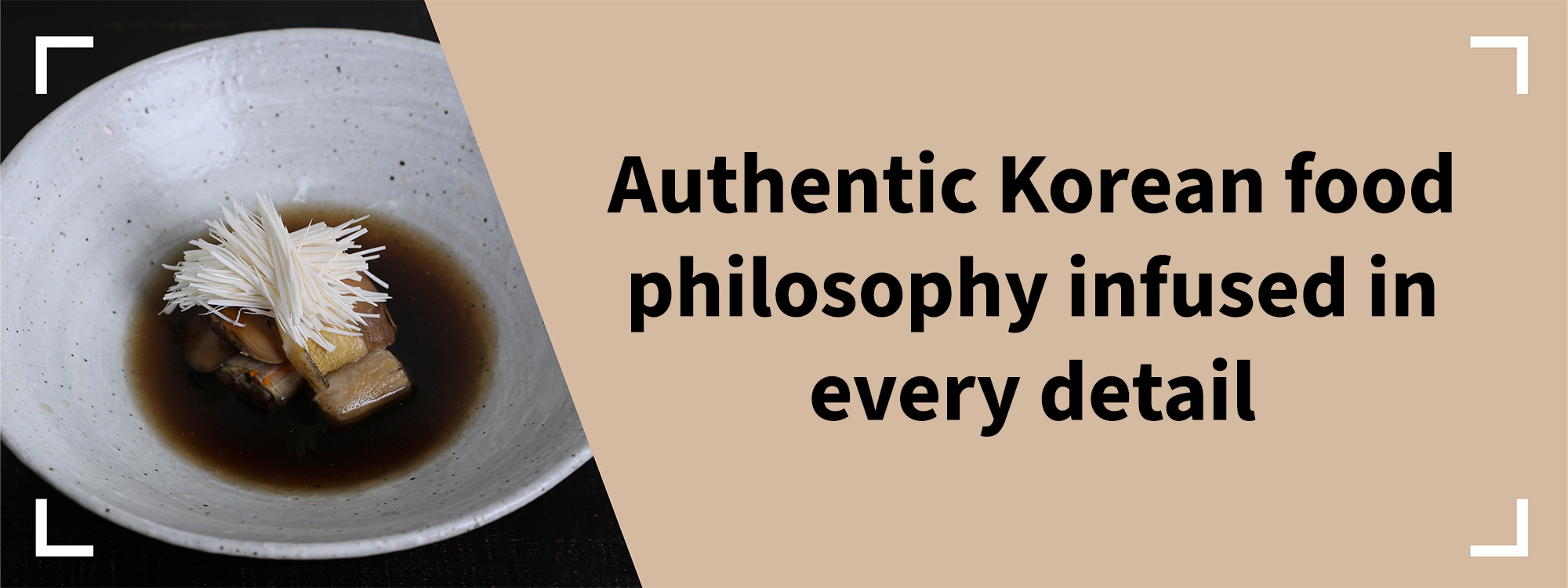
Chef Park: Our greatest inspiration comes from modernizing traditional noble house cuisine. Take “eoeumjeok,” for example—historical court feast records describe this as fish and beef meat threaded onto skewers and grilled. We’ve transformed this into our "eel eoeumjeok," incorporating pike conger eel with beef, Sichuan pepper, and dendrocnide. Another example is our interpretation of “okjamhwa,” a dish that traditionally encases beef, shiitake mushrooms, and pear within flower petals— created our own version using dried abalone in place of the beef.
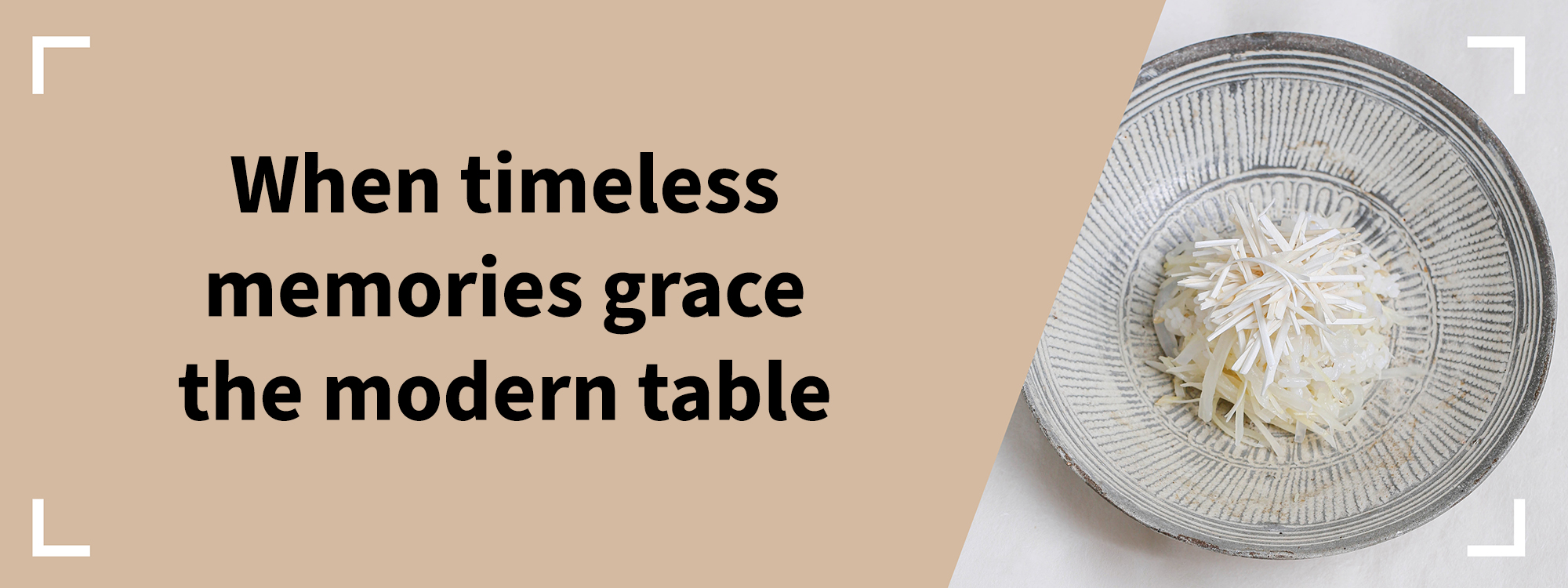
Chef Cho: We’re particularly excited about our upcoming autumn menu feature, “Baekhwaban.” This bibimbap showcases root vegetables that that reach their prime during the cooler months of fall and winter—radish, deodeok (lance asiabell), and doraji (bellflower root). The name “baek” (meaning white) comes from the ivory white tones of these ingredients. Much like Jeonju and Jinju, each with its signature bibimbap style, we’ve crafted our own distinctly Onjium version, and I hold a special affection for this creation.
Q. What food philosophy guides you most fundamentally in your cooking?
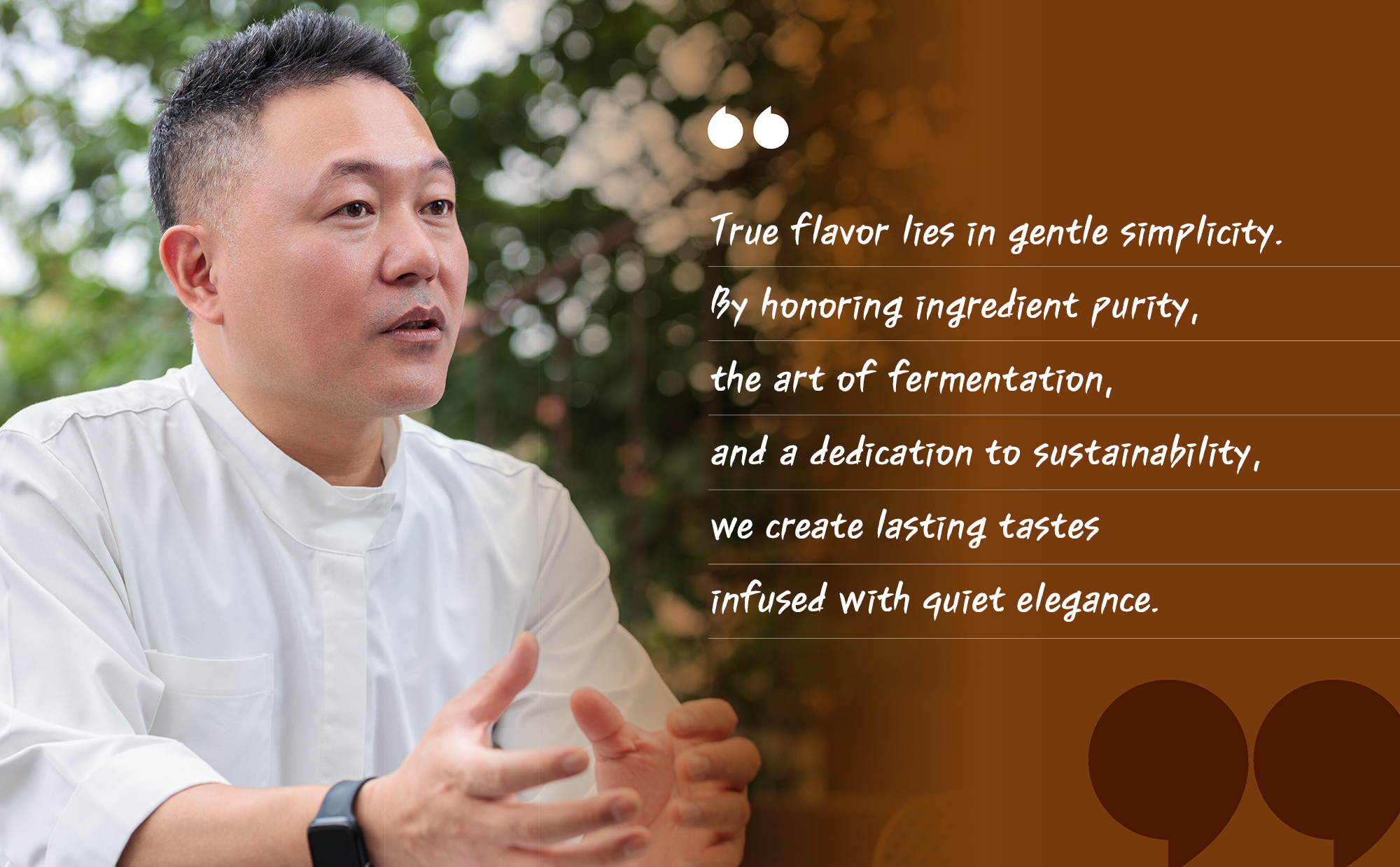
Chef Park: Our philosophy is rooted in the ancient wisdom of “daemi-pildam”—the finest flavors are gentle ones. Foods that shock the senses with stimulating intensity may grab attention initially, but they wear out their welcome quickly. Subtle, nuanced tastes, on the other hand, offer enduring pleasure and leave lasting impressions in memory. This is why at Onjium, we pursue cuisine that feels both effortlessly approachable and deeply satisfying— flavors you can return to time and again.
Chef Cho: Central to this philosophy is our commitment to “honoring ingredients in their truest form.” We aim to preserve the natural essence of quality ingredients as much as possible, while also engaging deeply with sustainable food systems. Living in a time of environmental crisis, we’re always wrestling with difficult questions: which ingredients must we safeguard, and what kind of food culture can we responsibly pass on to those who come after us. These days, we're focusing on “time-honored flavors.” Looking ahead five, even ten years, we’re convinced that the complex depths achieved through slow maturation will harmonize beautifully with the “gentle” sophistication that defines our culinary vision.
Q. You regularly present new Korean course menus. How do you plan and structure these offerings?
Chef Cho: Onjium’s course menus are based on seasonal rhythms. We hold the firm belief that using exceptional ingredients at their optimal moment creates the finest cuisine possible. Beyond this, we also try to capture the transformative power of fermentation—like that found in doenjang (soybean paste)— while honoring the essential life force that pulses through each raw ingredient.
Chef Park: Even when we return to familiar dishes, we introduce slight variations. For instance, last year’s tangpyeongchae (mung bean jelly salad) featured crab meat, while this year we might incorporate abalone instead. We are always seeking ways to let tradition and modernity coexist, experimenting with contemporary ingredients such as cheese or asparagus. What’s more, our menu development isn't limited to Chef Cho and myself—it's a collaborative effort involving our entire team. This teamwork leads to fresher, more harmonious results.
Q. The traditional liquor pairings are quite remarkable. What criteria guide your matching process?
Chef Cho: Traditional Korean alcoholic beverages have been fundamental to Onjium since our inception. We sample artisanal spirits from every corner of Korea to understand their harmony or synergy with our dishes, and we even brew our own. We embrace bold experimentation—brewing with surplus ingredients from the kitchen, or infusing our creations with doenjang (soybean paste), gochujang (red chili paste), or kimchi liquid.
Chef Park: Traditional Korean liquors possess a beautiful equilibrium of sweetness and other savory notes, making them naturally compatible with most dishes. But we take a deliberate approach—serving guests traditional liquors that pair exceptionally well with a dish alongside others that create more tension, encouraging diners to taste and discover these differences firsthand. This method ultimately illuminates the distinctive flavors and characteristics of both the heritage spirits and our cuisine with greater clarity.
Q. You're both dedicated to training emerging chefs and cultivating new talent. Was there a particular moment that inspired this focus?
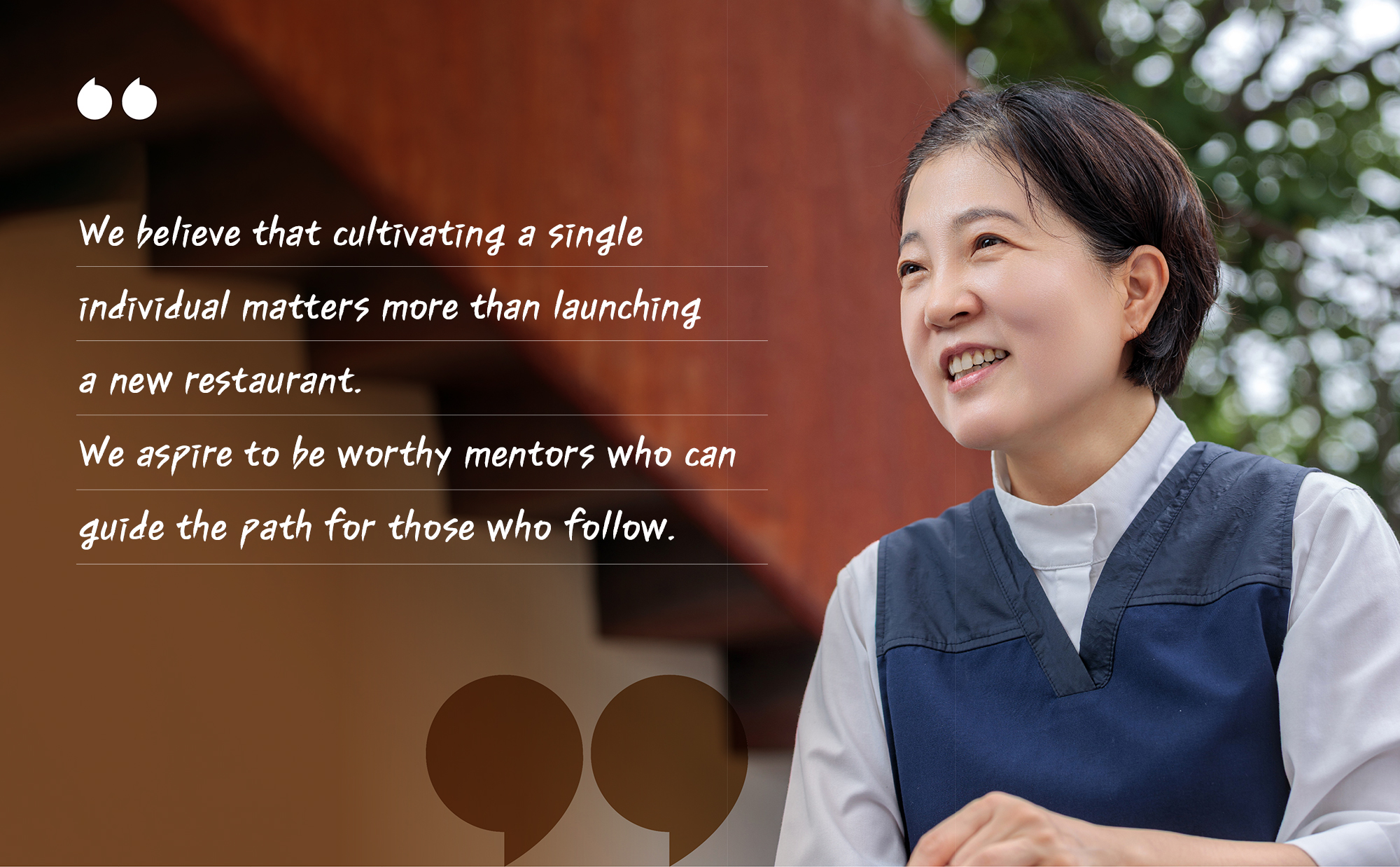
Chef Cho: We’re convinced that developing a single individual carries infinitely more worth than launching a new establishment. This conviction drives us to foster our team’s development through twice-monthly sessions with specialists who guide us through ancient culinary manuscripts, and we seek out elders nationwide to learn traditional food preparation firsthand. We complement this with liberal arts education, ensuring our team develops vision that extends well beyond the kitchen.
Chef Park: That’s exactly why we joined the “2025 Young Chef Education” initiative organized by Korean Food Promotion Institute. In that program, we showcased eight distinct cooking techniques using just one croaker fish. The students’ bright enthusiasm sparked in me a deeper passion for fulfilling my role as an instructing chef. Our ability to guide these younger colleagues exists only because we ourselves were fortunate to learn from extraordinary mentors. Chef Cho was trained by Han Bok-ryeo, and I owe who I am today to Chef Cho Hee-sook. Just as our teachers once lit the path ahead for us, we now strive to carry that light forward for those who come after.
Q. Onjium has achieved meaningful recognition, ranking 10th on Asia’s 50 Best Restaurants and 57th on The World’s 50 Best Restaurants. What significance does this hold?
Chef Park: It’s been 13 years since we launched Onjium. We began with just three people and now have over 20 members working alongside us. Throughout this journey, our fundamental mission has remained unchanged—it’s not about building Onjium’s reputation, but about “nurturing people.” We exist to provide a sanctuary where emerging chefs can master authentic Korean cuisine, and where vanishing traditions find new voice through contemporary interpretation. These accolades represent the harvest of that dedicated work. But the true prize is witnessing our team members embrace the confidence that comes from thinking, “I'm receiving genuine training in a place that truly matters.”
Chef Cho: The rankings themselves weren’t our objective, but the fact that Hansik’s sophistication gained worldwide recognition holds tremendous significance. Seeing foreign diners move beyond the usual dishes like chicken or bulgogi, but develop appreciation for the more nuanced and ancient aspects of Hansik through their Onjium experience. This fills me with immense pride as a Hansik chef.
Q. What are your expectations for the upcoming “2025 Hansik Conference' in October?
Chef Park: If Spain boasts “Madrid Fusión” as its international gastronomy fair, Korea’s equivalent is our “Hansik Conference.” This event serves as both a platform where Hansik restaurants exchange their latest discoveries and collectively address upcoming challenges, while also offering international guests a unified vision of Hansik.
Chef Cho: Hansik rarely captivates at first encounter—its deeper beauty emerges only through multiple tastings. That’s precisely why events like this must continue consistently. If this event succeeds in motivating international chefs to explore Korean culinary traditions and incorporate Korean ingredients in their own communities, it will evolve beyond a simple conference into a crucial engine propelling both the globalization and sustainability of Hansik.
Q. How do you hope Onjium will be remembered as a restaurant in the years to come?
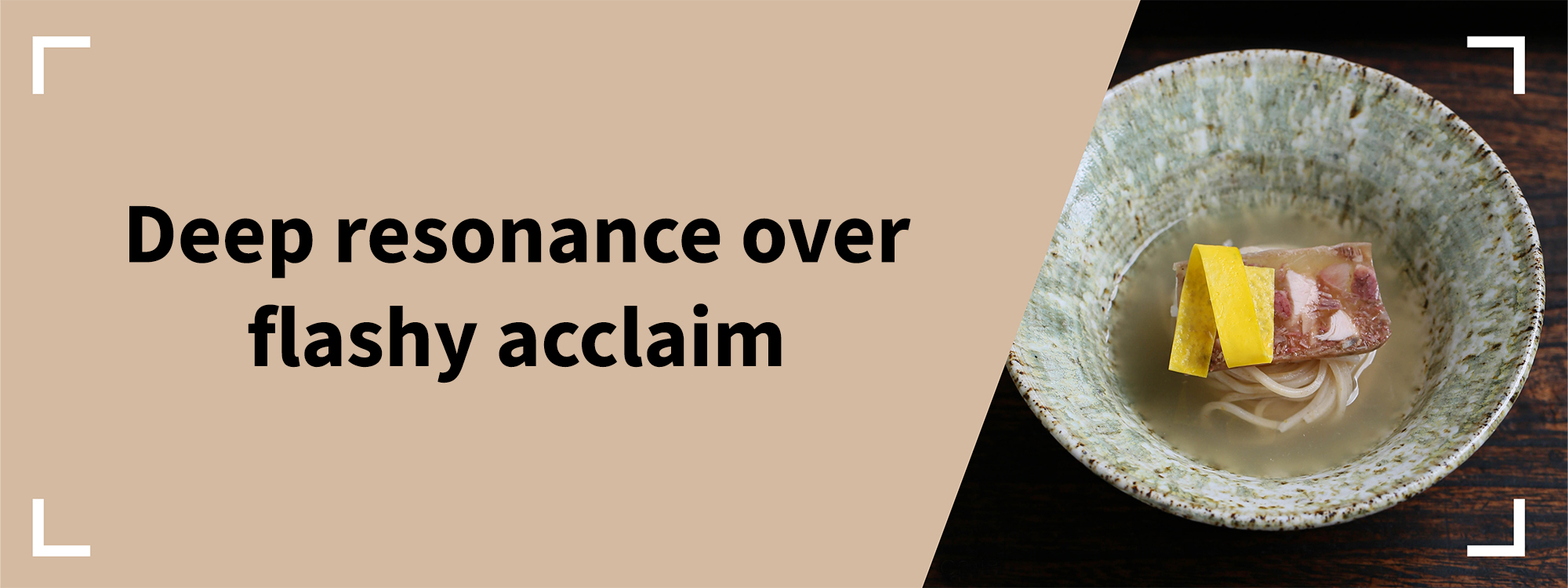
Chef Park: We aspire to be remembered for creating deep, lasting impressions rather than flashy acclaim. If foreign guests or newcomers to Hansik can visit us and intuitively grasp “this is the essence of Korean food,” leaving with that authentic sense of discovery—achieving that would fulfill me completely as a chef dedicated to Hansik.
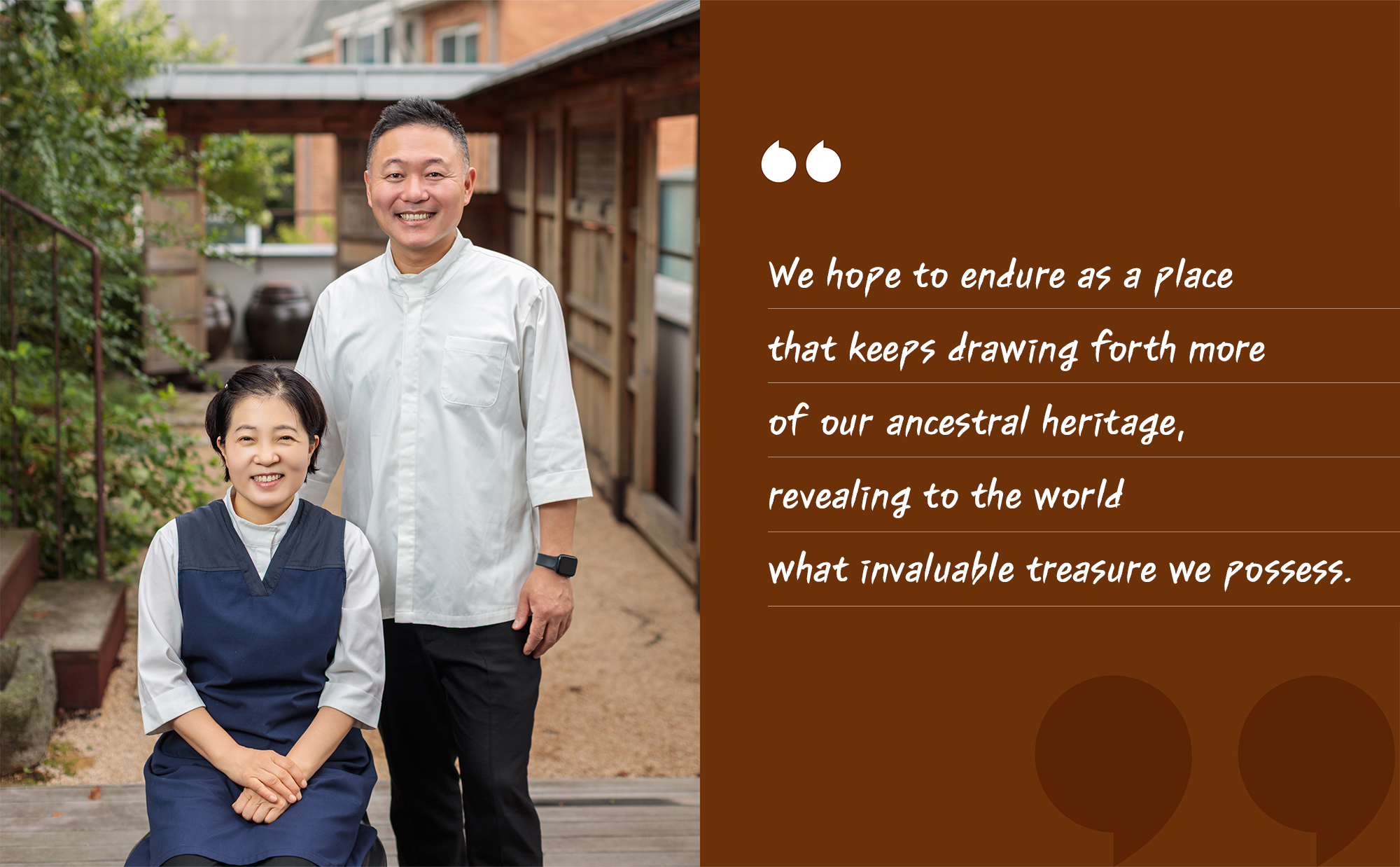
Chef Cho: Looking ahead, we dream of establishing a fermentation research center dedicated to the systematic study of traditional liquors and fermented pastes. We are also working toward producing over 80% of the seasonings used in our restaurant in-house. Above all, I want to help each team member focus intensively on developing expertise in their individual areas of interest. In the end, every one of these aspirations flows back to Onjium’s fundamental value: “nurturing people and preserving tradition.” We hope to endure as a place that keeps drawing forth more of our ancestral heritage, revealing to the world what invaluable treasure we possess.