


한식에 대한 다채로운 이야기를 전하는 온라인 매거진
A Joint Initiative by the Korean Food Promotion Institute and the Italian Cultural Institute in Seoul
An Insight into Korean Cuisine, Hansik
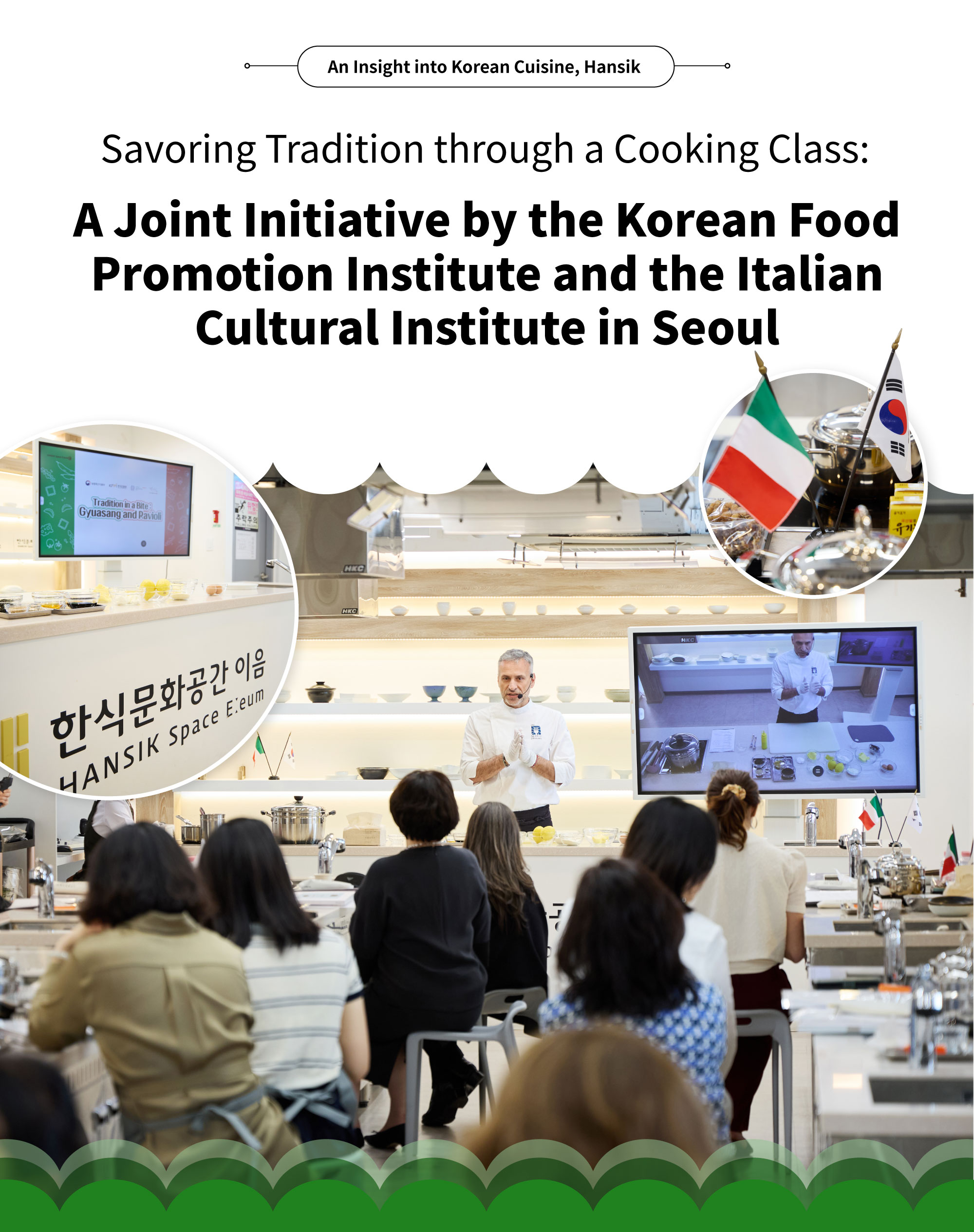
A unique event honoring the cultural identity and heartfelt spirit of traditional cuisine was held on June 5 at the Hansik Learning Center within Hansik Space E:eum in Jongno-gu, Seoul. The cooking class, titled “Tradition in a Bite: Gyuasang and Ravioli,” brought participants together around the shared theme of culinary heritage. The event, co-hosted by the Korean Food Promotion Institute and the Italian Cultural Institute in Seoul, was held in celebration of the “2024–2025 Korea–Italy Year of Intercultural Exchange.” Its aim was to deepen cultural understanding through the traditional cuisines of both nations. Let’s take a closer look at the event, where two chefs expertly prepared Gyuasang and ravioli, and participants eagerly joined in the hands-on cooking experience.
Pasta with a Soft, Airy Lift: Ravioli
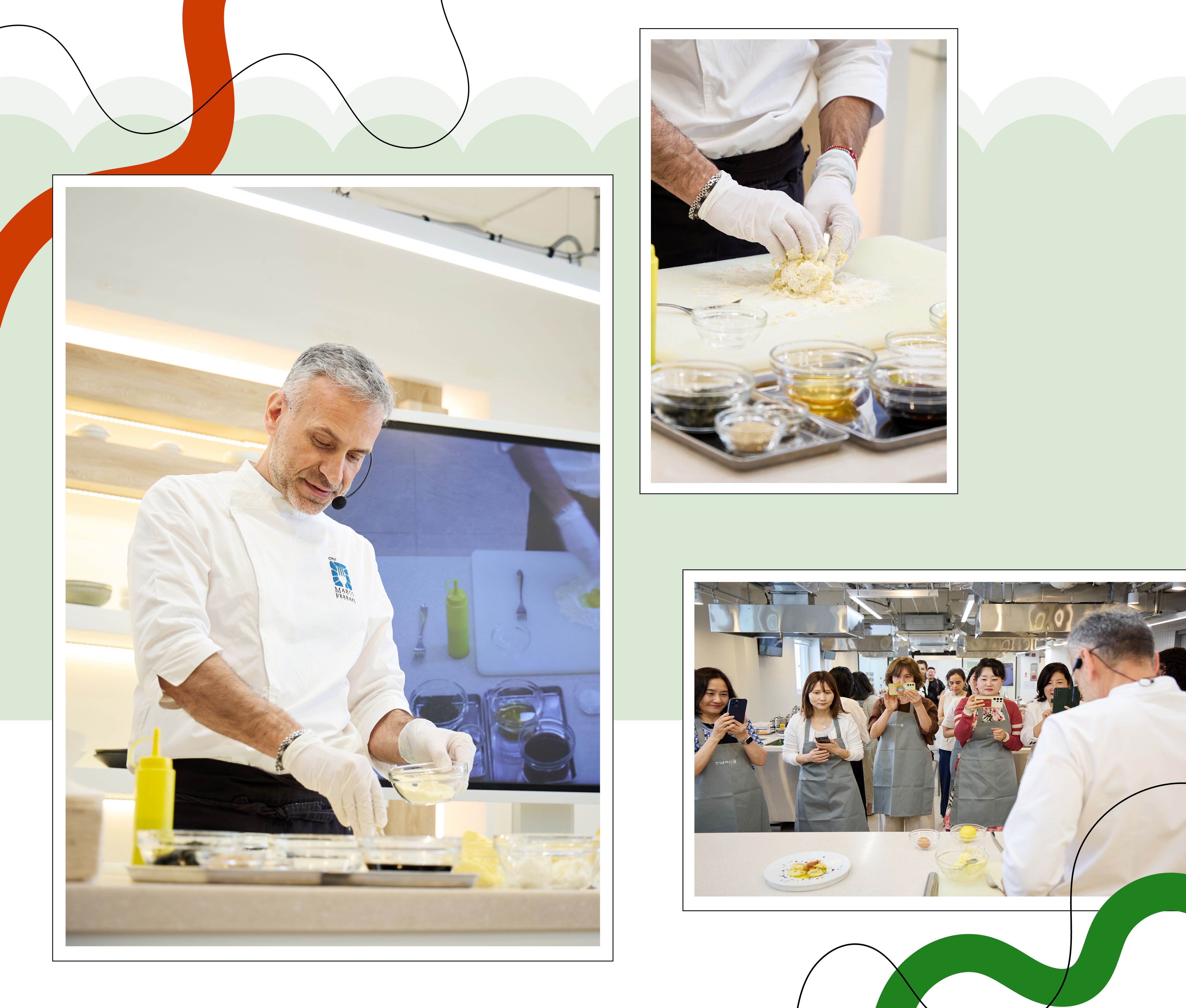
The first part of the class began with an engaging ravioli cooking demonstration led by Italian chef Marco Ferrari. Ravioli is a beloved traditional Italian pasta made by layering fillings like cheese, meat, or vegetables between thin sheets of dough, shaping them into squares or half-moons, and cooking them in boiling water. Italian chef Marco skillfully guided the process; gently rolling out the dough by hand, adding the filling, and finishing with a delicate shrimp garnish. The thin pasta sheets, just translucent enough to hint at the filling inside, made for a visually stunning dish that had participants eagerly snapping photos. Throughout the demonstration, Chef Marco offered insightful commentary on ravioli, making the experience all the more engaging and enjoyable.
Mandu (Dumplings) Reflecting Royal Summer Elegance: Gyuasang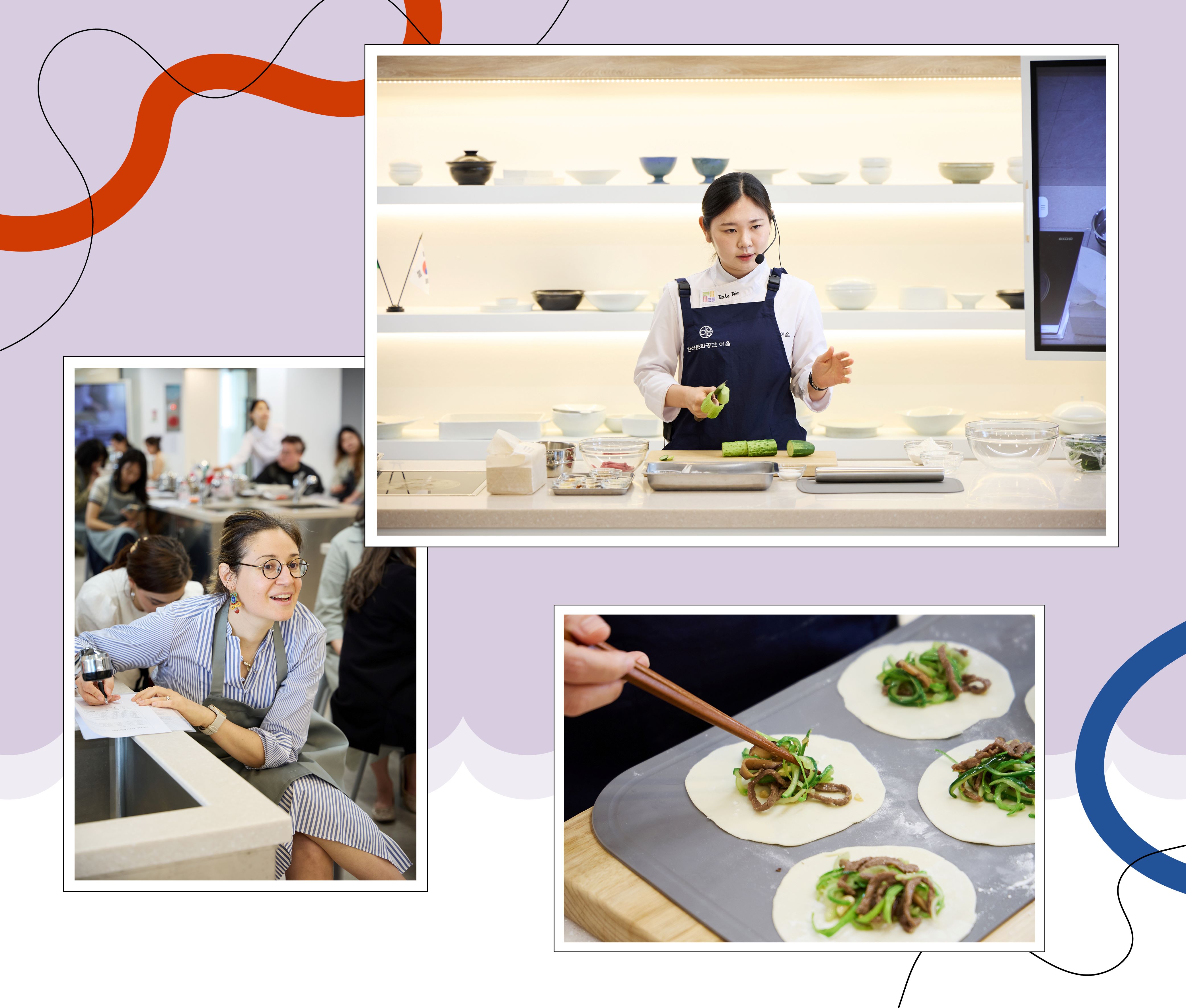
In the following session, Chef Kim Da-ae of the Korean Food Promotion Institute presented a demonstration of Gyuasang, a traditional Korean summer delicacy. Once served to esteemed guests in the royal court, Gyuasang is known for its refined appearance, full of vibrant colors and elegant form—featuring delicate, translucent wrappers, finely minced fillings, and a graceful presentation often accompanied by ivy leaves. Like ravioli, Gyuasang is made by filling a thin sheet of dough and then steaming or boiling it, resulting in a similar look and texture. Chef Kim Da-ae guided participants through the entire process—from kneading the dough to elegantly plating it with ivy leaves. The delicately steamed Gyuasang, carrying an inviting aroma, captivated the audience and sparked their curiosity.
Shape the Flavors of Tradition with Your Own Hands
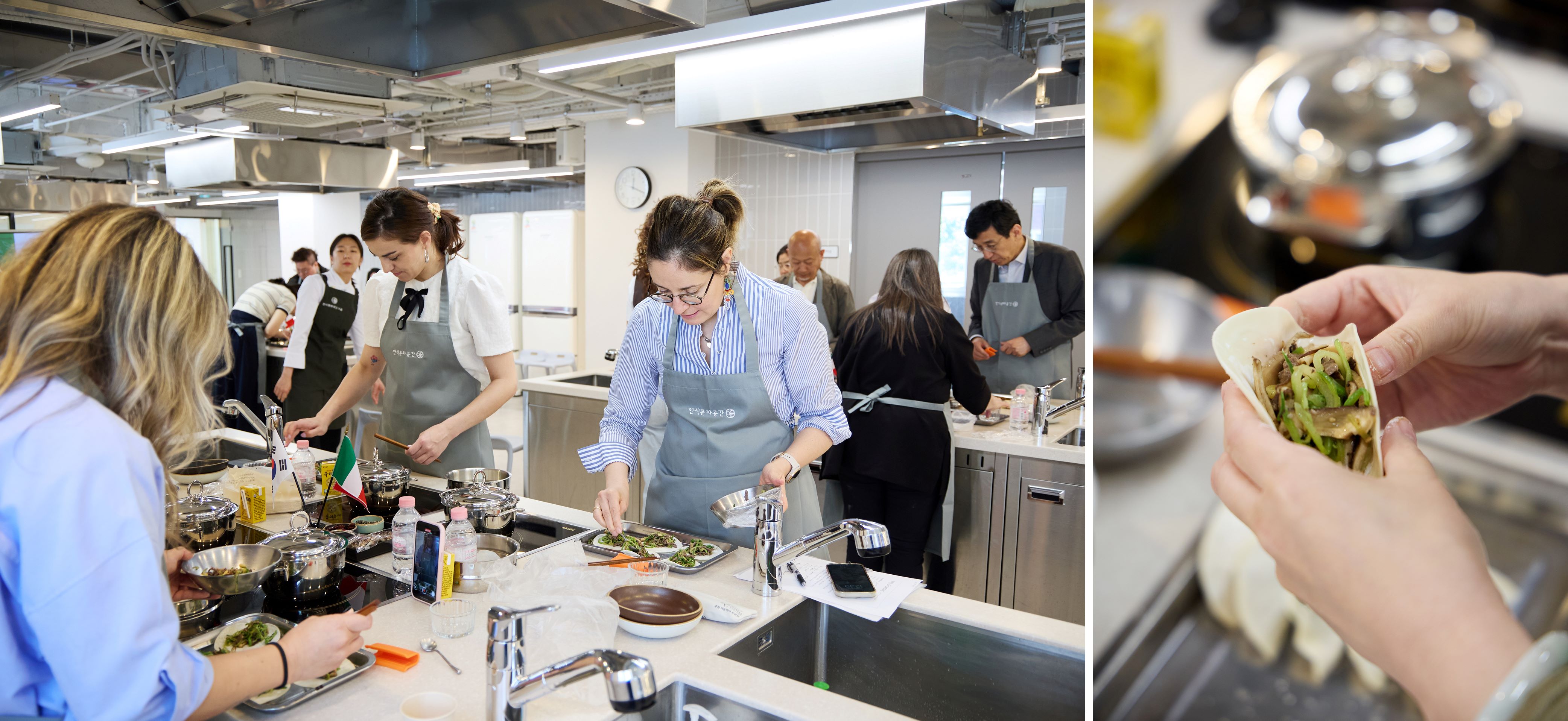
Following the demonstration, participants eagerly moved to their stations to try making Gyuasang themselves. They began by sautéing a variety of fillings to bring out their rich aroma, then carefully worked with the dough—at first unfamiliar, but soon more manageable as they gained confidence. Some participants focused intently on filling the dough with precision, while others carefully paid attention to maintaining the delicate shape of the Gyuasang as they placed it in the steamer. As the Gyuasang finished steaming, one by one over the course of about ten minutes, the room filled with a shared sense of pride and excitement.
Bridging Cultures Over One Table: Korea & Italy
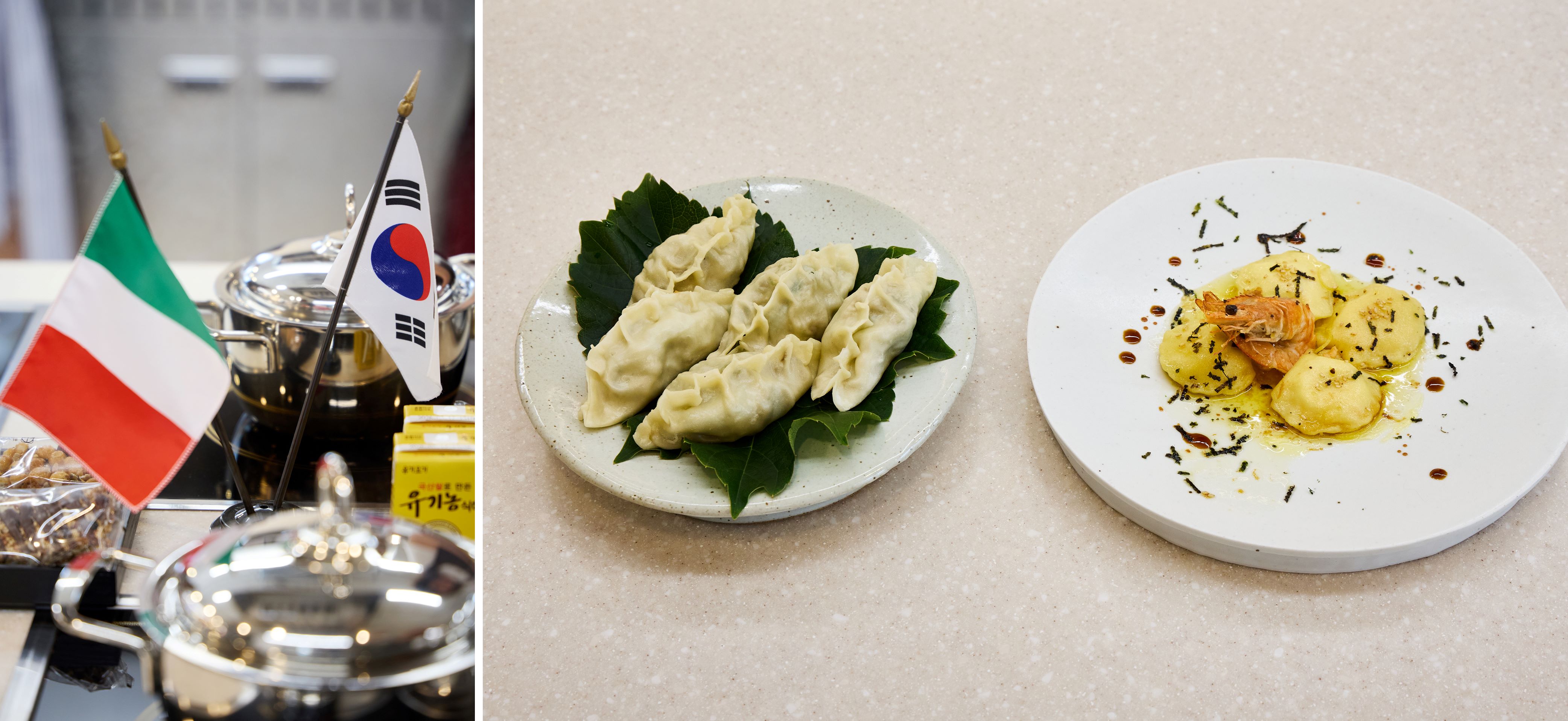
After the cooking session, participants moved to the tasting area, where a beautifully arranged table awaited—featuring Chef Marco’s ravioli alongside the handmade Gyuasang crafted by each participant. With smiles and curiosity, everyone enjoyed the flavors of both nations. Conversations flowed naturally, stories were exchanged, and a warm sense of connection blossomed. Through the shared language of food, Korean and Italian cultures came together effortlessly, with each bite crossing borders and touching hearts.