

한식에 대한 다채로운 이야기를 전하는 온라인 매거진
One Bowl to Purify the Heart: Venerable Jeonggwan
Explore the World of Hansik
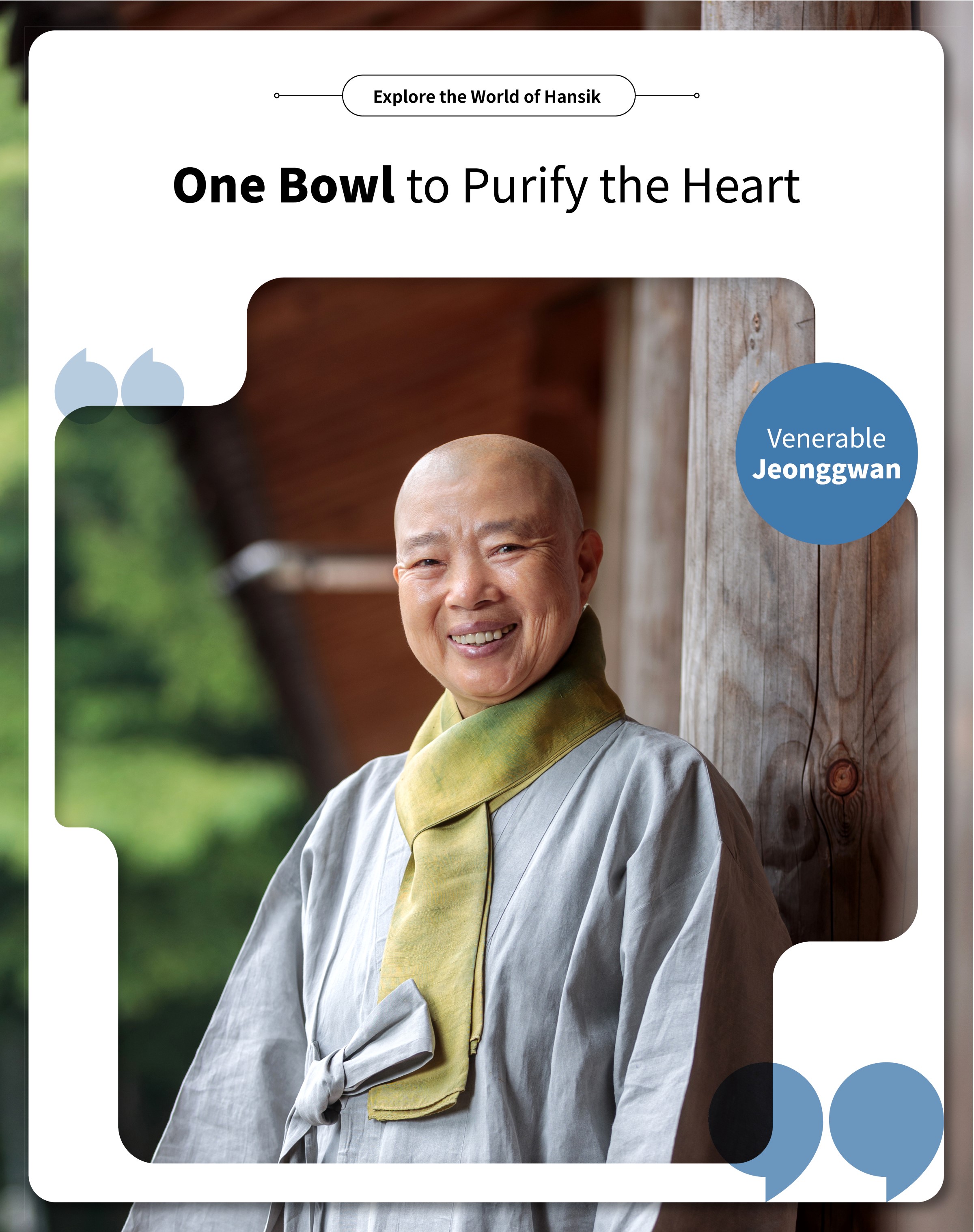
Venerable Jeonggwan does not refer to herself as a chef. She describes her daily cooking as an act of using natural ingredients in harmony with the changing seasons. Yet, her hands reveal a silent passion for food and profound tenderness. Every movement, as delicate as if she were handling life itself, reflects her deep care for those who will partake in the meal. For this Buddhist nun, cooking is not merely preparing food; it is a form of spiritual practice.
Entering monastic life at 17, Venerable Jeonggwan has devoted over five decades to the study of temple cuisine, infusing sincere care into every single ingredient. Her deeply rooted philosophy reached a global audience through the 2017 Netflix documentary Chef’s Table, which invited viewers to reconsider the very meaning of eating. Today, her approach continues to resonate, closely aligned with contemporary values such as sustainability and harmonious living. If you’re ready to explore food that reflects nature and embodies a spirit of mindful discipline in every dish, shall we begin a journey to Baekyangsa Temple in Jangseong to meet Venerable Jeonggwan, the spiritual practitioner of temple cuisine?
Q. You’ve been studying and practicing temple cuisine for decades. What meaning does temple food hold for you?
To me, temple cuisine is both a companion and a form of life. I am inseparable from it, even for a moment. In essence, it is life itself to me.
Q. Temple cuisine is often viewed simply as a meat-free or vegetarian diet. How do you distinguish temple cuisine from general vegetarian food?
Generally, vegetarianism refers to a plant-based diet that avoids animal products. Think of a salad dressed with olive oil or balsamic vinegar. But temple cuisine goes beyond simply omitting meat; it is grounded in a deep respect for all forms of life. This respect extends not only to animals but also to plants—their roots, stems, leaves, and fruits are all used mindfully, with nothing wasted. Leftovers are preserved with care. Even when picking a single leaf of lettuce, I do so with reverence for life, restraining desire and cultivating a mindset of living in harmony with nature.
Q. “Sustainability” and “zero waste” are keywords that matter in today’s food culture. It seems temple cuisine shares a lot in common with these values.
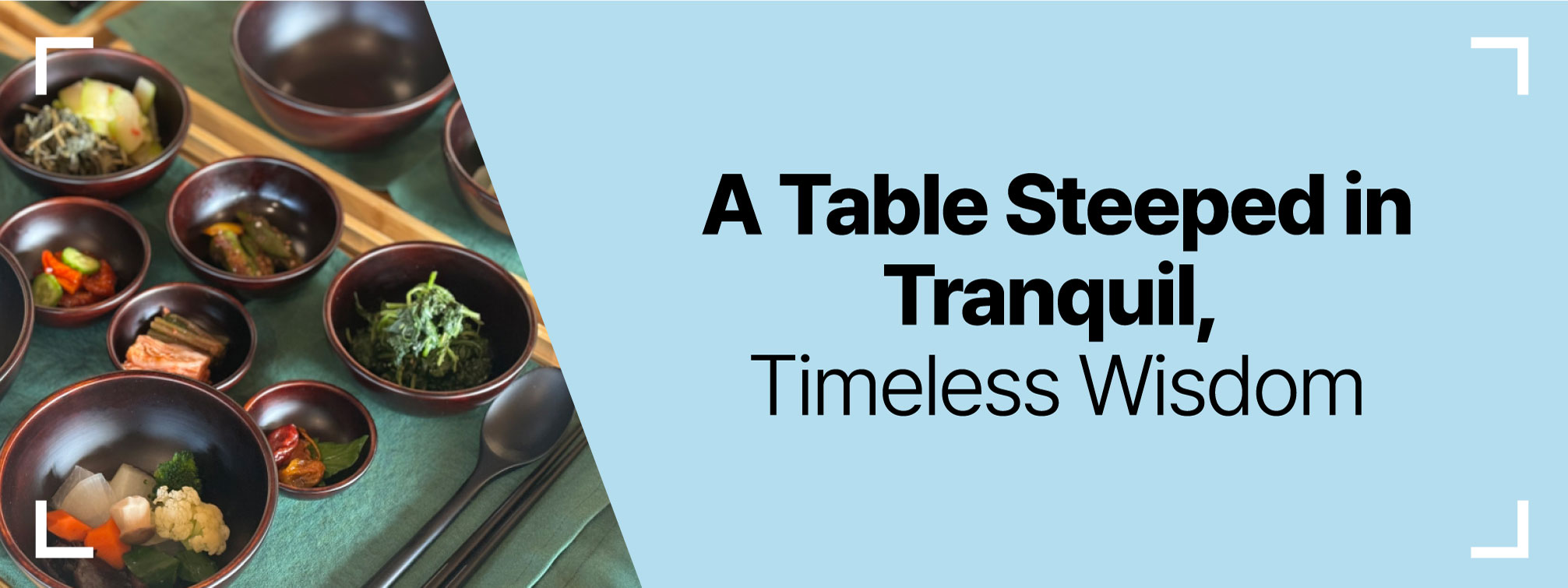
Exactly. In fact, this mindset dates back 2,700 years to the time of the Buddha. Monastics lived forming a community and went on mendicancy in the early morning, gathering food from villagers. They ate just one meal during the morning hours and either shared or stored the rest. The spirit of the “empty bowl”— taking only what is needed—was dates back to that time. This moderation and sharing reflect a profound respect for coexistence with nature and attitude toward the preciousness of food. In today’s world, where environmental issues are critical, it’s clear that the food culture people seek closely aligns with the philosophy of temple cuisine.

Q. You often emphasize the importance of seasonal ingredients. How do you typically approach cooking during the summer?
A. In spring, we forage wild greens from the mountains and begin planting seeds in the vegetable garden. As the season progresses, crops like lettuce, winter-grown cabbage, cucumbers, chili peppers, and pumpkins begin to grow. After the Dano festival in May, wild greens start to develop natural toxins, so we stop consuming them and shift our focus to the vegetables we’ve cultivated in the garden. In early summer, bamboo shoots are commonly enjoyed. They’re prepared in various ways; seasoned as namul, made into a sweet and sour salad, or pan-fried. As the season continues, cucumbers, eggplants, and green chili peppers come into their peak, making them ideal for chilled soups, stir-fries, and pickles. Ramie leaves also follow the rhythm of the season. In spring, we steam the leaves to make rice cakes, while in summer, the stalks grow tall and are used to prepare side dishes. In this way, ingredients are chosen in harmony with the changing seasons and cooked using the method that best suits each, reflecting the natural flow of the year.
Q. Since temple cuisine depends on creating deep flavor using only vegetables, the preparation process must be quite unique. What cooking method do you consider most important in temple cuisine?
In truth, there isn’t any special technique or complex process. If you approach cooking with the mindset of constantly adding more ingredients, you end up losing the essence of each one. What matters most is to truly face the ingredients in front of you, with respect. For example, even a single ingredient like eggplant is prepared differently depending on the season. When the blossoms first appear and the fruit is still young and tender, its flavor can be brought out with just a touch of seaweed and salt. A few days later, as the eggplant matures, with its skin thickening and seeds forming, it’s best cooked more thoroughly, then seasoned with homemade soy sauce and a sprinkle of toasted sesame seeds. Each season asks for its own way of preparing ingredients. That’s why I don’t rely on fixed recipes. Even a single ingredient can give rise to many different dishes. Every choice begins with understanding the ingredient’s natural state in the present moment.
Q. You described cooking as a kind of spiritual practice. What kind of mindset and approach do you adopt when you cook?
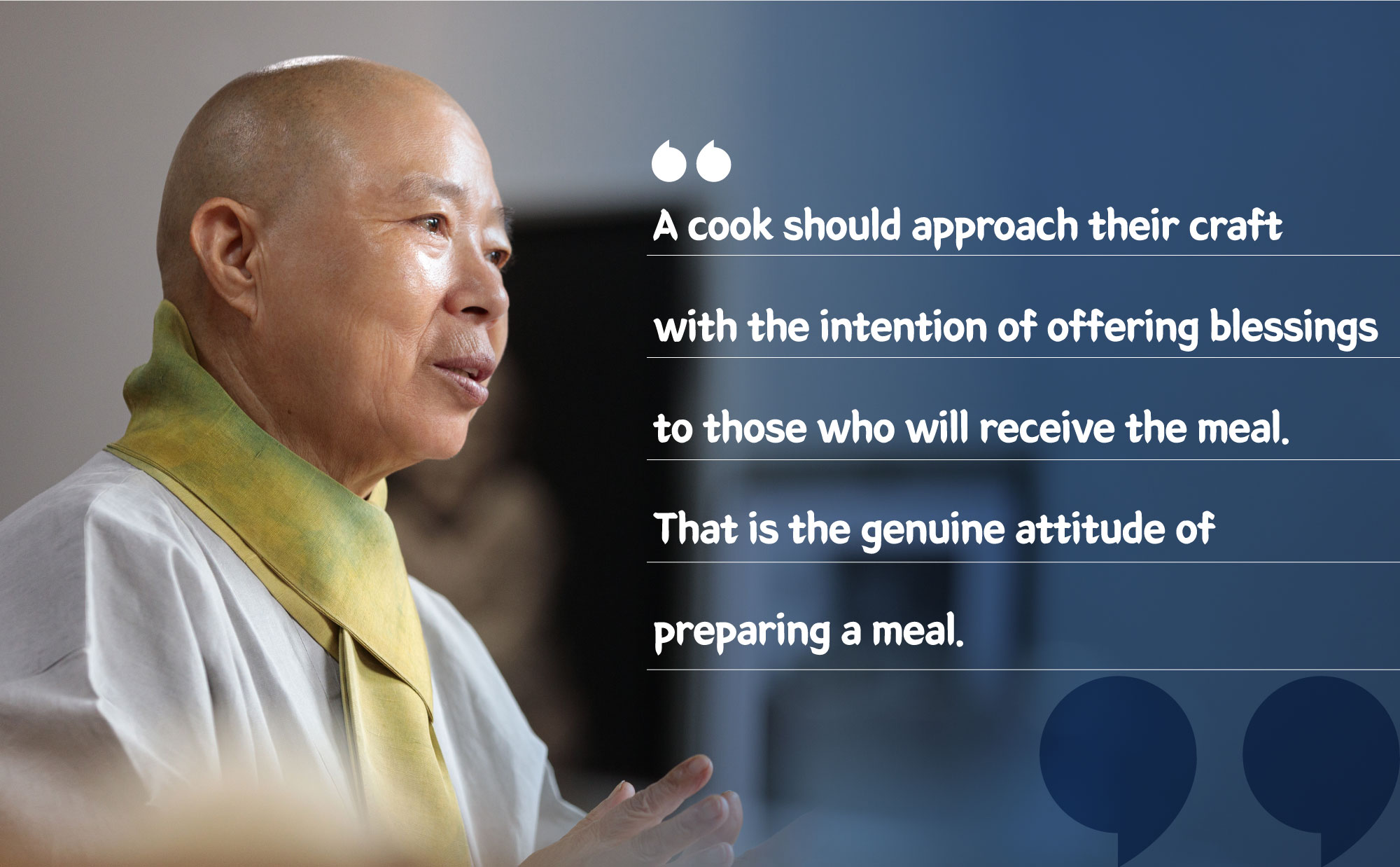
Just as the core of monastic practice is to unite self and others as “one,” cooking also calls for that same sense of unity—between myself and the ingredients. I need to understand them deeply and handle them with care so they can come alive. It’s a heart-to-heart dialogue between the cook and the food, a quiet exchange. It's equally essential to think about the person who will be eating the food. Their age or health condition should influence how the ingredients are sliced, cooked, and prepared. Food should be gentle on the stomach, nourishing, and supportive of the eater’s well-being to truly serve its purpose. The heart of cooking lies in preparing each dish with genuine care and a heartfelt wish for the well-being and happiness of those who will eat it.
Q. These days, more people are trying to bring elements of temple cuisine into their everyday meals. What are some simple ways to begin, or dishes you would suggest to get started?
One simple way to begin is by preparing dishes that make full use of each ingredient—from the roots and stems to the leaves and fruit. If certain parts, like roots, are hard to eat directly, you can gather the leftover bits and use them to make a broth or a nourishing tea. The main idea is to reduce waste by using every part of the ingredient as much as possible. Try to approach each step of cooking with mindfulness and an effort to minimize waste. For example, when boiling vegetables, begin with the lighter-colored ones and reuse the cooking water in other dishes. When stir-frying or seasoning, use just one pan or bowl, arranging your ingredients neatly and using them in order. What’s most important is treating even a single utensil or a bowl of water with care and respect.
Q. Temple cuisine is also drawing international interest. When sharing it abroad through lectures or demonstrations, what elements do you choose to highlight most?
These days, rather than traditional lectures or cooking demos, I guide participants through a mindful eating meditation. We prepare only three simple side dishes and a kettle of water. Everyone brings their own bowl and utensils from home, takes only what they need, and ensures nothing is left uneaten. After the meal, participants rinse their bowls with water, drink the water, and pour the final bit onto a tree. There are no dirty dishes, and no food waste. This practice becomes an embodied teaching. It reveals how eating itself can be a form of spiritual discipline, a way of living with intention, and an act of reverence for all forms of life.
Q. What steps are necessary to preserve temple cuisine, and how do you envision its future?
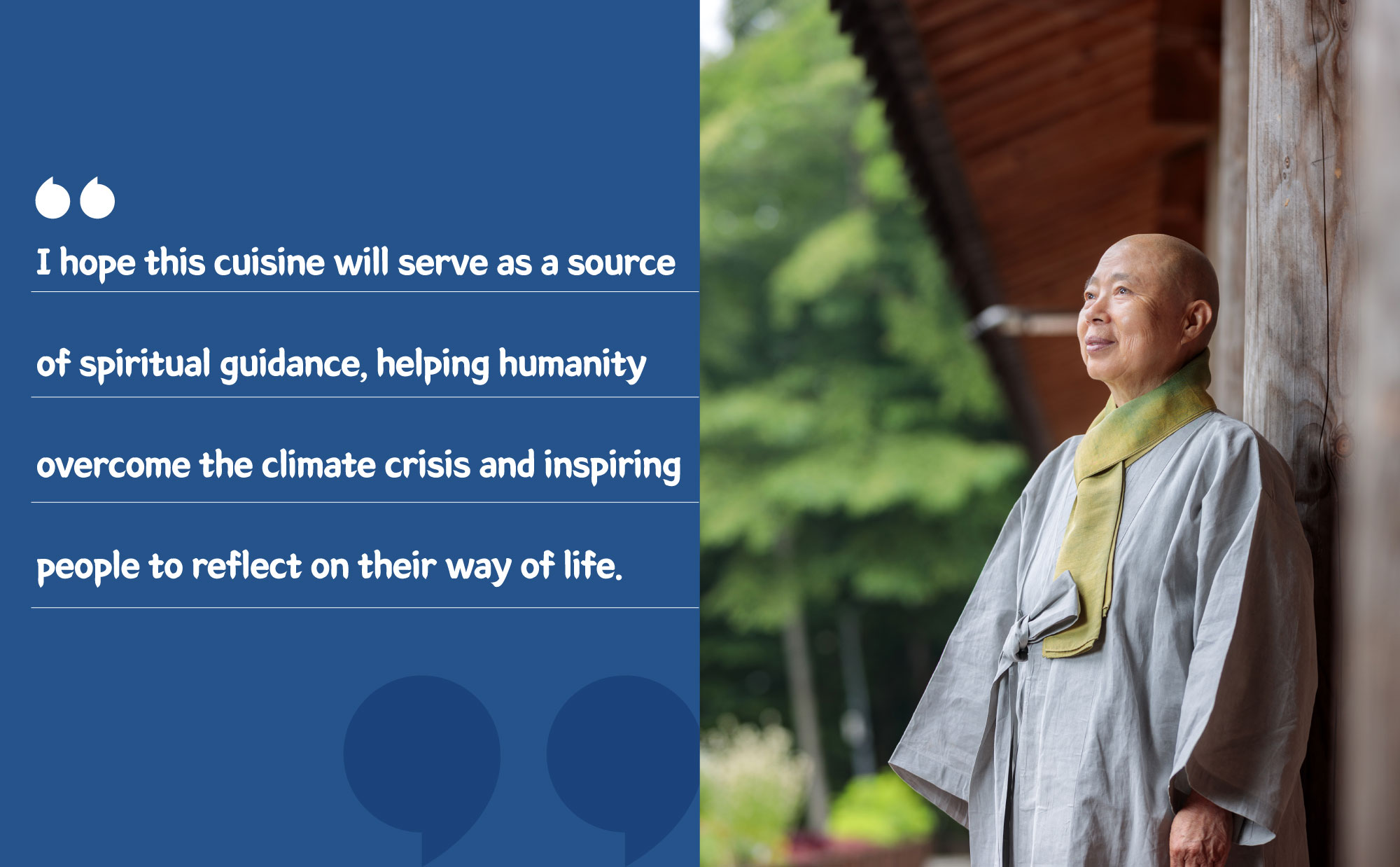
Temple cuisine is not merely a method of cooking. It is a living cultural tradition that reflects the Buddhist worldview and spiritual discipline. Since Buddhism arrived in Korea over 1,600 years ago, monks have sustained themselves by preparing meals with ingredients gathered from the mountains surrounding their temples. This deep-rooted wisdom has been passed down through generations, shared not just through words, but through shared experience and observation. In recent years, there have been conscious efforts to preserve this heritage more systematically by visiting various temples, studying their unique culinary practices, and compiling their recipes into organized records. Now is the moment to both preserve this tradition and thoughtfully adapt it to contemporary and global settings. Temple cuisine goes beyond nourishment; it embodies an attitude toward life, a path of spiritual discipline, and a deep harmony with the natural world. Looking ahead, I hope this cuisine will serve as a source of spiritual guidance, helping humanity confront the climate crisis and inspiring people around the world to reflect on their way of life, as we share its deeper meaning together.