

한식에 대한 다채로운 이야기를 전하는 온라인 매거진
The True Value of Korean Ingredients
HANSIK Dialogue
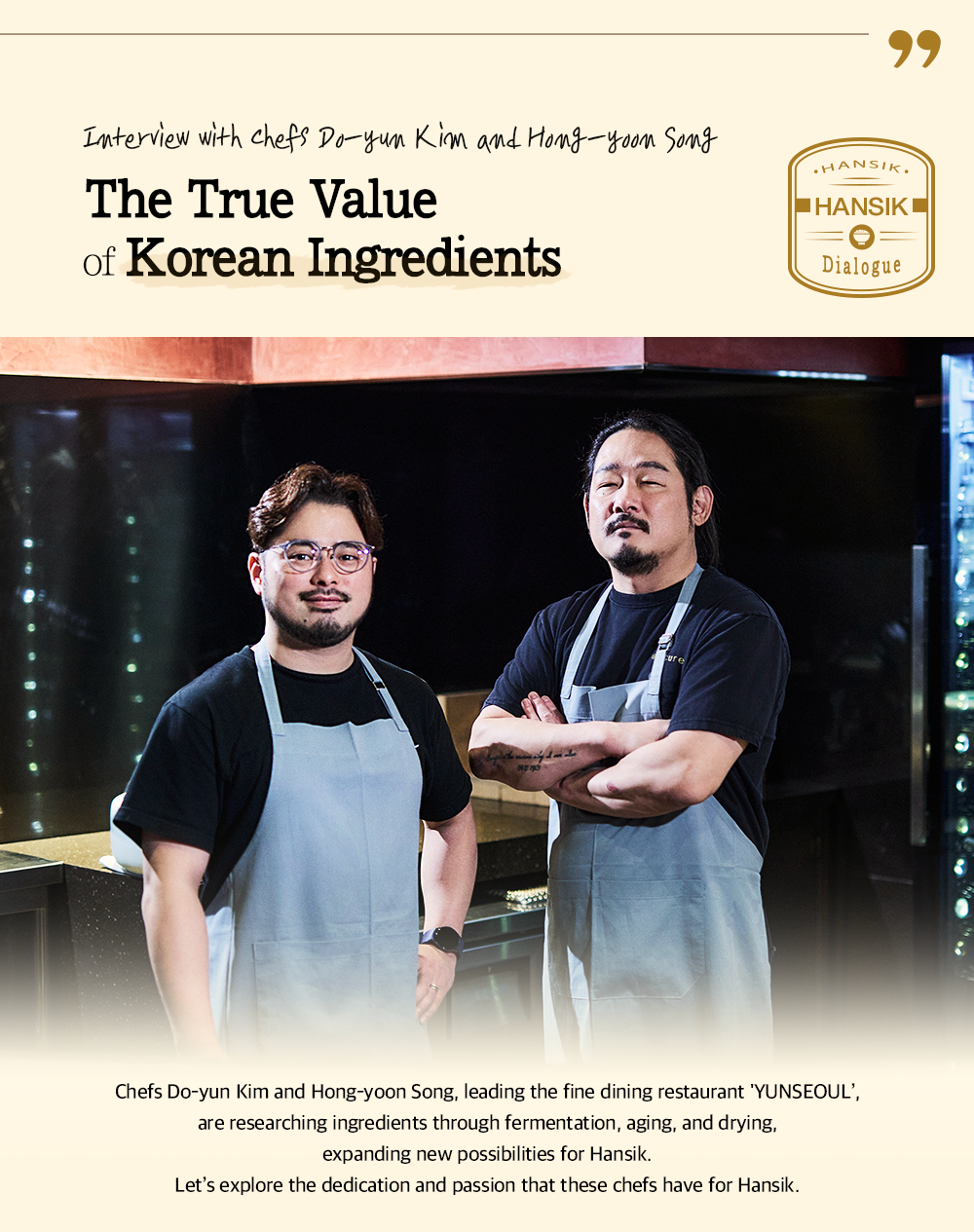
Hansik fine dining, which preserves tradition while reinterpreting it with a modern sensibility, is emerging as a new trend in the culinary world. At the heart of this movement are chefs who deeply explore the essence of Hansik and expand its possibilities through unique and innovative approaches.
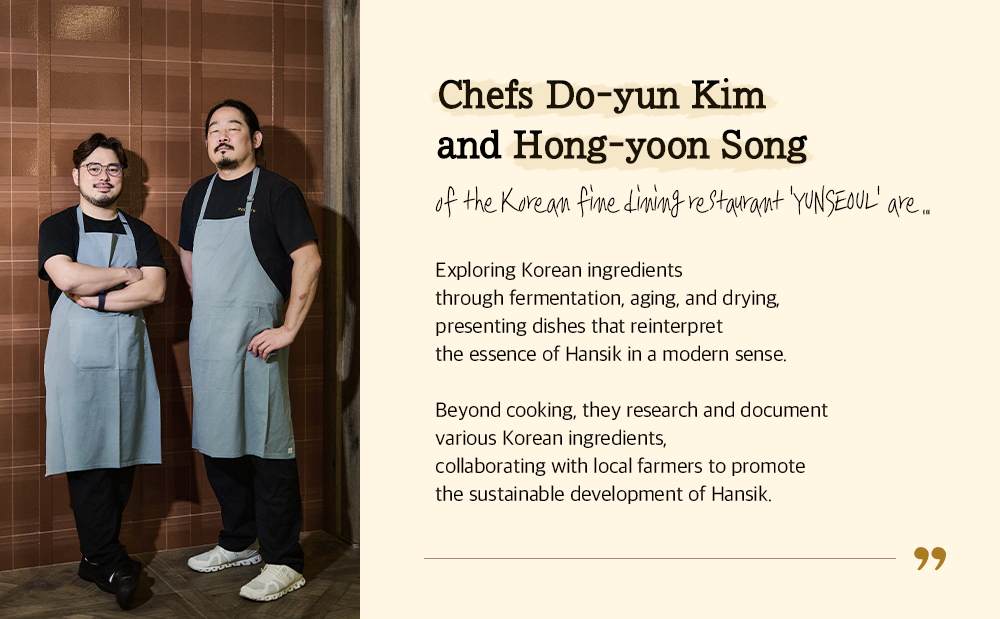
Chef Do-yun Kim and Chef Hong-yoon Song, who lead the Hansik fine dining restaurant YUNSEOUL, are elevating the distinctive charm of Hansik through techniques such as fermentation, aging, and drying. They are reshaping the future of Hansik fine dining with their creative vision. We had the opportunity to learn more about their culinary philosophy, vision, and their deep commitment to Korean ingredients.
Q: What is the main focus of YUNSEOUL as a Hansik fine dining restaurant?
Chef Kim: The most important aspect at YUNSEOUL is the raw ingredients themselves. We strive to bring out the natural flavors of ingredients through processes such as fermentation, aging, and drying. We aim to utilize traditional Korean fermented foods like jang (fermented sauce), jeotgal (salted seafood), and jangajji (pickled vegetables), or reinterpret Hansik based on the cooking methods of our ancestors.
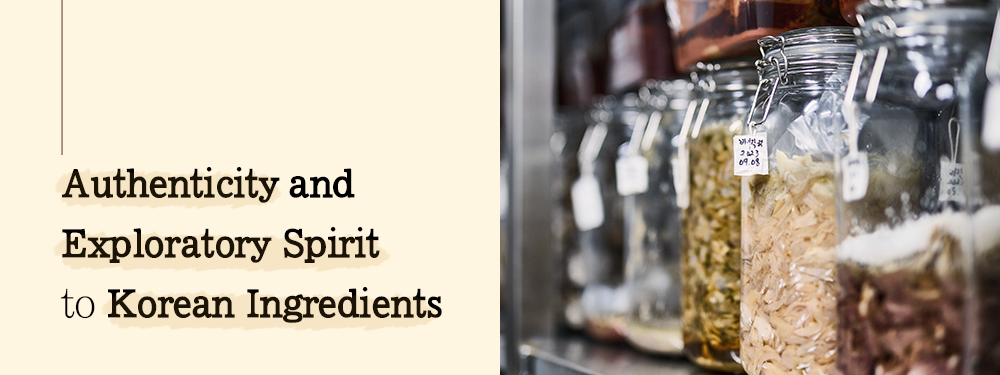
Chef Song: YUNSEOUL maintains close communication with local farmers and producers, and we travel across the country with various chefs in search of healthy ingredients. This year, we have traveled to the mountains and the seas to find ingredients such as gosari (bracken), juksun (bamboo shoots), and gim (laver). We are also planning to obtain gotgam (dried whole persimmon) soon in Cheonghakdong, Jirisan.
Q: What inspired you to open a fine dining restaurant based on Hansik?
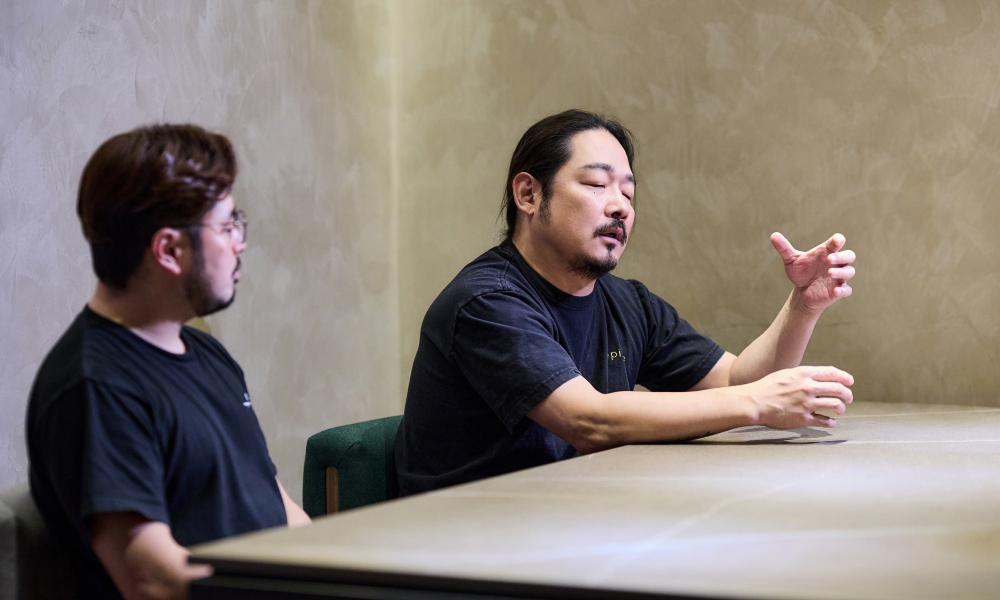
Chef Kim: I’ve experienced various cuisines, including French and Japanese, but the reason I chose Hansik was because of the endless possibilities offered by Korean ingredients. The texture and flavor of ingredients change completely depending on the processing methods such as drying, aging, and fermentation. It was through these processes that I became fascinated with researching Hansik.
Chef Song: In modern society, there seems to be a greater emphasis on efficiency, with a focus on producing food quickly and in large quantities rather than on quality. However, I believe that to preserve the tradition of Hansik, we must continually study and develop our ingredients, striving to improve them over time.
Q: Why are fermentation, aging, and drying important in the cuisine at YUNSEOUL?
Chef Song: Fermentation, aging, and drying are among the most crucial traditional cooking methods in Korea. These processes enhance the flavor and texture of ingredients, bringing out the unique charm of Hansik even futher. Fermented foods like jang (fermented sauce), jeotgal (salted seafood), and dried foods have long been a part of the Korean table and have played a significant role in the development of Hansik. I want to spread the knowledge and values of these traditions even wider.
Chef Kim: One of the reasons these processes are so important is that they can bring out a wide range of transformations from a single ingredient. The various ingredients that fill YUNSEOUL are also part of our ongoing research. For example, we’ve collected dozens of domestic sesame and perilla seed samples, comparing their differences. We experiment with roasting them at different temperatures and pressing out oils to explore how they can be used in various dishes.
Q: Where do you draw inspiration from when creating your menu?
Chef Kim: I have fond memories from my school days, like enjoying ganjaemijjim (steamed stingray) that my mother dried for three days and then steamed. Also, I remember making kkakdugi (diced radish kimchi) during home economics class and sharing it with my family. These everyday experiences with Hansik have had a big influence on the dishes I create today. These small, personal memories are a major source of inspiration for constructing the menu at YUNSEOUL and for reinterpreting Hansik in a modern way.
Q: Have you had any particularly difficult experiences while managing ingredients?
Chef Song: Fermentation often comes with unexpected challenges. There was one instance when I was fermenting meju (fermented soybeans), that various types of bacteria spread, causing us to have to discard all the ingredients that were stored in the same space. Through this trial and error, I gained a deeper understanding of fermentation and realized the importance of more meticulous management when handling ingredients.
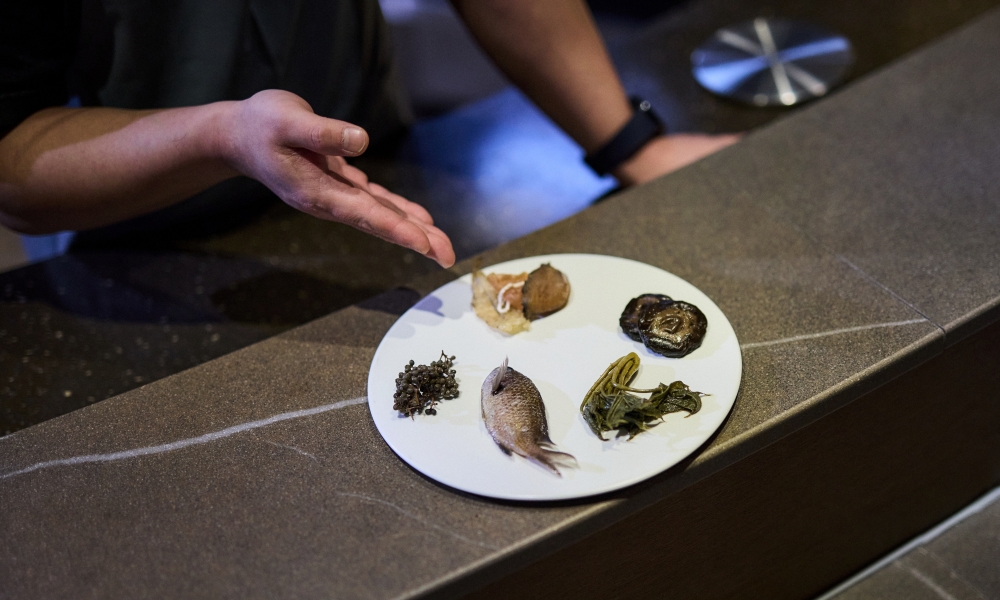
▲ Chef Song introduced ingredients used in the actual dining menu at YUNSEOUL. These include 8-year-old sancho jangajji (pickled prickly ash fruits), jaridom (pearl-spot chromis) used for jeotgal (salted seafood), eomnamu sun jangajji (pickled castor aralia shoots) from Jirisan, fermented pyogobeoseot (golden oak mushrooms), and dried seafood, among others.
Q: How do you think Hansik should develop in the future?
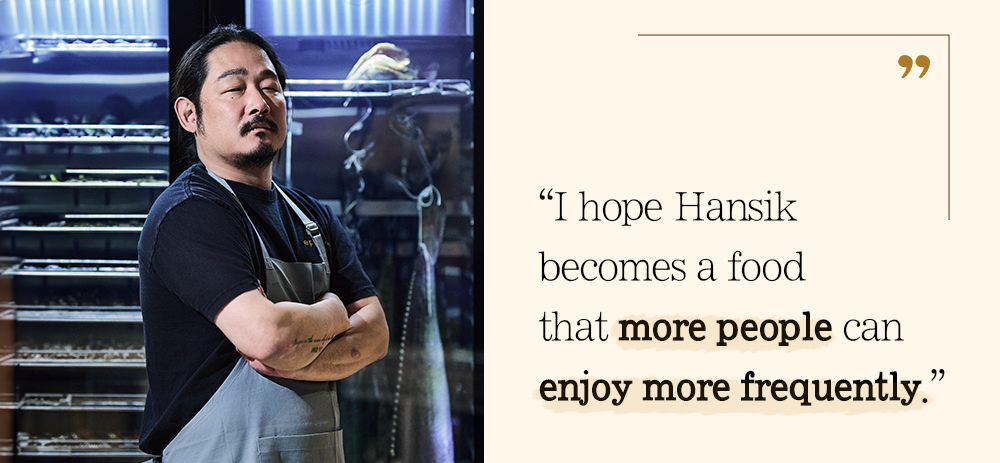
Chef Kim: I believe that for Hansik to progress, it needs to become a food that people can easily access and enjoy regularly. Once Hansik naturally establishes itself in daily life, I am confident it will evolve and develop further. We aim not only to preserve tradition but also to reinterpret it in a modern way, expanding the possibilities of Hansik.
Q: What are your plans for the future?
Chef Kim: Our goal is to take a step beyond just presenting dishes and create a space where we can research a wide variety of Korean ingredients. We aim to systematically study and document the traditional ingredients and cooking methods used in Hansik.
Recently, we collaborated with experts in Jeju's dairy industry and an olive oil sommelier to launch milk produced by cows fed with olive-based feed. We are also focusing on creating healthy ingredients, such as high-quality eggs from chickens raised on nutritious feed.
Chef Song: We want to be involved in every step of the process, from local ingredient production to the arrival on consumers' tables. Going forward, we plan to continue working closely with local farmers, exploring how their ingredients can be used in cooking, and ultimately contributing to the local economy.
Q: Any advice for aspiring chefs?
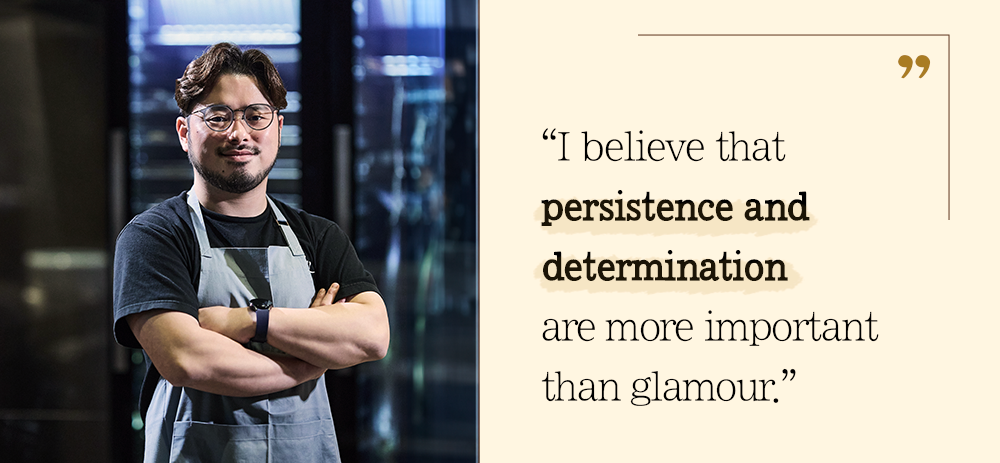
Chef Kim: I believe it's important to have the patience and determination to pursue cooking over the long haul. I hope to have opportunities to collaborate with young chefs in the future. When I first started cooking, there were times I wanted to give up. When I worked in Japan, I had to completely abandon everything I had learned and start over. That experience taught me that cooking is an endless journey of learning.
Chef Song: Rather than focusing on external fame, I believe persistence and determination to work steadily for a long time are crucial. I hope more young chefs will find joy in the process of letting go and simplifying. Also, to truly cook Hansik, a deep understanding of Korea's history and culture is essential. Hansik requires patience and waiting. It's about understanding the essence of ingredients and thinking for a long time about how to incorporate them into a dish. As a Hansik chef, it is important to constantly research, learn, and grow.