

한식에 대한 다채로운 이야기를 전하는 온라인 매거진
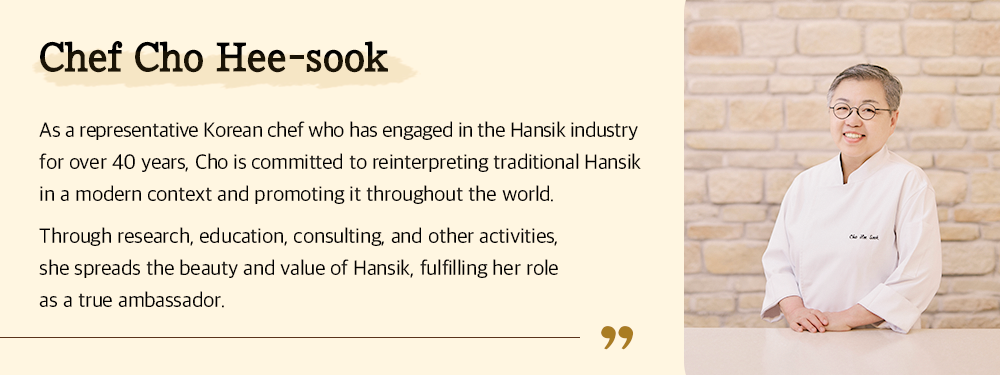
Chef Cho Hee-sook
HANSIK Dialogue
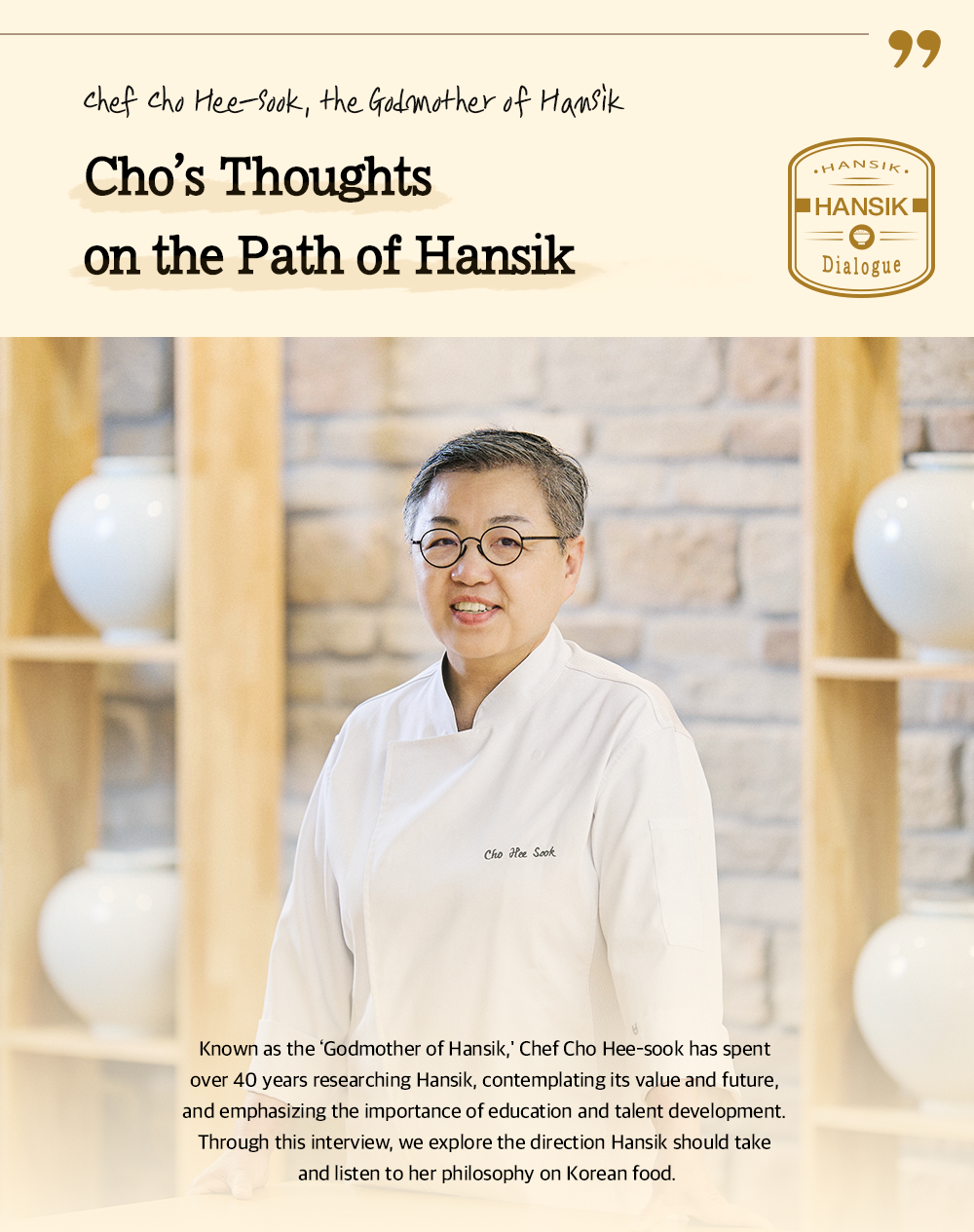
Renowned Chef Cho Hee-sook, hailed as the godmother of Hansik, has captivated the world with dishes that blend tradition and modernity. She began her culinary journey in 1983 at the renowned Sejong Hotel restaurant, stepping into the culinary world from her previous occupation as a middle-school home economics teacher. Following stints at Novotel Ambassador, Grand InterContinental Hotel, and Shilla Hotel's Korean restaurants, she took on the role of head chef at the residence of the Korean Embassy in Washington, D.C, USA, in 2005. In 2019, she further solidified her influence in the Korean culinary scene as the owner-chef of the specialized Korean restaurant 'HANSIKGONGGAN ', earning a Michelin star and leading the Hansik industry in various respects.
In every facet, whether it's in the kitchen, menu consulting, government collaborations, or culinary education, Chef Cho's passion for Hansik shines through in every endeavor. With her extensive experience, Chef Cho consistently contemplates the value and future of Hansik, stressing the significance of education and talent development within the industry. Through this interview, we had the privilege of listening to her philosophy on Hansik and the direction it should take moving forward.
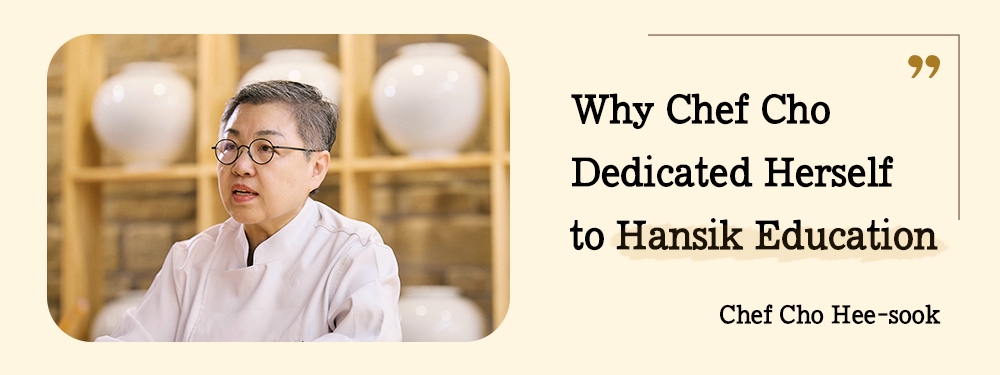
Q: You have devoted considerable effort to nurturing talent in the field of Hansik, from university lectures to apprentice training and even volunteering. What motivated you to dedicate yourself to Hansik education?
Chef Cho Upon completing my studies in Home Economics Education at the College of Education, I embarked on my journey as a schoolteacher. Given my academic background, it was only natural that my career path led me to the realm of food. Education being my foundation, it felt instinctive to delve into teaching Korean cuisine as well. As I evolved in my culinary career, I developed a strong urge to share both my triumphs and setbacks with aspiring chefs, contributing to their professional growth.
Exploring the cuisines and cultures of nations with a more developed culinary scene than ours, I felt a profound sense of responsibility to enrich our own food culture. Recognizing the significance of nurturing talent in the field of Hansik led me to dedicate myself to Hansik education and talent development.
Q: Is there is a particular aspect you focus on or pay attention to the most when teaching Hansik?
Chef Cho When teaching Korean cuisine, I emphasize the importance of adopting a ‘research-oriented’ approach. By delving into the precise processes and seeking out improved methods, we can transcend mere mastery of repetitive tasks—a ‘functional’ aspect—and instead craft dishes that express our unique thoughts and personalities—a ‘technical’ aspect. Additionally, I believe it's crucial to carve out one's own niche and philosophy. In my opinion, encouraging individuals to reach this level on their own is my role.
Q: When do you feel most fulfilled when teaching Hansik?
Chef Cho I feel the greatest sense of fulfillment when I see my students or apprentices surpassing the ideas or cooking methods I have taught them and reaching their own levels. It brings me joy and satisfaction to witness their growth. In those moments, I feel like I am the one learning. Additionally, it's incredibly rewarding when students I've taught at culinary school grow to the point where they become collaborative partners, relying on each other and working together.
Q: Your dedication to a single field for over 40 years serves as an inspiration to those aspiring to work in the Hansik industry. What has been your driving force in this field so far?
Chef Cho I believe I've been able to come this far because I constantly question myself about why I should be doing this and how I should do it, convincing myself through difficult times. It's the unwavering love for my own life and the act of cooking Hansik that has kept me going. When pondering what is most valuable and fulfilling in life, I found that this profession resonated with me the most—it brought joy and fulfillment, and it was something I could excel in.
Moreover, throughout my career, I've been more focused on what I can impart to others, rather than soley on business endeavors or financial gain. This mindset has sustained me over the years, enabling me to remain steadfast on this path for so long.
Q: Who is your role model or the person who has influenced you the most?
Chef Cho Under the tutelage of Teacher Mal-soon Lee from the Korean Traditional Food Research Association, I learned the culinary traditions of noble families. Immersed in teachings that emphasized the importance of a ‘righteous and steadfast heart’ in every culinary endeavor, I learned to honor even the smallest details in cooking. Teacher Mal-soon Lee, a disciple of the esteemed master In-hee Kang, dedicated her life to preserving the exquisite techniques of noble family cuisine and traditional Hansik. Inspired by her dedication, I, too, have adopted a resolute and unwavering approach to cooking, a mindset that grounds me whenever I step into the kitchen.
Q: Hansik is currently enjoying a surge in popularity. As efforts intensify across various fronts to enhance the competitiveness of the Korean food industry, what do you consider to be the most important factor?
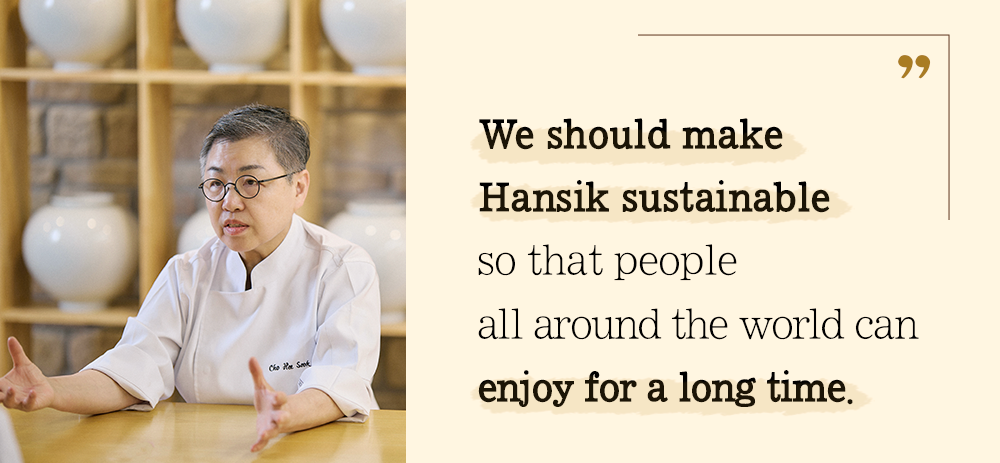
Chef Cho I believe that popular Korean dishes and the deeply rooted history of Hansik should progress harmoniously together. The current Korean food trend, I believe, is the result of various cultural elements coming together and synergizing, supported by the government's policies and budget allocations over the years. Just as globally beloved K-Food items like fried chicken contribute to this momentum, efforts are needed to ensure that this critical opportunity does not end up a temporary fad. It is essential for Hansik to showcase its unique cultural characteristics, historical significance, and culinary excellence.
Maintaining our authenticity ensures that even when it is altered, our cuisine retains its roots. Without this, dishes lose their legitimacy. From an industrial perspective, it's crucial for us to have our distinct identity. This is what solidifies the status of Hansik and ensures the proper dissemination of our food culture.
Q: What advice do you give to culinary students or young chefs in the field studying to make Hansik their profession?
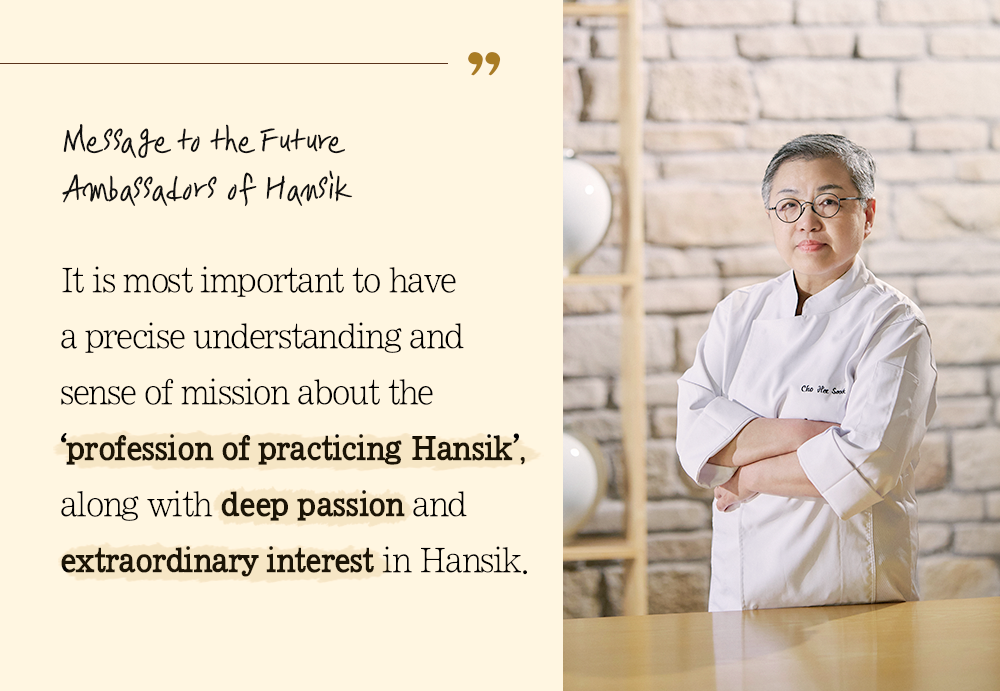
Chef Cho It is crucial to have a firm goal for why you want to pursue Hansik. While the promising outlook might be a significant factor, merely following the current trend will not sustain you in making Hansik your lifelong profession. The most important thing is to have a precise understanding and sense of mission about the profession of practicing Hansik, along with deep passion and extraordinary interest in Hansik. These are the starting points for making Hansik your profession and will be the foundation that keeps you steady and dedicated to your path.
Q: What are your future plans?
Chef Cho When I worked in the field, I often found myself cooking a given menu habitually, just as it had always been done. However, now I want to leverage the research and data I've accumulated to scientifically demonstrate the principles behind our cooking methods. I plan to delve deeper into culinary science and the humanities, aiming to compile my experiences and various theories on Hansik comprehensively. I hope that my accumulated experiences will be effectively conveyed to those uncertain about how to approach Hansik and to future generations of Korean culinary professionals.