


한식에 대한 다채로운 이야기를 전하는 온라인 매거진
Interview with YUNKE, the Best Overseas Korean Restaurant
HANSIK & People
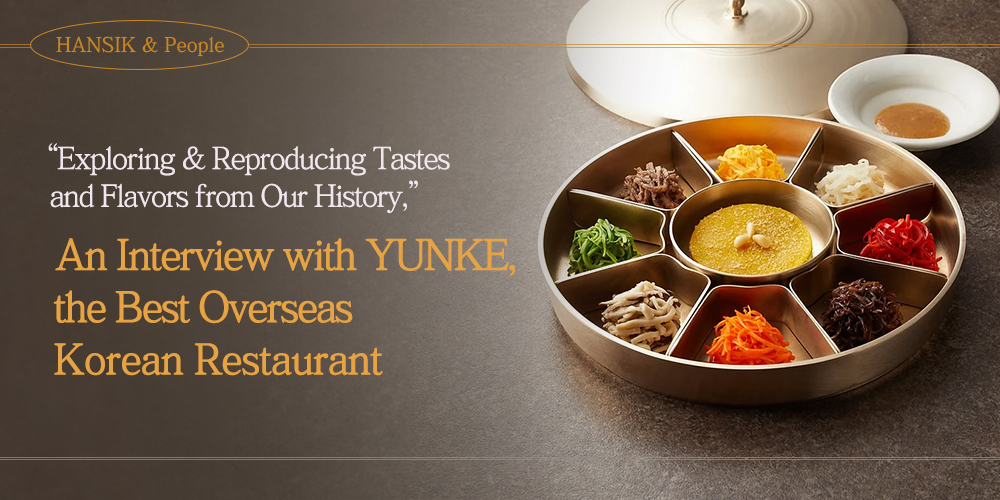
There are people who find satisfaction only when things are done properly. Mi-Wol Yoon, the head chef of 'YUNKE,' is one such person. Her dedication to Korean cuisine, Hansik is evident from how she delves into ancient texts to present authentic Korean dishes and consistently conducts Kimchi classes while running a Korean restaurant.
Yoon's 'YUNKE' in Tokyo, Japan, is a Hansik restaurant that recreates cuisines of the Joseon Dynasty based on historical texts. With an impressive record of earning the Michelin 2-star rating for six consecutive years, earlier this year, it was recognized as a 'Best Overseas Korean Restaurant' designated by the Ministry of Agriculture, Food and Rural Affairs and the Korean Food Promotion Institute, establishing itself as a key player in promoting Hansik worldwide.
<Hansik Magazine> met with CEO Mi-Wol Yoon and listened to her story about YUNKE.

Representing Hansik in Tokyo's Prestigious Luxury District
Ginza, Tokyo, where YUNKE is located, is one of Japan's premier luxury districts, famous worldwide for its concentration of luxury high-end shops. The reason why Mi-Wol Yoon, the head chef of YUNKE, could confidently open a Korean restaurant in this luxury shopping district was simple: she believed that Hansik itself was sufficient.
"At that time, Japan lacked an upscale Hansik culture comparable to sushi or steak. I wanted to showcase the sophisticated culture of Hansik as exquisitely impressive in its entiretyfrom the ingredients to the cooking process," she explained.
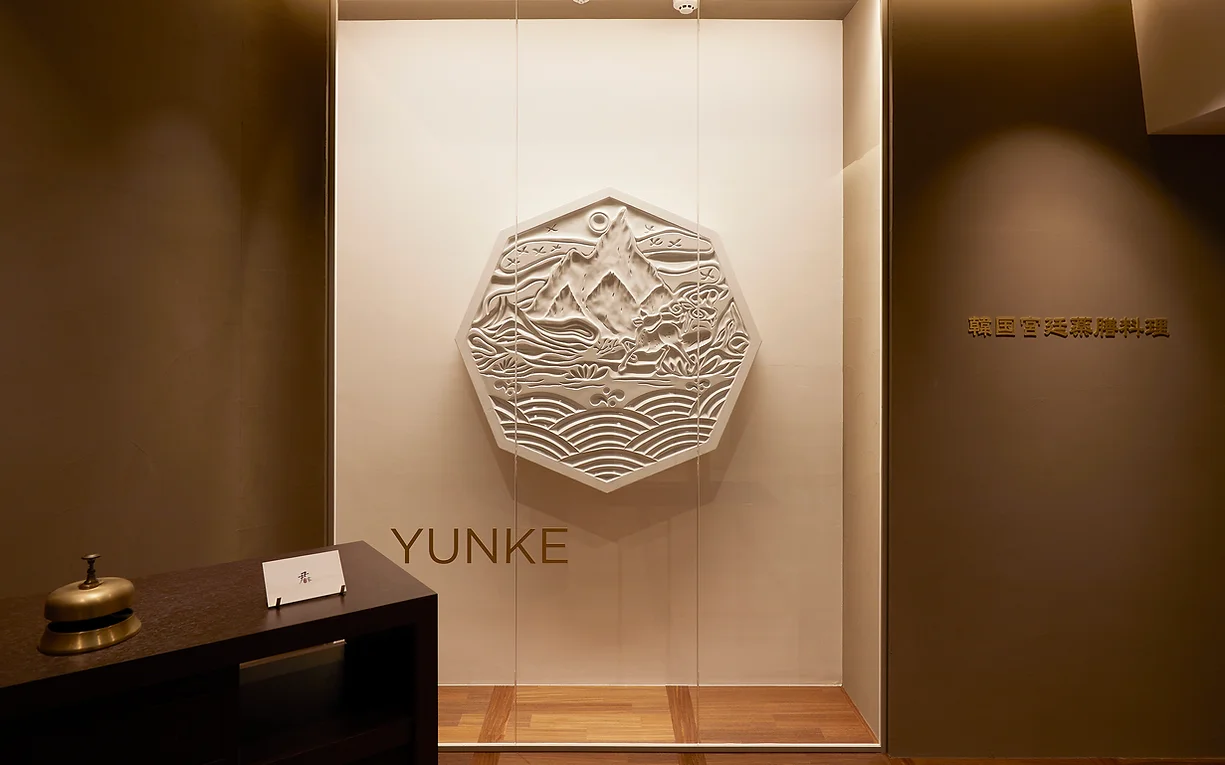
In the early 2000s, the perception of Korean restaurants in Japan was confined to modest establishments serving barbecue or home-style dishes. Therefore, Yoon had to make multifaceted efforts to raise understanding of the Hansik culture as a whole. She composed various courses ranging from royal court cuisine to temple food, to showcase the diversity of Korean food. Even the tableware used to serve dishes reflects the elegance of Korea. "We use diverse tableware, from Goryeo cheongja (celadon), Joseon baekja (white porcelain) to Bangjja Yugi (traditional Korean brassware) and even modern-style dishes. We offer course meals that not only serve food but also present the history of Korean tableware," explained Yoon.
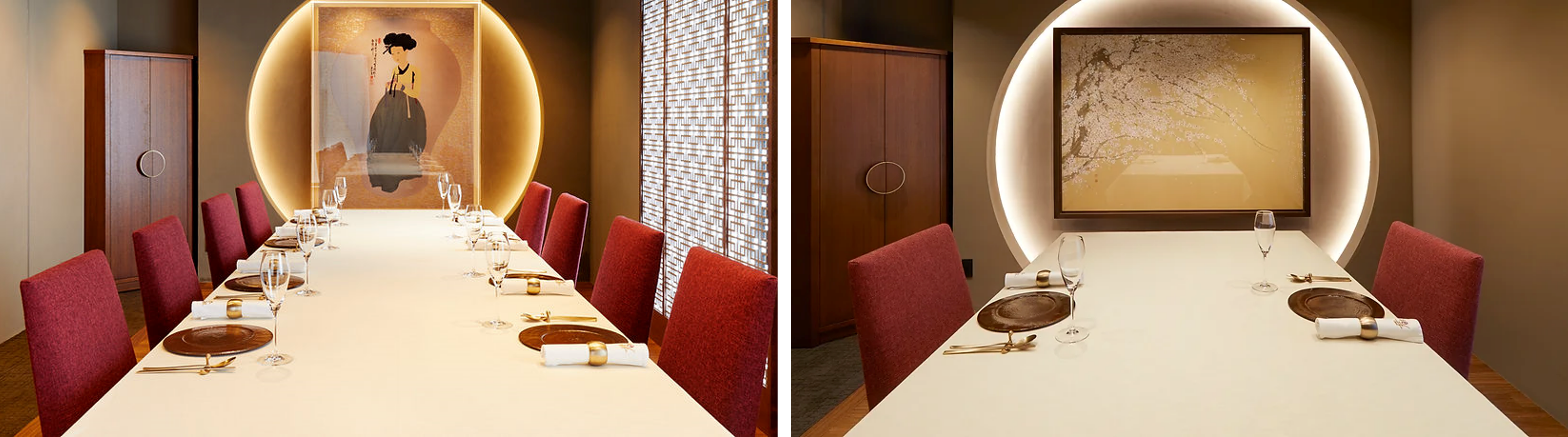
The interior, resembling an art gallery, exhibits eight pieces of art by Korean artists. Yoon emphasized, "Based on the concept that cultures are interconnected, we exhibit works that capture the essence of Korean culture."

“Korean Ingredients and Cooking Methods are the Competitive Edge”
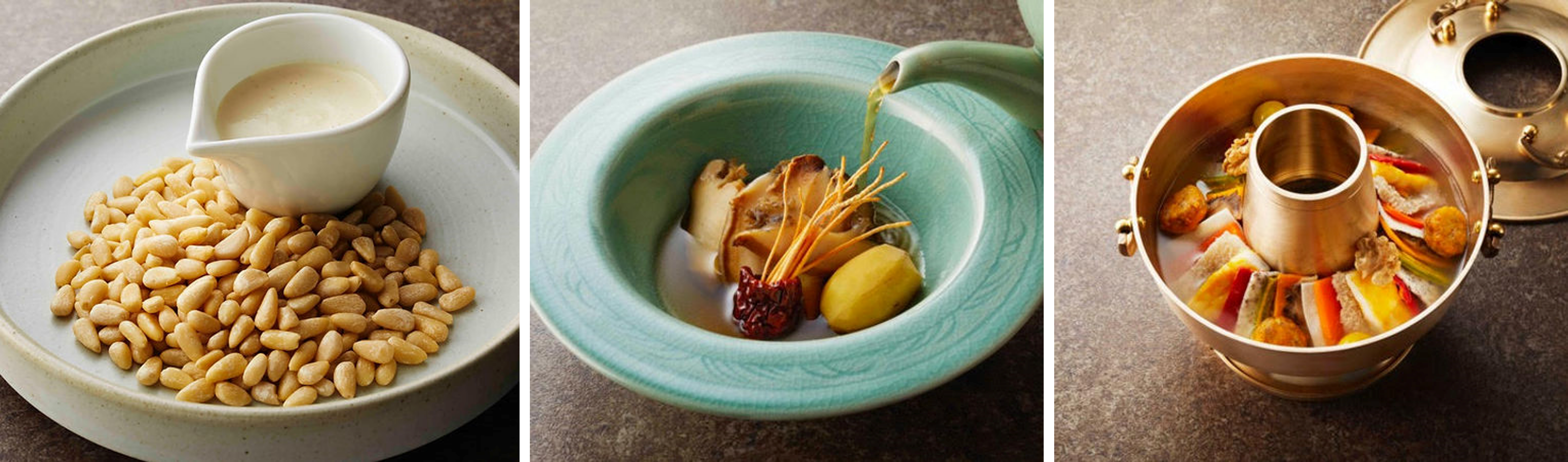
Yoon emphasizes that Hansik is based on Korean ingredients and cooking methods unique in themselves. As a matter of fact, YUNKE is dedicated to conveying the flavors of Korea by utilizing uniquely domestic ingredients such as Yeongwol pine nuts, Jirisan mulberry salt, and Boeun jujubes. "We put great effort into ensuring that traditional Korean ingredients, similar to medicinal herbs, serve as the core of our flavors, while ensuring that guests find it delicious," Yoon explained.
Compared to Japanese cuisine, Yoon pointed out, "Korean and Japanese cuisine differ significantly in the use of broth, which serves as the foundation for taste and the seasonings used to blend with vegetables.” She emphasized, “The fact that Hansik utilizes a variety of ingredients for its seasonings and brings out the deepest flavors of ingredients through the process of fermentation makes it competitive against any cuisine around the world.”
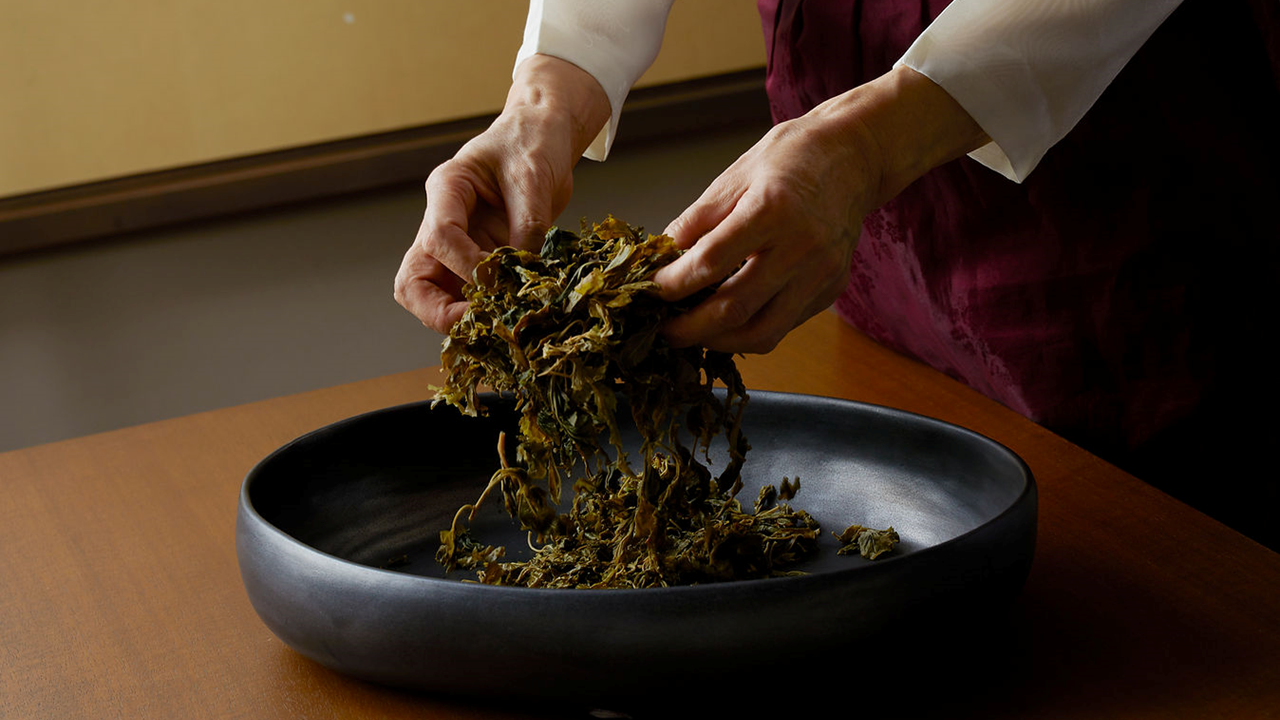
Yoon’s commitment to in-depth research for "authentic Hansik" remains unwavering. "I felt someone needed to research and reproduce the pre-existed Korean dishes," she said. "I believe that sharing how the Korean culinary culture has evolved is the path to rooting Hansik globally." Yoon continues to uphold her philosophy to diligently pursue studies to ensure that the essence of Hansik doesn’t get lost in complacency or familiarity.

Can't Live Without Kimchi: YUNKE's Special Love for Kimchi
For Yoon, life without Kimchi is unimaginable. Unsurprisingly, she is not only a Korean Food Grand Master, but also the third generation inheritor of ‘Sungchimchae’ -- the original form of baechukimchi documented in the ancient culinary book 'Siuijeonseo.' "I believed that Sungchimchae should not remain merely as a historical recipe in the book," remarked Yoon. "We meticulously communicate the historical background and flavors of Kimchi to our customers as part of the service.”
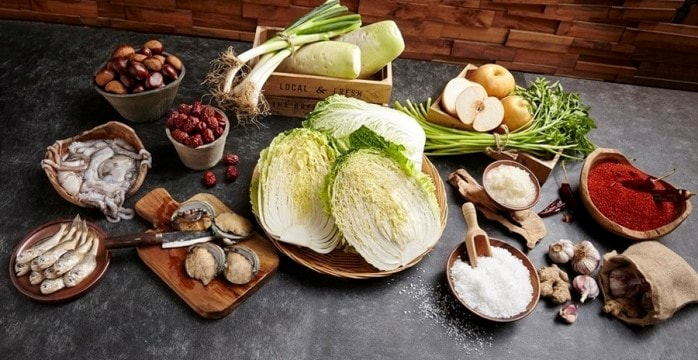
Sungchimchae is sold through Japanese TV home shopping and online shopping sites. Despite being among the relatively higher-priced Kimchi due to its special ingredients such as octopus, abalone, among others, it has steadily achieved sales of 30,000 units. "By selling Sungchimchae, which encapsulates the history of Korea's traditional Kimchi dish, we strive to continuously promote the excellence of Korean Kimchi,” Yoon asserted.
To actively promote Kimchi, YUNKE also hosts small-scale Kimchi classes. Yoon mentioned that conducting these Kimchi classes helps her truly sense a heightened interest in Hansik. She said, "When I meet students, sometimes I feel they have more interest in Korean culture than Koreans themselves. I believe we need to increase accessibility to help them better understand our culture."

Hansik Establishes Itself as a Trendy Culture in Japan
How is the perception of Hansik evolving in Japan? Yoon says that Hansik has deeply entrenched itself as both a culture and a culinary genre.
Viewers of K-dramas like 'Dae Jang Geum' and 'Winter Sonata' in the early 2000s, who are now in their 30s, have transitioned into the main consumer base. Additionally, teenagers and people in their 20s are rapidly exposed to various aspects of Korean culture through various social media platforms, more than ever before. Yoon stated, "Among the younger generation, Korean culture is perceived as 'Oshare,' meaning trendy and cool."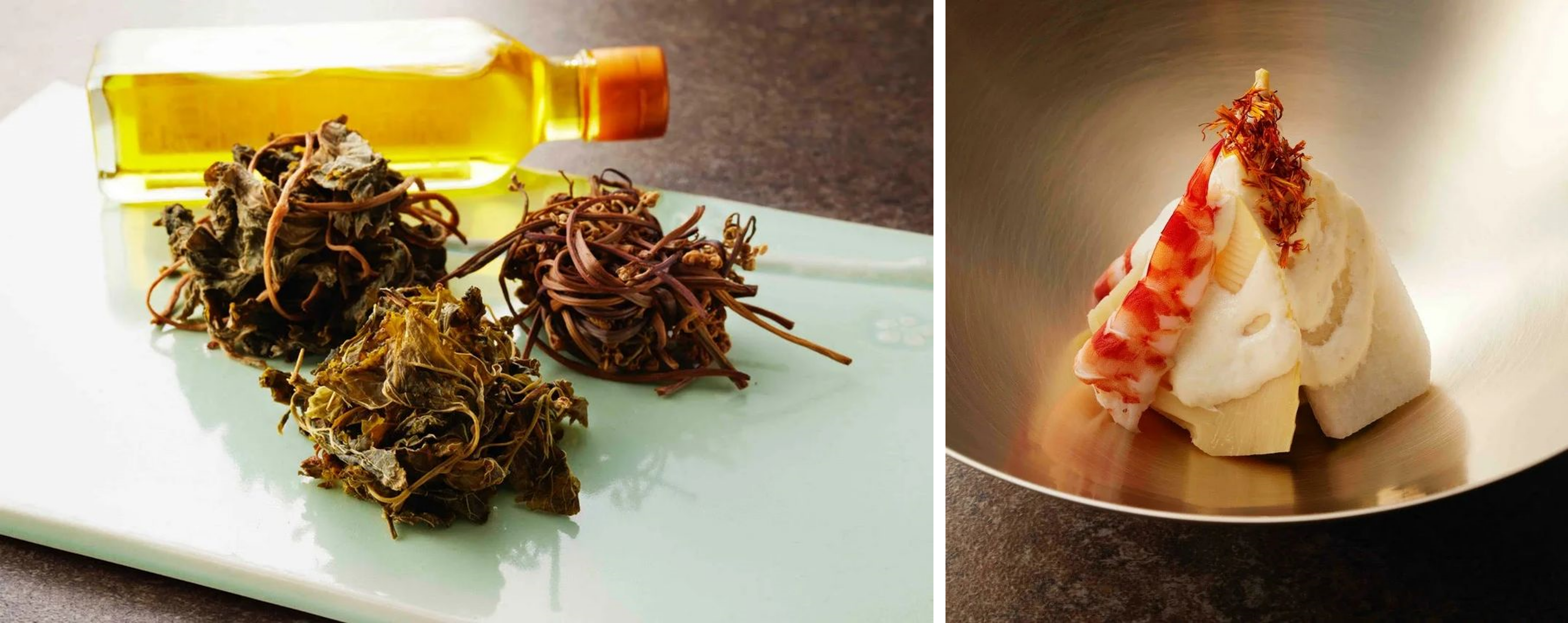
Even Japanese individuals aged 50 and above, who might be relatively less familiar with the internet, are somewhat familiar with Hansik. Yoon emphasized, "For the middle-aged and older groups, Hansik is often seen as limited to bulgogi or spicy dishes. To address these perceptions, we need to introduce a more diverse range of Korean dishes."
Yoon also mentioned the potential of traditional herbs and vegetables. She remarked, "Although menu items like 'Gujeolpan (platter of nine delicacies),' 'Sinseollo (royal hot pot),' and 'Hanbang Jeonbokjjim (steamed abalone with medicinal herbs)' have received positive responses, there is a higher interest in mountain vegetables." She added, "With the increasing demand for vegan dishes, overseas customers regard these vegetables as excellent cuisine they haven't experienced before." Yoon concluded, "Seeing these changes is gratifying, yet it also prompts further contemplation on how to promote Hansik in the future."

"A Korean Restaurant that Doesn't Entirely Understand Hansik”
When asked to introduce YUNKE in a single sentence, Yoon humbly replied, "It's still a restaurant that doesn't entirely understand Hansik.” Despite dedicating ten years exclusively to Hansik, her modest response reflects her continual mindset for learning.
Yoon explained, "Many people tend not to delve deeper into Hansik just because they are familiar with it." However, "YUNKE aims to create Korean dishes by always seeking and learning, with the mindset of acknowledging that there is still much to be understood," she added.
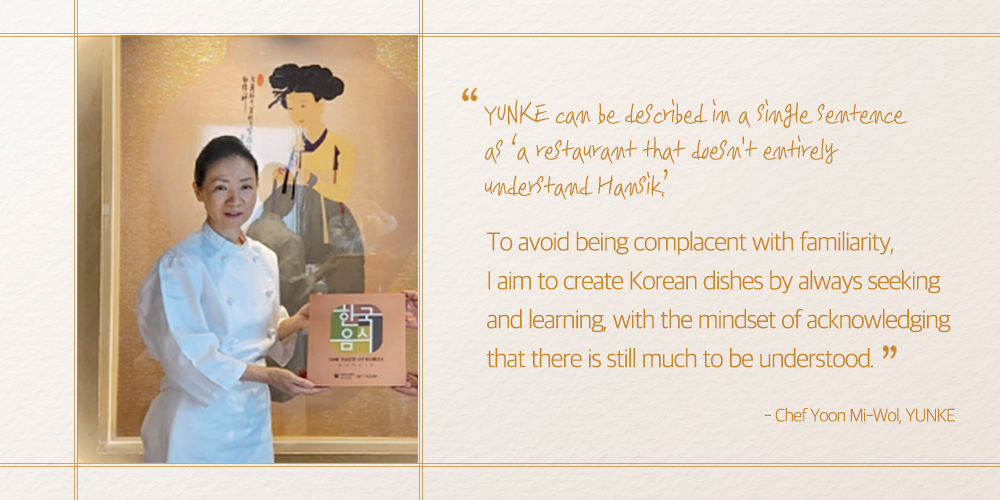
Yoon's next goal is to open YUNKE worldwide and spread Hansik and the Korean culinary culture to people around the globe. We look forward to seeing her consistent dedication to Korean cuisine resonate around the worldwide.
Address │ 104-0061 Tokyo, Chuo City, Ginza, 6 Chome−13−9 GIRAC GINZA 11F
Hours │ Monday-Saturday (5:00 PM – 10:00 PM) / Closed on Sundays